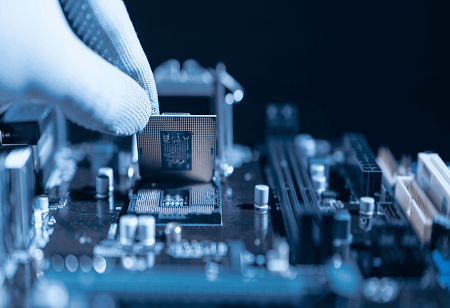
India is quietly designing the World's Most Powerful Chips, marking a significant shift in the global semiconductor landscape.
The World's Most Powerful Chips, including advanced processors used for artificial intelligence and high-performance computing, are increasingly being designed by engineering teams based in India.
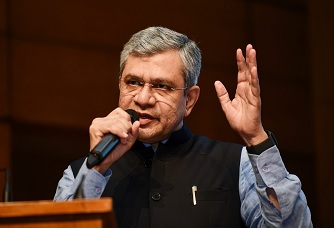
Union Railway Minister Ashwini Vaishnaw highlighted this growing achievement, emphasizing that India has emerged as a major hub for semiconductor design and innovation. The development reflects the country's rising influence in the global chip industry as it seeks to strengthen its position across the semiconductor value chain.
Speaking about India's progress in the semiconductor sector, Ashwini Vaishnaw said that some of the world's most advanced chips, including those developed by NVIDIA, are being designed in India. The statement underscores the country's growing capabilities in semiconductor engineering, an area that has gained strategic importance amid increasing global demand for AI chips, data center processors, and advanced computing technologies.
For years, India has been known for its software expertise, but the country is now becoming an important center for semiconductor design. Global technology companies have established large research and development centers across Indian cities, employing thousands of engineers who contribute to the design and verification of cutting-edge semiconductor products.
According to the minister, India is now involved in designing chips based on some of the most advanced technology nodes, including 2-nanometer-class chip designs. These next-generation chips are expected to power future AI applications, cloud infrastructure, consumer electronics, and advanced computing systems.
The growing involvement of Indian engineers in semiconductor development highlights the country's transition from being primarily a software services destination to becoming a critical contributor to global hardware innovation.
Also Read: Role of Industrial Gases in the Semiconductor & Electronics Ecosystem
India's semiconductor ambitions have gained momentum through a combination of government support, industry participation, and talent development initiatives.
Some of the major developments include:
These efforts are aimed at creating a complete semiconductor ecosystem capable of supporting both domestic and global demand.
The government is expected to place greater emphasis on semiconductor design and ecosystem development under the next phase of the India Semiconductor Mission (ISM 2.0).
According to Vaishnaw, the upcoming phase will prioritize several critical areas of the semiconductor supply chain, including chip design, semiconductor equipment, specialty chemicals, materials, and talent development.
The objective is to reduce dependence on external supply chains while strengthening India's ability to support advanced semiconductor production. Industry experts believe that a robust ecosystem is essential for attracting long-term investments and ensuring sustainable growth in the sector.
The semiconductor industry has become increasingly important worldwide due to the rapid adoption of artificial intelligence, cloud computing, electric vehicles, and next-generation communication technologies.
While India is making significant progress in semiconductor design, most advanced chip manufacturing still takes place in specialized fabrication facilities located outside the country.
Leading-edge chips developed by companies such as NVIDIA are typically manufactured by global foundries that possess highly sophisticated fabrication capabilities. Designing a chip and manufacturing it are separate processes, with manufacturing requiring massive capital investments and highly advanced production infrastructure.
Nevertheless, India's strength in design represents a crucial step toward building a comprehensive semiconductor ecosystem. Industry observers view the country's design capabilities as a strong foundation for future manufacturing expansion.
India's emergence as a semiconductor design powerhouse carries strategic and economic significance.
The country is rapidly positioning itself as a global destination for semiconductor innovation at a time when governments and businesses worldwide are seeking resilient supply chains and diversified technology ecosystems.
With growing investments, policy support, and a strong engineering talent base, India is increasingly becoming a key contributor to the future of AI chips, advanced processors, and next-generation semiconductor technologies.
As demand for high-performance computing continues to accelerate, India's role in designing the world's most advanced chips is expected to expand further, strengthening its position in the global technology landscape.





.jpg "Building EV Bus Ecosystems for India's Clean Mobility Goals")

We use cookies to ensure you get the best experience on our website. Read more...