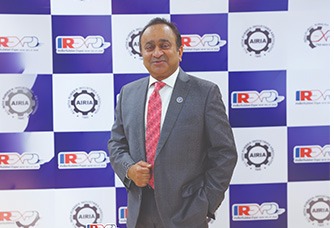
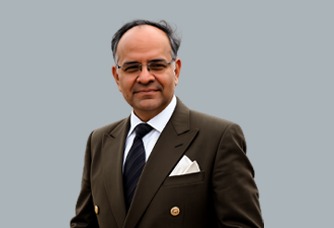
In an interaction with Thiruamuthan, Assistant Editor at Industry Outlook, Anay Gupta, President, All India Rubber Industries Association (AIRIA), discusses how India’s rubber industry is navigating rising input costs, supply-side constraints, and evolving global market expectations.
He reflects on the changing dynamics shaping manufacturers and growers, the need for a more resilient industry ecosystem, and how India can strengthen its position amid a rapidly changing business environment.
Natural rubber prices and input costs continue to remain a concern for manufacturers. How are current cost pressures affecting the profitability and pricing strategies of India’s rubber industry?
Raw-material cost is presently one of the biggest concerns for the rubber manufacturing industry, particularly for MSMEs and the non-tyre sector. Natural rubber prices have moved up significantly. As on 15 September 2026, the Rubber Board reference price for RSS-4 at Kottayam was around ₹274 per kg. Apart from natural rubber, manufacturers are also dealing with volatility in synthetic rubber, carbon black, rubber chemicals, energy, logistics and other inputs.
The difficulty is that manufacturers cannot always pass these increases immediately to customers. Many MSMEs work on annual contracts or predetermined prices, particularly with OEMs and large institutional buyers. Therefore, when raw-material prices increase sharply, margins get squeezed.
Companies are responding through better inventory management, productivity improvement, alternate formulations wherever technically feasible and closer negotiations with customers. But there is a limit to how much cost can be absorbed. A stable and predictable raw-material environment is extremely important for the long-term competitiveness of the industry.
With strong automotive and tyre demand supporting rubber consumption, is India adequately prepared on the supply side to meet the expected increase in demand?
There has certainly been improvement in domestic production, but we still have a structural gap between production and consumption.
Natural rubber production increased from about 8.75 lakh tonnes in 2024–25 to around 9.05 lakh tonnes in 2025–26. At the same time, consumption increased from approximately 14.10 lakh tonnes to 14.27 lakh tonnes. So, even after the improvement in domestic production, the gap remains above five lakh tonnes.
Another important point is that rubber demand should not be viewed only from the tyre perspective. The non-tyre industry supplies automotive components, hoses, belts, seals, footwear, medical products, construction products, industrial components and thousands of other applications.
Therefore, India needs to increase domestic production and productivity while maintaining a reliable mechanism for meeting the unavoidable deficit through imports.
India continues to depend on imports to bridge the gap between domestic natural rubber production and consumption. What immediate measures are needed to strengthen domestic supply?
The first priority should be productivity. We have to obtain more rubber from the existing tappable area through scientific tapping, rain guarding, disease management, better clones, replanting and mechanisation.
The second priority is bringing untapped and under-tapped plantations back into production. Availability and cost of skilled tappers remain genuine challenges in traditional rubber-growing regions.
The expansion of rubber cultivation in the North East is a very positive development. Under the INROAD programme, around 1.79 lakh hectares had been planted by the 2025 planting season, benefiting more than 2.07 lakh growers. This will contribute significantly in the coming years, although rubber plantations naturally require time to reach the tapping stage.
India therefore needs a two-track approach: improve productivity from existing plantations immediately and simultaneously develop new production areas for long-term supply security.
Global rubber supply chains are increasingly being shaped by weather disruptions, geopolitical risks and sustainability requirements. How should Indian manufacturers prepare for these risks?
Supply-chain risk has now become a permanent part of business planning. Rubber is particularly exposed because natural rubber production is concentrated in certain geographies and is affected by rainfall, disease, climate conditions and tapping availability.
Manufacturers should avoid excessive dependence on any single source or geography. Supplier diversification, strategic inventory, stronger domestic sourcing and long-term supplier relationships will become increasingly important.
At the same time, companies must invest in material efficiency, recycling, reclaimed rubber and better compound design wherever product standards permit.
For MSMEs, however, every company cannot independently build sophisticated global sourcing and compliance systems. Industry associations and Government institutions can play an important role by providing market intelligence, common guidance, testing support and awareness programmes.
Traceability and sustainable sourcing are gaining importance globally. What challenges could these requirements create for Indian rubber growers and manufacturers, particularly MSMEs?
Sustainability and traceability are no longer optional issues for exporters. They are increasingly becoming market-access requirements.
The challenge in India is the highly fragmented nature of the value chain. Natural rubber is produced substantially by small growers, while the downstream rubber-products industry includes a very large MSME base. Capturing plantation-level information, maintaining chain-of-custody records and implementing digital traceability can therefore involve considerable cost and administrative effort.
The EU Deforestation Regulation is one example of how compliance expectations are changing. Such regulations will require Indian industry to strengthen documentation and supply-chain visibility.
AIRIA supports sustainability, but implementation must be practical. MSMEs need awareness, affordable digital tools, common traceability frameworks and adequate transition support. Otherwise, compliance cost itself can become a barrier to exports.
Synthetic rubber demand is increasingly shifting towards high-performance and specialty applications. Where do you see the biggest opportunities for Indian manufacturers in this segment?
This is an area where India has considerable opportunity. The future will increasingly move towards application-specific and high-performance elastomers.
Electric vehicles, advanced automotive systems, railways, aerospace, defence, electronics, medical applications, infrastructure and renewable energy equipment require materials capable of performing under demanding conditions involving temperature, chemicals, pressure, ageing and electrical requirements.
There are opportunities in EPDM, silicone rubber, fluoroelastomers, specialty NBR and other engineered elastomers and compounds.
India should not remain only a large consumer of these materials. We should build stronger domestic capability in specialty elastomers, compounding, testing, tooling and product development. This can also reduce import dependence in critical industrial applications.
With rising demand from automotive, infrastructure and industrial applications, how do you see India’s rubber consumption evolving over the next 2–3 years?
The medium-term direction remains positive. The Rubber Board has earlier projected India’s natural rubber consumption to reach around two million tonnes by 2030.
Growth will come from several sectors simultaneously—automobiles and EVs, infrastructure, railways, construction, defence, healthcare, footwear and general engineering.
What is particularly encouraging for AIRIA is the potential of the non-tyre sector. As India increases manufacturing and localisation, demand for engineered rubber components will rise alongside final-product manufacturing.
Over the next two to three years, therefore, we expect rubber consumption to remain strong, although the actual pace will depend upon automotive production, infrastructure spending, exports and the broader global economic environment.
How can India strengthen its position as a global rubber-product manufacturing and export hub amid changing global trade dynamics?
India has the manufacturing base, engineering capability and entrepreneurship to become a much stronger global rubber-products hub. But we have to compete on more than price.
Quality, consistency, certification, testing, delivery reliability and compliance with international standards will determine future export success.
For MSMEs, affordable testing and certification is particularly important. AIRIA has been working to improve members’ access to recognised testing facilities because international buyers increasingly demand documented compliance.
We also need competitive access to raw materials, easier trade procedures, technology upgradation, market-development support and stronger participation in global exhibitions and buyer-seller platforms.
The objective should be to move from being primarily a supplier of conventional rubber products to becoming a trusted global source of high-value engineered rubber components.
What policy interventions are currently most critical for balancing the interests of rubber growers, raw-material suppliers and downstream manufacturers?
The interests of growers and manufacturers should not be seen as opposing interests. Both are essential parts of the same value chain.
Growers require remunerative prices and confidence to continue tapping and invest in plantations. Manufacturers require raw materials of consistent quality, adequate quantity and internationally competitive prices.
Policy should therefore focus on increasing domestic production and productivity rather than trying to protect one segment at the cost of another.
At the same time, since domestic consumption continues to exceed production substantially, the downstream industry must have predictable access to imports to bridge the genuine deficit.
For MSMEs, we would also emphasise affordable finance, technology support, subsidised testing and certification, rationalisation of duties where there are inverted structures, and easier access to Government procurement and export-support programmes.
Looking ahead, what will be the three biggest opportunities and three biggest risks for India’s rubber industry through 2027?
I would identify three major opportunities.
First is the continued expansion of Indian manufacturing. Automotive, EVs, infrastructure, railways, defence, healthcare and industrial manufacturing can create significant demand for rubber products.
Second is import substitution. India still imports several specialty elastomers, compounds and high-value rubber products that can increasingly be manufactured domestically.
Third is exports. Changes in global supply chains are creating opportunities for dependable and technically capable Indian suppliers, particularly MSMEs producing specialised engineered products.
On the risk side, the first is raw-material availability and price volatility. With natural rubber consumption at around 14.27 lakh tonnes against domestic production of about 9.05 lakh tonnes in 2025–26, supply security will remain important.
The second is increasing compliance cost—whether related to sustainability, traceability, testing, certification or international regulations. Smaller manufacturers will require institutional support to manage this transition.
The third is global uncertainty. Geopolitical developments, freight disruptions, trade measures and weak demand in major markets can affect both raw-material sourcing and exports.
However, I remain confident about the industry's direction. India has a strong manufacturing ecosystem, a large domestic market, experienced entrepreneurs and a substantial MSME base. If we can ensure raw-material security, encourage technology and quality upgradation and provide MSMEs with the right policy and institutional support, India can significantly strengthen its position in the global rubber industry over the coming years.



.jpg "Building EV Bus Ecosystems for India's Clean Mobility Goals")
We use cookies to ensure you get the best experience on our website. Read more...