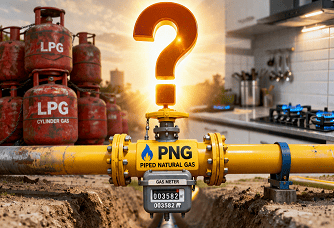
India’s push for LPG to PNG shift has raised a bigger question — is this a smart long-term move or just a quick fix during a fuel crunch? As supply pressures grow, many households and businesses are now being nudged to rethink how they cook and operate.
At its core, the debate is simple. LPG comes in cylinders that need refilling and delivery, while PNG (piped natural gas) is supplied directly through pipelines, offering a steady flow without storage. But the real impact goes beyond convenience.
For urban users, the shift to PNG looks promising. There’s no need to track cylinder bookings or worry about running out mid-use. Costs can also be more predictable over time, especially in cities where PNG pricing is relatively stable. Safety is another plus — PNG disperses quickly in air, reducing the risk of major accidents compared to LPG.
Also Read: Govt Mandates LPG to PNG Switch as India Faces Gas Shortage
But the transition is not without challenges. PNG is still limited to select cities, leaving a large part of India dependent on LPG. Installation costs and connection delays can also discourage users. Unlike cylinders, PNG ties consumers to a fixed location, which may not suit small businesses or households that need flexibility.
For commercial setups, the impact is mixed. Large restaurants and industrial kitchens may benefit from uninterrupted supply, but smaller outlets could face upfront costs for modifying equipment and pipelines.
The biggest gap remains rural access. While cities may adapt quickly, expanding PNG infrastructure across smaller towns and villages will take time and heavy investment.
So, is shifting from LPG to PNG worth it? The answer isn’t a simple yes or no. PNG offers clear long-term benefits in safety, convenience, and efficiency. But until infrastructure catches up and access becomes widespread, LPG will continue to play a critical role.
For now, the shift looks less like a replacement — and more like a gradual transition.
The data behind India’s gas transition
LPG consumers:
India has around 32–33 crore LPG consumers
PNG connections:
About 1.6–1.7 crore PNG connections, with ~1 crore active users
LPG coverage:
Over 100% coverage (multiple connections per household included)
Government push:
Around 60 lakh households have been urged to switch to PNG
Future target:
India aims for 12+ crore PNG connections by 2034






We use cookies to ensure you get the best experience on our website. Read more...