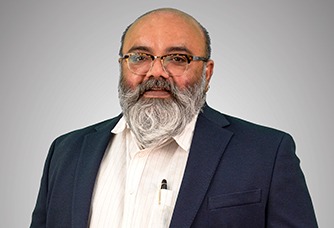
A Prabhu, Executive Director, Best Power Equipments India, is an experienced Business Leader with over 30 years of expertise in operations, project execution, and large-scale infrastructure management. He specializes in strategic planning, sustainability initiatives, and operational excellence, with strong capabilities in crisis management, cost optimization, and delivering complex, high-impact projects across diverse environments.
Below are his key excerpts highlighting insights on thermal derating challenges in India, the impact of extreme climate conditions on UPS performance, battery reliability concerns, and the need for climate-resilient design, smarter monitoring, and policy-driven interventions to ensure dependable and future-ready power infrastructure.
Uninterrupted power is now essential to modern life in India and is not considered a luxury. Imagine a busy data center driving the digital economy, a hospital intensive care unit where machines keep patients alive, or a tiny business that uses electronic payments. Reliable backup power is necessary in each of these locations; it is not a choice. The Uninterruptible Power Supply (UPS), a silent protector that intervenes when the grid fails, stands silently at the heart of this dependability. What Thermal Derating Really Means
Think of a UPS as a marathon runner trained to perform best at a comfortable 25°C. Now imagine asking that runner to perform in 40°C heat, day after day. Naturally, the runner slows down, tires faster, and wears out sooner. That is exactly what happens to UPS systems in Indian conditions. When temperatures rise, batteries drain faster, components age more quickly, and the system cannot deliver its promised capacity. In short, UPS struggles at the very moment it is needed most.
Our climate makes this challenge sharper than in many other parts of the world. In Delhi, Jaipur, or Nagpur, temperatures often soar past 45°C. In coastal cities like Mumbai and Chennai, humidity adds another layer of stress. Dust and pollution clog cooling systems, while frequent voltage fluctuations force UPS units to work harder and more often. Unlike countries with milder climates, our UPS systems are constantly pushed to their limits. Here, they are not just machines; they are frontline defenders against an unforgiving environment.
Also Read: Optimizing Power Consumption in Data Centers for Maximum Savings
Batteries are the beating heart of any UPS, but they are also its most fragile part. For every 10°C rise above 25°C, the lifespan of a lead acid battery is cut in half. That means a battery designed to last five years may fail in less than two if it operates in a warehouse at 40°C. Even lithium-ion batteries, which are more resilient, suffer under heat. Chemical reactions inside the cells speed up, reducing capacity and sometimes even creating safety risks. So thermal derating is not just about performance, it is about cost, safety, and reliability.
Behind every UPS failure is a human consequence. Imagine a hospital where critical equipment shuts down mid surgery. A data center where downtime translates into millions of rupees lost. Or a small business where a power cut disrupts daily operations and livelihoods. These are not hypothetical scenarios. They are real, lived experiences that underline why thermal derating in Indian conditions is not just a technical issue; it is a human one.
At BPE, we have spent years studying this challenge and working on solutions tailored for India. Some of the steps we believe are essential include:
These are not optional upgrades. They are necessary innovations if we want to ensure reliable backup power across the country.
Also Read: Cost Reduction Strategies for Manufacturing Plants
Engineering alone cannot solve the problem. We need awareness and action at every level. Businesses and institutions must understand the importance of thermal management. Procurement standards should require testing under Indian temperature conditions. Technicians need training to handle these challenges. And government incentives can encourage adoption of advanced, heat-resilient UPS systems. When policy and engineering work hand in hand, we can build a truly resilient power ecosystem.
Looking ahead, India is stepping into a digital future. Smart cities, 5G networks, and AI-powered industries will all depend on uninterrupted power. If we ignore thermal derating now, we risk slowing down this progress. But I see this challenge as an opportunity. By innovating for Indian conditions, we can set global benchmarks. Our solutions can inspire other nations with hot climates facing similar struggles.
Thermal derating is not a minor technical detail; it is a defining factor in UPS performance in India. By acknowledging its impact, investing in solutions, and spreading awareness, we can ensure that our hospitals, data centers, businesses, and homes remain powered, no matter how harsh the climate. For instance, at BPE, our mission is simple yet profound: to deliver power solutions that are not only reliable but also resilient to the realities of India. Because uninterrupted power is not just about machines, it is about people, progress, and the promise of a brighter tomorrow.
.jpg "AR Enterprises: Building The Supply Networks Behind India's Construction Growth")
.jpg "Industrial Packers: Engineering Industrial Packaging for India's Manufacturing Future")




We use cookies to ensure you get the best experience on our website. Read more...