Telecom energy now shapes how profitably tower companies run their networks.
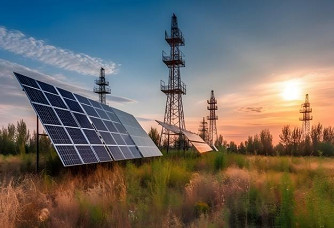
Indus Towers has deployed 50,000 solar-powered telecom sites across India, backed by roughly 300 MW solar capacities.
The expansion reflects a broader shift toward controlling electricity and diesel costs across thousands of scattered towers.
CEO Prachur Sah calls the milestone a defining moment, and the company says it is the first passive infrastructure player to reach this scale. For Indus, solar no longer serves as a sustainability badge alone. It works as an operational tool that drives costs, resilience and uptime.
Indus Towers now runs 50,000 solar-powered sites with approximately 300 MW of installed capacity. Those sites sit within a network of approximately 270,480 towers as of September 2026. The company accelerated its solar program in 2024 and aims to reach 100,000 solar-powered sites by FY29. Distributed installations suit a network that spans diverse terrain, because each tower generates power where it stands.
Also Read: Indian Solar Wafer Policy 2028: ALMM Rules, Deadline, Impact
Towers need reliable, round-the-clock electricity. Diesel generators still back up sites where the grid fails, and that keeps telecom energy costs high. Solar generation reduces exposure to diesel price hikes and conventional power bills. Management reports savings in two areas:
These gains come from solar deployment, battery systems and energy management working together, not from solar alone.
Lithium-ion batteries store solar electricity for hours without sunlight, and the industry is replacing traditional lead-acid batteries with them. Smart meters and digital energy management systems monitor consumption and optimize usage. Indus has integrated digital monitoring across its solar sites to track generation and performance in real time.
Indus Towers targets 100,000 solar-powered sites by FY29, double today’s base. Scaling solar can sharpen cost management and strengthen energy resilience. The push also signals how the wider industry must handle rising energy demand. Prachur Sah says the operating model could replicate in Africa. Renewable energy in telecom now forms part of infrastructure operating strategy, not just sustainability commitments.







We use cookies to ensure you get the best experience on our website. Read more...