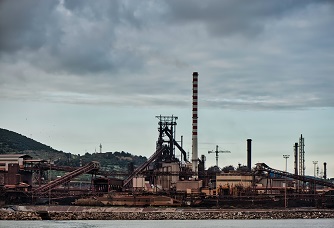
Coal gasification is emerging as a key pillar of India's energy strategy as the country looks to reduce its dependence on imported fuels and chemicals.
With geopolitical tensions in West Asia raising concerns over energy supplies, the government is accelerating investments in coal gasification projects across the country.
The push for coal gasification has gained momentum after the Centre approved a Rs 37,500 crore incentive scheme aimed at boosting domestic production of gas, fertilizers, and chemicals from coal.
The initiative is expected to strengthen India's energy security while reducing reliance on imported liquefied natural gas (LNG), methanol, ammonia, and urea. The government believes the move will help make better use of the country's vast coal reserves and support long-term industrial growth.
Parliamentary Standing Committee on Coal Chairman and BJP MP Anurag Thakur highlighted coal gasification as an important solution to address energy security challenges arising from global uncertainties. The government has approved a financial support package worth Rs 37,500 crore to encourage public and private sector investments in coal gasification projects.
The scheme aims to attract investments of nearly Rs 3 lakh crore and help India achieve its long-term energy goals.
Key highlights of the initiative include:
Also Read: Tech-Enabled Manufacturing Pathways for India's Infra Equipment
Coal gasification is a process that converts coal into synthesis gas, commonly known as syngas. This gas can be used to produce fertilizers, chemicals, hydrogen, methanol, and industrial fuels.
Unlike direct coal combustion, gasification allows coal to be used as a feedstock for several industrial applications. This becomes particularly important during periods of global supply disruptions when imported energy products become expensive or difficult to access.
India remains heavily dependent on imports for several critical industrial inputs. By increasing domestic production through coal gasification, the government aims to improve self-reliance and reduce exposure to international market volatility.
The recent uncertainty in West Asia has once again highlighted the risks associated with import dependence, prompting policymakers to speed up project approvals and implementation.
The government has set ambitious goals for expanding coal gasification capacity. India aims to gasify around 75 million tonnes of coal annually, with a broader target of reaching 100 million tonnes by 2030.
Several public sector companies and private players are already working on projects related to coal-to-chemicals, coal-to-methanol, and coal-to-fertilizer production.
Industry experts believe successful implementation could help:
However, challenges remain. Coal gasification projects require significant capital investment and advanced technology. Environmental concerns related to carbon emissions also continue to be debated, particularly in the absence of large-scale carbon capture systems.
Despite these challenges, the government views coal gasification as a strategic tool to strengthen India's energy ecosystem and reduce vulnerabilities linked to global energy markets.

.jpg "AR Enterprises: Building The Supply Networks Behind India's Construction Growth")
.jpg "Industrial Packers: Engineering Industrial Packaging for India's Manufacturing Future")




We use cookies to ensure you get the best experience on our website. Read more...