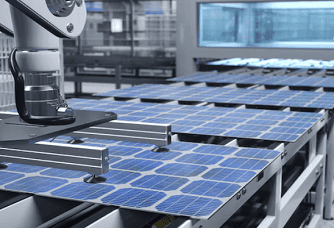
India has announced a major policy shift as it mandates local solar wafers and ingots for clean energy projects starting June 2028, aiming to reduce its heavy reliance on Chinese imports and strengthen domestic manufacturing.
The move is part of a broader strategy to build a fully integrated solar supply chain within the country. At present, India depends largely on imports for critical components such as wafers and ingots, which form the backbone of solar panels. By enforcing local sourcing, the government wants to ensure long-term energy security and reduce exposure to global supply disruptions.
This policy follows earlier steps where India required the use of locally manufactured solar modules and will soon extend that requirement to solar cells by 2026. The addition of wafers and ingots in 2028 completes the plan to localize the entire solar production chain. The India mandates local solar wafers decision is expected to push companies to invest in upstream manufacturing capabilities, an area where the country currently has limited capacity.
Also Read: Advancements in 5G Chipset Development in India's Semiconductor Sector
Industry estimates suggest India’s existing wafer and ingot production is still at a very early stage compared to demand. This gap is likely to drive significant investments over the next few years as developers prepare to meet the new requirements. The government is betting that this transition will create jobs, attract global manufacturers, and position India as a competitive player in the global solar market.
However, the shift may come with short-term challenges. Domestic production costs are currently higher than imports, especially from China, which dominates the global solar supply chain. There are also concerns around the availability of raw materials like polysilicon, which India still does not produce at scale.
Despite these hurdles, the policy aligns with India’s ambitious clean energy targets and its goal of achieving large-scale non-fossil fuel capacity by 2030. By focusing on domestic solar supply chain India development, the country is taking a long-term view to balance sustainability, self-reliance, and economic growth.
Policy Timeline:
Current Production vs Demand:
China Dependence:
Investment & Jobs:
Clean Energy Targets:
Challenges:







We use cookies to ensure you get the best experience on our website. Read more...