Toyota Kirloskar Motor’s decision to anchor a global “BizIntel Hub” in Karnataka’s upcoming KWIN City is less about incremental capacity and more about repositioning India in the global automotive value chain. The investment of Rs 1,200 crore over five years, while modest compared to full-scale manufacturing plants, carries disproportionate strategic weight: it signals a pivot from assembly-led growth to intelligence-led mobility ecosystems.
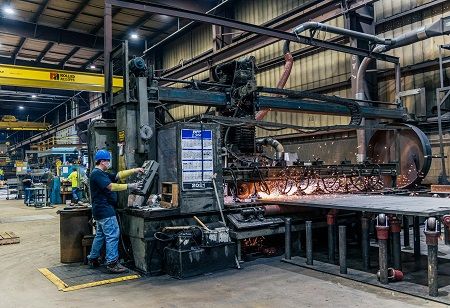
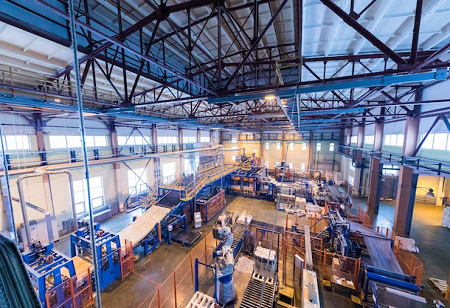
At its core, the proposed hub spanning 300 acres with vehicle manufacturing and testing capabilities sits at the intersection of engineering, data, and product validation. This is where the story diverges from a conventional investment announcement. Toyota is not merely expanding footprint; it is embedding decision-making capabilities closer to a market that is rapidly evolving in complexity, regulation, and consumer behavior.
India has long been a cost-efficient manufacturing base for global automakers. However, the next phase of automotive competitiveness is being defined by software integration, real-time analytics, and localized innovation. A “BizIntel Hub” suggests a layered function: combining prototyping, testing, and potentially data-driven insights that inform global product strategies.
This aligns with a broader industry shift. Vehicles are no longer static products; they are software-defined platforms requiring continuous validation across geographies. Locating such a hub in Karnataka allows Toyota to tap into a mature engineering talent pool while staying proximate to one of India’s fastest-growing automotive markets.
Also Read: Toyota Bets Big on India With Maharashtra Plant by 2029
KWIN City itself is an experiment in cluster-led development. With a planned 5,800-acre footprint and projected investments of Rs 48,000 crore, the state government is attempting to build a multi-sector ecosystem spanning innovation, healthcare, and IT. Toyota becoming the first major investor to formalize its commitment gives the project early credibility—something large industrial townships often struggle to achieve.
But the more important signal lies in sectoral convergence. By bringing together universities, healthcare institutions, and research organizations, KWIN City is positioning itself beyond industrial zoning. If executed well, it could replicate elements of global innovation corridors where academia, enterprise, and applied research co-exist.
Toyota’s presence, therefore, is not just anchor tenancy—it is a validation of the ecosystem thesis.
The projected creation of around 200 jobs may appear underwhelming against the scale of land allocation. However, this reflects the nature of the investment. Intelligence hubs are inherently high-value, low-volume employment generators. The real multiplier effect lies in indirect ecosystems—suppliers, testing services, software partners, and research collaborations.
For that reason, the quality of jobs, not the quantity, becomes the metric of success. These roles are likely to sit at the higher end of the skills spectrum, contributing to capability building rather than just employment generation.
For Karnataka, this investment is also about signaling. In an environment where states are competing aggressively for capital, early wins in flagship projects matter. The assurance of full government support, coupled with swift land allocation, reflects an intent to reduce friction in project execution—an area where India has historically lagged.
More importantly, it underscores a shift in how states are framing industrial policy: moving from incentives-led attraction to ecosystem-led retention. If KWIN City can deliver on infrastructure, connectivity, and institutional partnerships, it could become a template for future industrial corridors.
Globally, automakers are recalibrating their footprints amid electrification, supply chain realignments, and geopolitical shifts. India, with its scale and engineering base, is increasingly being seen not just as a demand market but as a development hub.
Toyota’s move fits into this recalibration. By investing in intelligence and testing capabilities rather than pure manufacturing expansion, it is hedging for a future where adaptability matters more than scale alone.
The real test will lie in execution timelines and ecosystem build-out. Will the promised academic and research institutions materialize? Can KWIN City attract complementary investments that create network effects? And crucially, will this hub integrate into Toyota’s global R&D architecture or remain a localized function?
If the answers trend positive, this could mark a quiet but significant shift: from India as a production base to India as a thinking node in the global automotive industry.
Japanese automaker giant Toyota entered India in 1997 as a joint venture with the Kirloskar Group, launching operations in 1999. It generates estimated annual revenue of over Rs 64,895 crore in India. Beyond passenger vehicles, its verticals include hybrid technology, exports, mobility services, and component manufacturing through Toyota Group companies.







We use cookies to ensure you get the best experience on our website. Read more...