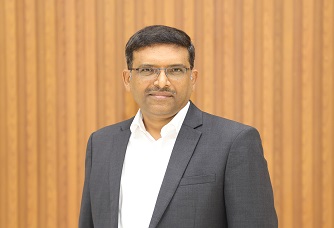
In an exclusive interaction with Thiruamuthan, Assistant Editor at Industry Outlook, Malini Narayanamoorthi, President, Renesas India, discusses how India is strengthening its semiconductor ecosystem through policy-led initiatives and ecosystem integration. She highlights advancements in domestic manufacturing, design innovation, talent development, and foreign investments, positioning the country to scale advanced chip production and emerge as a competitive global hub for semiconductor R&D and manufacturing. Malini Narayanamoorthi is a transformational leader with 20+ years of experience, specializing in VLSI design, IP development, and engineering leadership, with expertise in strategy, talent management, and global team execution.
How is India strengthening its semiconductor ecosystem through the Make-in-India initiative, and how is this impacting the scaling of domestic manufacturing for advanced chipsets?
India is in a very exciting phase of growth in the semiconductor industry. Historically, since the software boom and the early phases of semiconductor expansion, India has been widely recognized and valued for its talent base and strong design capabilities.
What is particularly encouraging today is India’s integrated approach to building a more complete semiconductor ecosystem, and the opportunity to be part of this transformation. The ecosystem build has been policy‑led, with the Production Linked Incentive (PLI) and Design Linked Incentive (DLI) schemes playing a pivotal role in encouraging domestic manufacturing and nurturing semiconductor design startups in India.
This holistic approach goes beyond any single segment of the value chain. It actively encourages and enables advanced packaging, wafer fabrication, indigenous product development, and talent and skill creation—all of which are essential building blocks for long‑term self‑sufficiency and global competitiveness in semiconductors.
India's pragmatic focus on mature nodes is building foundational manufacturing strength while preparing the ecosystem for gradual transition toward advanced semiconductor technologies.
With the surge in global demand for AI and 5G technologies, how is India positioning itself to lead in semiconductor R&D and advanced manufacturing?
Over the past few years, India has been deliberately transitioning from being primarily a semiconductor design powerhouse to adopting a more integrated, end‑to‑end approach across the semiconductor value chain. The India Semiconductor Mission (ISM) has been a key enabler in this journey, introducing both Production Linked Incentive (PLI) and Design Linked Incentive (DLI) schemes to catalyze domestic manufacturing and strengthen indigenous design. Importantly, these schemes are being actively monitored and refined to ensure effectiveness and long‑term ecosystem growth.
On the manufacturing front, there has been significant progress, particularly in assembly, packaging, and testing. Multiple initiatives are underway, including CG Semi, a joint venture involving CG Power (as a majority partner) and Renesas (as a minority partner), which is establishing a packaging facility in Sanand, Gujarat, with a focus on industrial and automotive applications. These are critical steps in anchoring high‑value manufacturing capabilities within the country.
On fabrication, India is taking a pragmatic approach by initially targeting mature process nodes. These nodes address segments where global supply constraints are expected, such as data centers, 5G infrastructure, and edge AI, while simultaneously building the operational and manufacturing experience needed to progress toward smaller geometries and more advanced technologies over time.
In parallel, India continues to deepen its design and R&D capabilities. This includes the rapid growth of a vibrant startup ecosystem and focused skilling initiatives such as the Chips‑to‑Startup (C2S) program, which is bringing semiconductor design capabilities into universities across the country. At the same time, global semiconductor leaders are expanding advanced design and development activities in India, further strengthening local expertise and accelerating capability building across advanced nodes and architectures.
Also Read: Advancements in 5G Chipset Development in India's Semiconductor Sector
Amid the ongoing shortage of skilled talent in semiconductor design and manufacturing, what strategies are proving effective in closing the talent gap in India?
India has a strong and well‑established base in semiconductor design talent, built over several decades through the presence of global R&D centers. Indian engineers have gained deep exposure to advanced technology nodes, complex SoCs, AI accelerators, automotive architectures, and mixed‑signal systems, providing a very solid foundation for the next phase of growth.
This mature talent pool is now increasingly finding its way into semiconductor startups, driven by the ambition to build products and take greater ownership of architecture‑level and system‑level innovation. This shift is helping broaden India’s capabilities beyond block‑level design toward end‑to‑end product creation.
At the same time, the talent pipeline is being strengthened at the university level. Access to industry‑relevant tools and workflows has significantly improved. Programs such as Chips‑to‑Startup (C2S), driven by the Ministry of Electronics and Information Technology (MeitY) and CDAC, are enabling students to work with professional‑grade EDA tools and real‑world design environments, greatly improving their readiness for the industry.
In alignment with India’s aspiration to become a product nation, Renesas is actively contributing to this ecosystem by providing universities with hardware platforms, embedded systems curricula, and PCB design tools. This allows students to go beyond theoretical learning and build practical applications such as mini robots, stampede monitoring systems, and other real‑world solutions, strengthening hands‑on skills and system level thinking from an early stage.
As foreign investments play a crucial role in India’s semiconductor industry, what recent policies have successfully attracted investments and what impact have they had?
Foreign investment has been a key accelerator in India’s semiconductor journey, and that confidence is coming from clear and consistent policy direction. The India Semiconductor Mission, along with the PLI and DLI schemes, has helped de‑risk what is otherwise a highly capital‑intensive industry by offering attractive incentives, faster approvals, and greater policy predictability. This is further strengthened by state‑level incentives that complement central support and enable faster on‑ground execution.
Beyond subsidies, India has deliberately positioned itself as a long‑term partner—with a well‑rounded ecosystem approach, strong design heritage, and increasing talent readiness across design, packaging, and manufacturing. It’s encouraging to see many of these investments slowly but steadily bearing fruit across advanced packaging, manufacturing, and design.
The impact is clearly visible: global companies are committing capital, transferring know‑how, and increasingly viewing India as an integral part of their global operations, rather than just an offshore base. That shift in perception is a meaningful milestone in India’s semiconductor journey.
Also Read: Artificial Intelligence to Revolutionize Advanced Chip Design
How will the Union Budget 2026-27’s measures, including funding for fabs, R&D tax incentives, and skill development, drive semiconductor growth?
The Union Budget 2026–27 builds on the strong momentum India has created in semiconductors, with a continued focus on manufacturing, innovation, and talent development. Continued funding support for fabs and packaging facilities reinforces the seriousness of India’s long‑term manufacturing ambitions. Equally important are the design incentives, which encourage companies to anchor higher‑value activities—such as advanced design, system architecture, and product development—in India. This helps drive an innovation‑driven mindset, which is essential for competitiveness in AI, 5G, automotive, and industrial semiconductors.
Targeted investments in skilling, university programs, and industry‑academia collaboration ensure that talent growth keeps pace with manufacturing and R&D expansion.
Together, these measures strengthen India’s full‑stack semiconductor ecosystem and accelerate the transition from policy intent to sustained, scalable growth.
Looking towards the future, how do you envision the growth of India’s semiconductor industry over the next decade in terms of self-reliance and technological advancements?
In the future, India has the opportunity to play a defining role in the global semiconductor landscape, moving beyond participation toward deeper contribution across innovation, manufacturing, and systems development. As capabilities mature, products increasingly architected locally can serve both domestic needs and global markets, meeting demanding requirements for scale, performance, and cost.
We look forward to the day when product ideas are brought to life in world‑class fabs across the country, packaged in India, and shipped from our shores to serve the nation and the world. From conception to creation, from silicon to shipment—all in harmony.




We use cookies to ensure you get the best experience on our website. Read more...