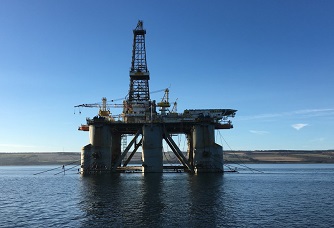
Global oil prices jumped sharply on Monday, crossing the $100-per-barrel mark after the United States signalled plans to block Iranian-linked shipping through the Strait of Hormuz, one of the world’s most critical oil transit routes. The development has raised fresh concerns about supply disruptions and escalating Middle East tensions.
Crude benchmarks reacted quickly to the news. Brent crude climbed about 7% to trade above $102 per barrel, while WTI crude surged nearly 8% to cross $104 per barrel in early trading. The spike comes after a brief period of stability, showing how sensitive global oil market trends remain to geopolitical developments.
The Strait of Hormuz plays a vital role in global energy supply, with nearly one-fifth of the world’s traded oil passing through this narrow waterway. Any disruption here has immediate global impact. The proposed US action is expected to target ships linked to Iran, potentially limiting their ability to move oil through the region and affecting Iran oil exports.
This escalation follows the breakdown of recent talks between the US and Iran, which had aimed to ease tensions. With negotiations failing to produce results, concerns are growing that the situation could worsen in the coming days. While some shipping routes may remain open, uncertainty around enforcement has already triggered oil price surge fears and heightened volatility.
Also Read: Indian Railways Expansion Gets INR 1.53 Trillion Boost
Analysts warn that if the situation continues or intensifies, oil prices could rise further. A prolonged disruption in supply could push prices significantly higher, adding pressure to economies already dealing with inflation and rising costs, including rising fuel prices and broader energy crisis risks.
The impact is not limited to oil markets alone. Higher crude prices often lead to increased fuel and transportation costs, which can drive up inflation across sectors. Stock markets have also shown signs of caution as investors react to the uncertainty surrounding the US Iran conflict.
For now, global markets are closely watching how the situation unfolds. Any further escalation—or a return to diplomatic talks—will play a key role in shaping the future of oil prices and the broader global economy.
.jpg "AR Enterprises: Building The Supply Networks Behind India's Construction Growth")
.jpg "Industrial Packers: Engineering Industrial Packaging for India's Manufacturing Future")





We use cookies to ensure you get the best experience on our website. Read more...