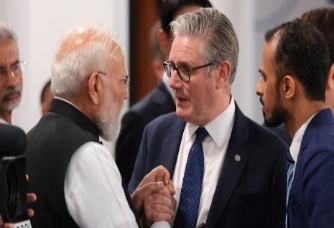
The India-UK Trade Deal is set to take effect on July 15, 2026, with Indian exporters expected to benefit from zero-duty market access, tariff concessions, and improved competitiveness in one of India's most important overseas markets.
Officials indicated that efforts are underway to put the necessary customs infrastructure in place so that Indian exporters can begin shipping goods under the preferential tariff regime from the very first day of the agreement's implementation.
The government clarified the pact as India's most ambitious trade agreement to date, opening access to a market worth more than $500 billion for Indian businesses.
Under the agreement, more than 99 percent of India's tariff lines and trade value will receive duty-free access to the UK market. The deal is expected to provide Indian exporters with an additional tariff advantage of 7-10 percent, placing them on an equal footing with countries that already have zero-duty access to the UK.
Moreover, the agreement is also expected to create significant opportunities across sectors including engineering goods, textiles, pharmaceuticals, automotive components, food products, and services.
India currently maintains a trade surplus with the United Kingdom in both goods and services.
India's services exports to the UK reached $21.6 billion in 2024, while UK services exports to India stood at $13.7 billion. In merchandise trade, India's exports to the UK were valued at $13.7 billion in 2025, compared to imports of $9.47 billion, highlighting the strength of bilateral commercial ties.
One of the key issues delaying the operationalization of the agreement was the UK's proposed steel safeguard measures. Government sources confirmed that India's concerns have been satisfactorily addressed through negotiations.
According to the agreed framework, approximately 85 percent of India's steel exports will remain outside the scope of the UK's steel safeguard measures. India has also secured concessions across 188 steel tariff lines, ensuring continued market access for domestic steel producers.
Officials emphasized that India would not lose long-term access to the UK steel market and that mechanisms such as country-specific quotas, residual quota allocations, and access under the Authorized Use Scheme (AUS) would help protect exporters' interests.
The UK had announced plans to reduce tariff-free steel import quotas by 60 percent and impose a 50 percent duty on imports exceeding quota limits from July 1, 2026. The issue had emerged as a major hurdle in finalizing the trade pact.
Another significant achievement under the agreement is the inclusion of the Double Contribution Convention (DCC), a longstanding demand of India.
Under the arrangement, eligible Indian professionals temporarily working in the UK will be exempt from making social security contributions in the UK while continuing to make contributions in India. The exemption period has been extended from three years to five years, aligning with India's key negotiating objective.
The measure is expected to improve the competitiveness of Indian companies operating in the UK and benefit more than 75,000 Indian professionals currently employed there.
Also Read: Modi's G7 Meetings Signal India's Multi-Region Strategy
Addressing concerns over the implementation of the agreement, House of Lords member Sonny Leong stated that the UK has no intention of undermining the benefits of the trade deal for any sector.
He noted that current steel imports are not close to reaching the proposed quota limits, meaning the additional 50 percent tariff would not apply unless those thresholds are exceeded.
The remarks came amid discussions surrounding steel safeguard measures and reports that India could reconsider tariff concessions on British products if its concerns were not adequately addressed.
As part of the agreement, India has committed to significantly reducing tariffs on Scotch whisky imports. Duties will be lowered from 150 percent to 75 percent immediately, followed by a gradual reduction to 40 percent over the next decade.
The UK government has reiterated its expectation that these commitments will be implemented as outlined in the legally binding agreement.
The trade pact reflects the growing economic relationship between the two countries. More than 900 Indian companies currently operate in the UK, contributing significantly to investment, employment, and bilateral trade.
Sources indicated that negotiations were concluded on June 17, following which Prime Minister Narendra Modi and UK Prime Minister Keir Starmer agreed to bring the agreement into force from July 15, 2026.
The implementation of the India-UK CETA marks a major milestone in bilateral economic relations. By providing near-complete tariff liberalization, addressing critical concerns in sectors such as steel, and improving mobility provisions for professionals, the agreement is expected to enhance trade competitiveness and unlock substantial growth opportunities for businesses in both countries.
With exporters set to receive immediate benefits from day one, the pact is poised to strengthen India's position in one of its most important international markets while deepening the broader strategic partnership between New Delhi and London.

.jpg "AR Enterprises: Building The Supply Networks Behind India's Construction Growth")
.jpg "Industrial Packers: Engineering Industrial Packaging for India's Manufacturing Future")




We use cookies to ensure you get the best experience on our website. Read more...