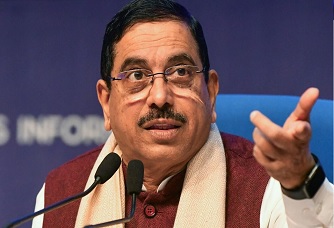
India is on track to achieve a major clean energy milestone, with 300 GW Non-Fossil Capacity expected to be reached by the end of the current quarter, according to Union Minister for New and Renewable Energy Pralhad Joshi.
The 300 GW Non-Fossil Capacity target reflects the country's rapid progress in renewable energy and its broader efforts to reduce dependence on fossil fuels.
Speaking at the workshop on Strengthening the National Green Hydrogen Mission through State Policies, Hubs and Infrastructure in New Delhi, Joshi said India has emerged as one of the fastest-growing clean energy markets in the world under the leadership of Prime Minister Narendra Modi.
The minister highlighted the country's achievements in renewable energy deployment and emphasized that India is steadily moving toward its long-term target of 500 GW of non-fossil fuel-based power capacity by 2030.
India's growing renewable energy capacity has been driven by strong additions in solar, wind, hydro and nuclear power generation. According to Joshi, crossing the 300 GW mark will further strengthen the country's position as a global leader in energy transition.
The minister noted that the government has undertaken one of the world's largest clean energy transformations over the past decade. He added that renewable energy growth is playing a key role in meeting rising electricity demand while supporting climate goals.
Also Read: Decarbonizing Lignite-Based Power Generation in India
A major focus of the workshop was the National Green Hydrogen Mission, which the government views as a key pillar of India's clean energy future.
Joshi said the mission is expected to transform India's industrial and energy sectors by encouraging the production and use of green hydrogen. The initiative aims to attract investments of nearly Rs 8 lakh crore while generating around six lakh employment opportunities across the value chain.
The minister also said the mission could help reduce annual carbon emissions by 50 million tonnes, supporting India's environmental commitments and industrial decarbonization efforts.
To encourage innovation, the government has earmarked Rs 100 crore for startups working on green hydrogen technologies. The first list of nine startups has already been approved, with a combined funding support of Rs 22 crore.
During the event, Joshi launched the Green Hydrogen Certification Portal of India. Developed by the Ministry of New and Renewable Energy (MNRE), the portal will help ensure transparent certification and regulatory compliance under the Green Hydrogen Certification Scheme.
The minister also highlighted the government's focus on research and innovation. A dedicated research and development roadmap worth more than Rs 100 crore is currently supporting 21 approved projects related to green hydrogen technologies.
He further acknowledged the contribution of major Indian private sector companies that are investing in renewable energy, green hydrogen production and related infrastructure.
The workshop was organized as part of the celebrations marking 12 years of the current government's tenure and showcased India's achievements in renewable energy deployment, green hydrogen development, clean energy transition and industrial decarbonization.




.jpg "Building EV Bus Ecosystems for India's Clean Mobility Goals")
We use cookies to ensure you get the best experience on our website. Read more...