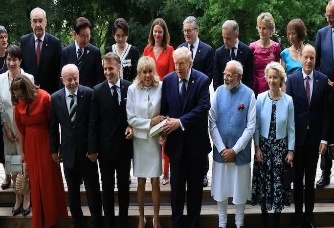
Prime Minister Narendra Modi’s series of bilateral meetings on the sidelines of the G7 Summit in Evian, France, underscores India’s evolving strategy of strengthening partnerships across multiple regions simultaneously, while positioning itself as a key voice in global diplomacy.
Engaging with leaders from the UAE, Kenya, Japan, Egypt, and South Korea, Modi’s discussions focused on trade, investment, strategic cooperation, and people-to-people ties.
Taken together, these meetings reflect a broader effort to deepen India’s global footprint amid shifting geopolitical and economic dynamics.
A key highlight of the engagements was Modi’s meeting with UAE President Sheikh Mohamed bin Zayed Al Nahyan, where both sides reviewed progress under their Comprehensive Strategic Partnership. The UAE remains one of India’s most important economic partners in West Asia, particularly in energy, investment, and diaspora linkages.
In Africa, Modi’s interaction with Kenyan President William Ruto reinforced India’s positioning as a partner of the Global South. The emphasis on shared development goals and long-standing cooperation reflects India’s growing outreach to emerging economies seeking diversified partnerships beyond traditional powers.
Meanwhile, discussions with Egyptian President Abdel Fattah El-Sisi highlighted the historical depth of India’s ties in the Middle East and North Africa region, with both sides reiterating their commitment to strengthening bilateral engagement.
Economic cooperation remained central to Modi’s talks with advanced economies such as Japan and South Korea. His meeting with Japanese Prime Minister Sanae Takaichi focused on boosting trade and investment, areas that have long been pillars of India-Japan relations.
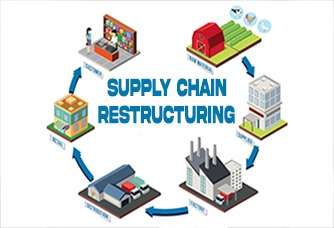
Similarly, discussions with South Korean President Lee Jae-myung explored collaboration in emerging and future-oriented sectors. These engagements signal India’s intent to deepen technology and manufacturing partnerships, particularly in areas such as electronics, supply chains, and innovation-driven industries.
By strengthening ties with technologically advanced economies, India is seeking to integrate more deeply into global value chains while accelerating domestic industrial growth.
Also Read: Top Government Schemes for Manufacturing Startups in India 2026
Beyond bilateral ties, Modi used the G7 platform to reiterate India’s stance on global conflicts and international cooperation. Addressing the Outreach Session, he emphasized that dialogue and diplomacy remain the only sustainable path to resolving tensions.
Referring to recent developments in West Asia, the Prime Minister acknowledged progress in peace efforts but also highlighted the significant humanitarian and economic consequences of prolonged conflict. His remarks reflect India’s balanced diplomatic approach and supporting stability while avoiding alignment with any single bloc.
A notable aspect of Modi’s intervention was his focus on maritime security, particularly disruptions in the Strait of Hormuz. He pointed out that such disruptions have a direct impact on global trade and economic stability, underlining the importance of safeguarding critical shipping routes.
For India, which relies heavily on maritime trade and energy imports, ensuring secure sea lanes is both an economic and strategic priority. Modi’s emphasis on protecting seafarers and maintaining open trade routes aligns with broader global concerns over supply chain resilience.
India’s participation in the G7 Outreach process, now for the 13th time, highlights its growing importance in global discussions despite not being a formal member of the group. Modi’s engagements demonstrate a calibrated approach: balancing relations with developed economies while strengthening ties with emerging nations.
This multi-alignment strategy allows India to navigate a complex geopolitical landscape, where economic interests, security concerns, and diplomatic priorities are increasingly interconnected.
The series of bilateral meetings at the G7 Summit signals India’s intent to play a more active role in shaping global outcomes. By engaging across regions from West Asia and Africa to East Asia, India is reinforcing its position as a bridge between the developed and developing worlds.
As global uncertainties persist, India’s emphasis on dialogue, economic cooperation, and strategic partnerships is likely to remain central to its foreign policy approach.
The Evian meetings, in that sense, are not just routine diplomatic engagements as they are part of a broader effort to redefine India’s role on the global stage.
.jpg "AR Enterprises: Building The Supply Networks Behind India's Construction Growth")
.jpg "Industrial Packers: Engineering Industrial Packaging for India's Manufacturing Future")
We use cookies to ensure you get the best experience on our website. Read more...