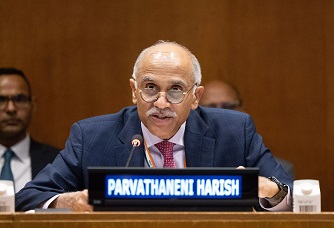
India has strongly called for the immediate restoration of safe and unimpeded freedom of navigation through the Strait of Hormuz, terming the targeting of commercial shipping during the ongoing West Asia conflict as “deplorable” and unacceptable under international law.
Speaking at a UN General Assembly debate on Thursday under the Veto Initiative, India’s Permanent Representative Ambassador Harish Parvathaneni linked the issue directly to the country’s energy and economic security.
Background of the Conflict
The crisis traces its roots to escalating tensions over Iran’s nuclear programme, regional proxy activities, and long-standing sanctions. On February 28, 2026, the United States and Israel launched coordinated airstrikes on Iranian targets, including the reported assassination of Supreme Leader Ali Khamenei. This marked the beginning of open warfare after years of shadow conflicts.
In retaliation, Iran effectively closed the Strait of Hormuz — the narrow waterway between the Persian Gulf and the Gulf of Oman that handles roughly 21% of global seaborne oil and significant LNG volumes. Iranian forces, backed by the Islamic Revolutionary Guard Corps (IRGC), began attacking and threatening commercial tankers and cargo ships, leading to a near-total collapse in maritime traffic.
Key Highlights
Also Read: Wipro Hydraulics Acquires Indeco to Boost Global Expansion
How the War Triggered Multiple Crises
The blockade triggered cascading global shocks:
Energy Shock Brent crude prices surged from around $69 per barrel in February to over $113–$119 in March. Prices have since moderated to near $97–$100 but remain elevated, fuelling inflationary pressures worldwide.
Shipping Paralysis Daily vessel transits fell from a normal ~100–140 to as low as 6–7 per day. Even after the fragile US-Iran ceasefire on April 8, traffic remains below 10% of normal levels, with only about 45 ships recorded in the strait since then. Insurance premiums have skyrocketed, forcing rerouting or suspension of voyages.
Fertiliser and Food Crisis The Gulf region supplies nearly half of global seaborne urea and ammonia. Disruptions have raised fears of fertiliser shortages and rising food prices in Asia, Africa, and Latin America.
Impact on India As the world’s third-largest oil importer, India sources a significant portion of its crude, LNG, and LPG via the strait. The crisis has:
Broader Global Effects The International Energy Agency described it as one of the largest supply disruptions in history. UN Secretary-General Antonio Guterres warned of severe consequences for the world’s poorest. A UK-led meeting of over 60 nations explored alternative “Plan B” options, while a Bahrain-proposed UN Security Council resolution was vetoed, prompting the ongoing General Assembly debate.
Situation Now: Fragile Ceasefire, Lingering Uncertainty
A ceasefire brokered around April 7–8 has held tenuously, with US President Donald Trump announcing a naval blockade focused on Iranian-linked vessels while claiming neutral shipping would resume. However, ship-tracking data shows the strait remains in a restricted or near-closed state. Iran has warned vessels to stay close to its territorial waters, and independent reports indicate continued low-level controls and incidents.
Oil prices stay stubbornly high compared to pre-war levels, with analysts warning of risks if the disruption extends further. India continues diplomatic efforts for de-escalation, restraint, and respect for international law while accelerating long-term energy diversification — boosting imports from the US, Russia, and Argentina to build resilience.
What Lies Ahead
The restoration of full freedom of navigation in the Strait of Hormuz is critical not just for India but for global commerce and stability. Prolonged uncertainty could deepen macroeconomic challenges, including higher inflation, slower growth, and supply chain strains.
As Ambassador Parvathaneni emphasised at the UN, the issue transcends regional politics — it is an imperative for safe civilian maritime activity and uninterrupted energy flows. Diplomatic engagements continue across multiple forums, with India actively engaging partners to push for a lasting resolution.
For now, the world remains on edge as tankers stay largely idle, markets monitor every development, and millions await relief from the energy shock triggered by the 2026 Iran war.







We use cookies to ensure you get the best experience on our website. Read more...