Brent crude oil prices skyrocketed as much as 13 percent to a 14-month high of USD 82.37 per barrel on Monday, March 2, 2026, marking the steepest jump in years as the US-Iran war intensifies following US and Israeli strikes that killed Iran's Supreme Leader Ali Khamenei over the weekend.
This sharp rise has sent shockwaves through global markets, with particular concern in India, the world's third-largest oil importer, where higher energy costs could hit everything from fuel pumps to inflation and the rupee.
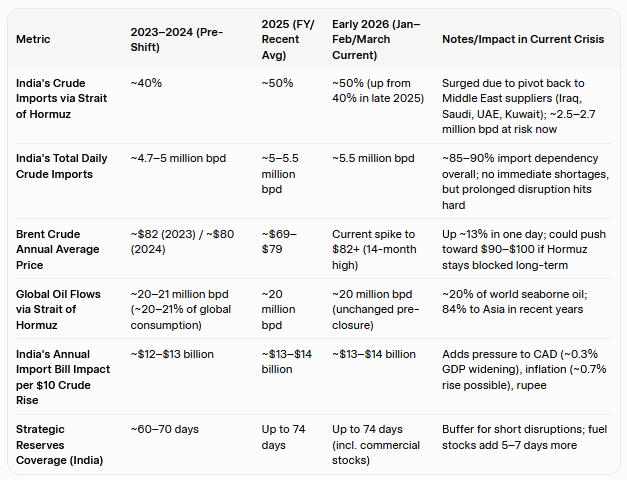
The escalation has already disrupted shipments, with attacks damaging tankers in the Gulf and Iran closing the Strait of Hormuz in retaliation. This narrow waterway between Iran and Oman is the world's most vital oil chokepoint, handling around 20 million barrels per day—roughly one-fifth of global oil supplies and a significant share of liquefied natural gas (LNG).
Also Read: Synthetic Engine Oils Optimizing Friction, Wear, and Fuel Economy
For India, the stakes are high: about half of the country's crude imports, or 2.5–2.7 million barrels per day, pass through the strait from key suppliers like Iraq, Saudi Arabia, the UAE, and Kuwait. In recent months, this dependence has grown as refiners shifted toward more Middle Eastern crude.
VK Vijayakumar, Chief Investment Strategist, Geojit Investments, on March 1, 2026, warned that "The spurt in oil prices is certainly bad news for India. Our trade deficit and balance of payments (BoP) will be impacted if oil prices remain high for long".
Indian markets felt the heat immediately, with Sensex and Nifty futures dropping over 1 percent in early trading amid broader risk-off sentiment. Sectors like aviation, chemicals, paints, tires, autos, and oil marketing companies face selling pressure from elevated energy costs, while upstream players like ONGC and Oil India saw gains of up to 5 percent on higher crude realizations. The rupee weakened further against the dollar, compounding import expenses.
Madhavi Arora, Chief Economist, Emkay Global, noted on March 1, 2026, that geopolitical tensions could "disrupt shipping and increase freight and insurance costs," though India possesses "buffers in the form of diversified imports and strategic reserves."
West Texas Intermediate crude climbed around 7 percent to USD 71.68 per barrel, after hitting USD 75.33 earlier, its highest since June 2025. While prices pulled back somewhat—with Brent settling around USD 77–USD 78 per barrel mid-session—the volatility underscores fears of prolonged supply issues. If the strait remains blocked, analysts warn oil prices could push toward USD 100 or even higher, adding billions to India's import bill. Every USD 1 rise in crude adds roughly USD 2 billion annually to the country's oil costs, pressuring the trade deficit, widening the current account gap, and fueling inflation.
.jpg "Industry Special")






We use cookies to ensure you get the best experience on our website. Read more...