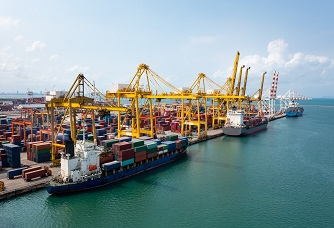
India’s export growth is moving from markets to manufacturing chains. The country no longer simply ships finished goods to distant buyers.
It increasingly supplies industrial inputs, intermediate products, electronics, metals and chemicals that feed factories overseas.
Commerce Ministry data for April–August 2026-27 show this shift clearly. Exports to the four core BRICS economies rose 34 percent to USD 19.9 billion, while shipments to South Korea, Japan and Italy also climbed sharply.
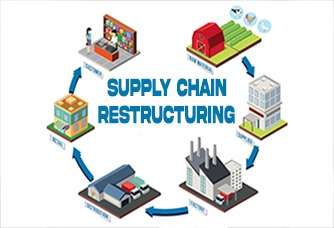
The pattern reveals a bigger change that Indian manufacturing is embedding itself inside global production ecosystems rather than remaining a peripheral supplier of end products.
India’s shipments to China, South Africa, Brazil and Russia climbed from USD 14.9 billion a year earlier to USD 19.9 billion. Their share of total Indian exports increased from 8.1 percent to 9.2 percent. China led the advance with a 39 percent jump to USD 9.6 billion. South Africa recorded the fastest growth at 58 percent, while Brazil and Russia posted gains of 13 percent and 11 percent respectively.
The same period also delivered strong results outside BRICS:
These figures show Indian manufacturers expanding their footprint across both emerging and advanced industrial markets.
Also Read: How Battery Economics Will Shape Electric Two-Wheeler Profit Margins
South Korea’s data illustrate the new role most clearly. Minerals and fuels, electronics, aluminum, iron and steel, and chemicals drove the 22 percent export rise. A Commerce Ministry official noted that India’s shipments increasingly supply industrial raw materials, energy products and intermediate goods that feed South Korea’s advanced manufacturing ecosystem.
As South Korea strengthens its position in automobiles, electronics, semiconductors and advanced manufacturing, Indian producers are becoming preferred sourcing partners. The same logic appears in Japan, where mineral fuels rose 76 percent by value and electronics and aluminum also expanded. Indian factories are no longer merely exporting to consumers; they are integrating into the supply chains that keep overseas production lines running.
The broader story centers on Indian manufacturing itself. Core BRICS markets now grow nearly three times faster than the wider BRICS grouping, yet the real significance lies in the composition of the goods. Electronics, metals, chemicals and energy products dominate the incremental volumes. These are precisely the intermediate inputs that global factories require.
India is therefore converting its manufacturing base into a supplier of critical industrial building blocks. The rise in exports to China, South Korea and Japan demonstrates that overseas production ecosystems are turning to Indian sources for reliability and scale.
This transition strengthens India’s position in global value chains far more than simple market diversification ever could. The latest numbers confirm the direction. Indian manufacturing is moving upstream into the arteries of international production, and export growth is following that path.

.jpg "AR Enterprises: Building The Supply Networks Behind India's Construction Growth")
.jpg "Industrial Packers: Engineering Industrial Packaging for India's Manufacturing Future")




We use cookies to ensure you get the best experience on our website. Read more...