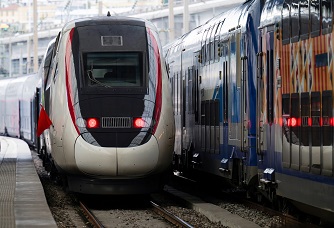
India has taken a major step toward cleaner transportation with its first Indigenous train project. The upcoming hydrogen-powered train marks a significant milestone for Indian Railways as the country enters the global hydrogen race.
Developed as a swadeshi hydrogen train, the project aims to reduce dependence on fossil fuels and promote green transportation. The train is expected to operate on the Jind Sonipat route in Haryana and will showcase India's growing capabilities in hydrogen fuel cell technology.
The Indian Railways hydrogen train is being developed under the government's push for sustainable and cleaner mobility solutions. Unlike diesel-powered trains, the new hydrogen fuel cell train will generate electricity through hydrogen fuel cells, producing only water vapor as a byproduct.
The indigenous hydrogen train has been designed and developed in India as part of the country's Atmanirbhar Bharat initiative. Railway officials have described it as one of the world's longest hydrogen train sets and among the most powerful hydrogen-powered trains operating on a broad-gauge network.
Some key highlights of the project include:
The project represents a major railway innovation effort and highlights India's focus on clean energy train solutions.
Also Read: Advancing Genomics Through Accessible Indigenous Biotech
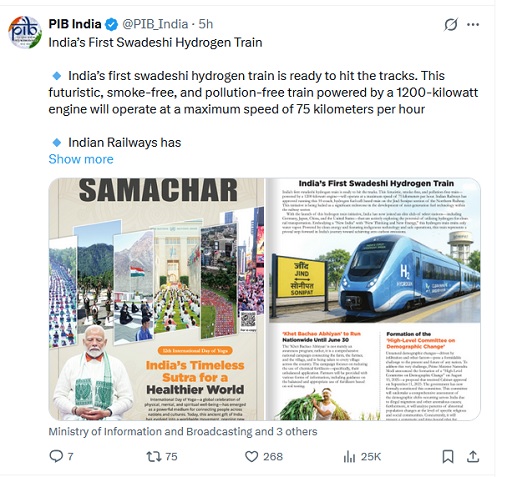
Hydrogen trains use hydrogen stored onboard to generate electricity through fuel cells. The electricity powers the train's motors, eliminating the need for diesel engines. As a result, the train functions as a zero emission train, helping reduce air pollution and carbon emissions.
This technology is gaining attention worldwide as countries explore cleaner alternatives to traditional rail transport. The use of hydrogen mobility solutions is seen as an important part of achieving long-term sustainability goals.
For passengers, hydrogen trains can offer a travel experience similar to electric trains while supporting eco-friendly rail travel and sustainable transportation initiatives.
With this project, India joins countries such as Germany, Japan, China, and the United States that are actively exploring hydrogen-powered rail systems. The launch of the pollution-free train reflects India's commitment to modernizing its railway network and investing in the future of rail transport.
However, experts point out that hydrogen trains are currently more expensive than conventional electric trains. Since a large part of India's railway network is already electrified, hydrogen-powered trains may be most useful on routes where electrification is difficult or economically challenging.
Even so, the Indian Railways project is expected to serve as an important technology demonstration. Its performance on the Jind Sonipat route will help determine the future role of alternative fuel train systems in the country.
The first indigenous hydrogen-powered train has successfully completed its final high-speed trial on the Jind–Sonipat section in Haryana, marking a significant milestone in the project's development. During the test, the train achieved a top speed of 120 km/h, demonstrating the performance of its hydrogen fuel-cell propulsion system under operational conditions.
The trial evaluated key parameters, including braking efficiency, stability, acceleration, and overall system performance. With this milestone completed, the project has entered its final stage and is awaiting regulatory approvals and operational clearances before commercial passenger services begin.
As India continues to expand its clean energy ambitions, the arrival of the swadeshi hydrogen train could become a key milestone in the country's journey toward greener and more sustainable transportation.







We use cookies to ensure you get the best experience on our website. Read more...