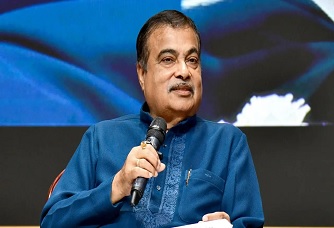
Union Minister Nitin Gadkari on Thursday outlined a massive vision for India’s infrastructure and clean mobility sector, stressing the need for stronger India-US business partnerships to accelerate growth.
Speaking at the Annual Leadership Summit of the American Chamber of Commerce in India, Gadkari said Indian companies should actively form joint ventures with US firms to access advanced technologies and strengthen India’s industrial ecosystem.
The focus on Green Transport in India was clearly visible in Gadkari’s speech as he highlighted the government’s aggressive push toward cleaner fuels, lower logistics costs, modern highways, and green hydrogen-powered vehicles.
He also emphasized that India’s rapidly expanding expressway network has already started transforming the country’s transportation and logistics sector. Nitin Gadkari underlined how Green Transport in India is becoming central to the nation’s long-term economic and environmental strategy.
According to Gadkari, the Ministry of Road Transport and Highways is exploring the possibility of taking assistance from US consultancy firms in preparing detailed project reports (DPRs) for major road infrastructure projects. He said the collaboration can help India adopt better planning methods, innovative construction technology, and modern engineering standards.
The minister stated that India remains the world’s fastest-growing major economy and has become an attractive destination for global investors. He noted that the United States continues to develop cutting-edge technologies in infrastructure, mobility, logistics, and clean energy, making partnerships between Indian and US companies highly beneficial.
Gadkari highlighted the major transformation taking place in India’s logistics sector due to the rapid construction of expressways and economic corridors. He said efficient supply chains are critical for economic growth and competitiveness.
Citing a report jointly prepared by IIT Chennai, IIT Kanpur, and IIM Bangalore around six months ago, Gadkari revealed that India’s logistics cost has significantly reduced because of improved highway infrastructure. Earlier, logistics costs in India stood at nearly 16 percent, but the development of expressways and industrial corridors has helped bring it down to nearly 10 percent.
Also Read: Challenges in India’s EV Ecosystem & How Startups Can Scale Ethically
The minister further claimed that logistics costs in India have now fallen to single digits, a major achievement for the country’s transport and manufacturing sectors. He compared India’s progress with other global economies, stating that logistics costs are around 12 percent in the United States and Europe, while China maintains costs between 8 and 10 percent.
Industry experts believe lower logistics costs can improve India’s export competitiveness, reduce transportation delays, and support faster industrial growth. Gadkari also indicated that better highways and smoother cargo movement are helping businesses save both time and fuel.
The Union minister also spoke extensively about the future of India’s automobile sector. He announced an ambitious target to make India’s automobile industry the world’s largest within the next five years.
Gadkari said that when he assumed charge as Transport Minister, the Indian automobile industry was valued at around Rs 14 trillion. According to him, the sector has now grown to approximately Rs 22 trillion, reflecting rapid expansion in manufacturing and vehicle demand.
Currently, the US automobile industry stands at nearly Rs 78 trillion, while China’s industry is valued at around Rs 47 trillion. India remains in third position globally, but Gadkari expressed confidence that the country can rise further with strong policy support, innovation, and investments.
He also highlighted the sector’s contribution to employment and government revenue. The automobile industry provides jobs to nearly 4 lakh youths and remains one of the highest contributors to GST collections for both the Centre and state governments.
A major part of Gadkari’s speech focused on clean energy and sustainable mobility. He warned that India’s heavy dependence on fossil fuel imports is both an economic and environmental challenge. The country currently spends nearly Rs 22 trillion annually on fuel imports, which places significant pressure on the economy.
To address this issue, the government is actively promoting alternative fuels and green transportation technologies. Gadkari announced that 10 highway stretches across India have been identified for the operation of green hydrogen-powered trucks aimed at reducing vehicular pollution and carbon emissions.
Some of the selected corridors include Greater Noida-Delhi-Agra, Bhubaneswar-Puri-Konark, Ahmedabad-Vadodara-Surat, Sahibabad-Faridabad-Delhi, Jamshedpur-Kalinganagar, Thiruvananthapuram-Kochi, and Jamnagar-Ahmedabad.
The initiative is expected to support India’s clean energy goals while also encouraging investments in hydrogen fuel technology and eco-friendly commercial transport solutions.



.jpg "Building EV Bus Ecosystems for India's Clean Mobility Goals")
We use cookies to ensure you get the best experience on our website. Read more...