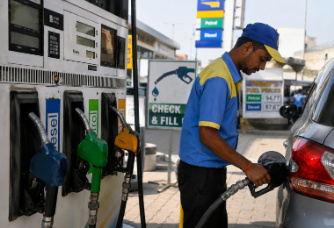
India is absorbing a global oil shock as its energy strategy comes under pressure, with state-run oil marketing companies (OMCs) facing mounting losses to sustain a fuel price freeze amid rising geopolitical tensions in West Asia. The decision to shield consumers has intensified fiscal strain, highlighting the growing challenge of balancing price stability with long-term economic resilience.
With Indian Oil Corporation (IOC), Bharat Petroleum (BPCL), and Hindustan Petroleum (HPCL) together incurring an estimated Rs 30,000 crore in under-recoveries since mid-March, the situation underscores a delicate balancing act between economic stability and fiscal strain.
Despite a surge of over 50 percent in input costs, retail prices of petrol and diesel have remained unchanged since late February. This price freeze comes even as Brent crude prices briefly spiked to nearly $144 per barrel at the peak of the crisis, following disruptions in the Strait of Hormuz—a critical artery for global oil trade. The decision to maintain price stability reflects a clear policy stance: prioritizing inflation control and ensuring uninterrupted fuel supply in a volatile global environment.
Also Read: Castrol India Focuses on Rural Growth and Pricing Amid Rising Costs
The government’s intervention has been central to mitigating the impact. A significant reduction in excise duties of Rs 10 per liter on both petrol and diesel helped contain the losses, which otherwise could have ballooned to approximately Rs 62,500 crore. Additionally, the Center absorbed a portion of the cost burden, estimated at peak levels of Rs 24 per liter for petrol and Rs 30 per liter for diesel.
However, even with these measures, OMCs faced daily under-recoveries of Rs 600–700 crore in April, driven by per-liter losses of Rs 18 on petrol and Rs 25 on diesel. Beyond pricing pressures, companies also grappled with elevated logistics costs, including higher freight rates due to rerouted shipments, increased marine insurance premiums, and expenses linked to emergency crude sourcing and refinery adjustments.
This combination of factors has significantly strained balance sheets and compressed refining margins, raising concerns about liquidity and future capital allocation.
Also Read: India's Oil Safety Buffer Shrinks as West Asia Conflict Disrupt Supply
One of the most notable aspects of India’s response has been supply continuity. Panic buying following the Strait of Hormuz disruption led to a sharp spike in demand, stretching supply chains to their limits. Yet, the absence of fuel shortages or rationing highlights the robustness of India’s distribution infrastructure and crisis management capabilities.
This stands in stark contrast to several global economies, where fuel prices surged sharply by as much as 34 percent in Spain and around 30 percent in countries like Japan and Italy, accompanied by rationing measures and consumption advisories. India, in comparison, maintained stable retail prices at Rs 94.77 per liter for petrol and Rs 87.67 for diesel, reinforcing consumer confidence and economic continuity.
Even as crude prices showed intermittent moderation outside peak conflict periods, India’s oil trade deficit has continued to widen marking a structural shift from historical trends. Traditionally, softer crude prices translated into a narrower trade deficit. However, recent data suggests a decoupling of this relationship.
A key driver is the growing imbalance between imports and exports. India’s crude import volumes have risen significantly, outpacing the growth in petroleum product exports. This divergence reflects increasing dependence on imported energy amid steady domestic consumption growth.
Compounding this is a structural demand dynamic unique to India. While global oil demand is expected to plateau by the end of the decade due to energy transition efforts, India’s demand is projected to grow steadily, adding nearly 1 million barrels per day between 2024 and 2030. Rapid urbanization, industrial expansion, and rising mobility needs are fueling this growth, limiting the impact of softer global prices on the country’s import bill.
Also Read: India Boosts Oil & Gas Output Amid West Asia Crisis: RBI
The widening oil trade deficit poses broader risks to India’s external balances, particularly the current account deficit (CAD). In a geopolitical environment marked by recurring supply shocks, reliance on imported crude exposes the economy to volatility in both prices and availability.
Looking ahead, sustained high crude prices could force OMCs to increase working capital borrowings and potentially recalibrate capital expenditure plans. While strategic investments in refining capacity, energy security infrastructure, and alternative fuels are expected to continue with government support, financial pressures may influence the pace and prioritization of expansion.
The situation also reinforces the urgency of accelerating energy diversification. Expanding renewable energy capacity, scaling ethanol blending, improving energy efficiency, and enhancing refining competitiveness will be critical in reducing long-term import dependence.
India’s decision to shield consumers from a global oil shock has come at a significant financial cost, but it reflects a broader economic strategy centered on stability and resilience. As geopolitical uncertainties persist and domestic demand continues to rise, the challenge will lie in balancing short-term protection with long-term sustainability in the country’s energy ecosystem.

.jpg "AR Enterprises: Building The Supply Networks Behind India's Construction Growth")
.jpg "Industrial Packers: Engineering Industrial Packaging for India's Manufacturing Future")




We use cookies to ensure you get the best experience on our website. Read more...