India’s power and renewable energy ministries are preparing for key discussions on green power curbs and grid penalties, as renewable energy companies raise concerns over the growing financial burden caused by stricter power regulations.
The talks come at a crucial time for India’s clean energy sector, with developers warning that frequent renewable power curtailments and heavy penalties could affect future investments and slow down the country’s energy transition.
The meeting will mainly focus on the deviation settlement mechanism (DSM), a system that penalizes power producers when actual electricity generation differs from scheduled forecasts.
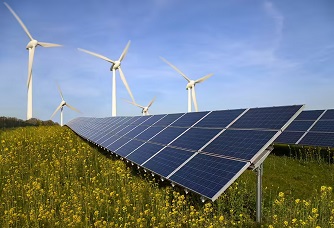
Renewable energy firms say such rules are difficult to manage because solar power and wind power generation depends heavily on weather conditions, which can change unexpectedly. Industry players believe the current penalty structure needs to be more flexible for renewable energy producers.
Also Read: Micro Battery Market Size to Reach USD 5,396.98 Million by 2034
Another major concern is the increasing curtailment of renewable energy. In many cases, grid operators reduce or stop the flow of solar and wind power even when clean electricity is available. Developers say these curbs result in major revenue losses, affect project efficiency, and reduce investor confidence in India’s fast-growing renewable energy market.
The issue has gained importance as India continues to push aggressively toward its renewable energy targets. The country plans to significantly expand solar, wind, and battery storage capacity over the next decade. However, experts say the existing power transmission network is struggling to handle the rapid increase in green energy generation, especially during peak production hours.
Several renewable energy companies have reportedly faced operational challenges because the current grid infrastructure cannot absorb all the electricity being produced. This has led to wastage of solar and wind energy in certain regions, creating financial stress for developers and raising concerns about long-term sustainability in the sector.
Government officials have acknowledged the challenges and emphasized the need for stronger grid planning and infrastructure upgrades. Renewable Energy Secretary Santosh Sarangi recently highlighted the importance of building a large-scale transmission system similar to China’s “super grid” model to support India’s future renewable energy growth.
Along with grid expansion, policymakers are also exploring solutions such as battery energy storage systems, better forecasting technology, and flexible power management tools to improve grid stability. These measures are expected to help integrate renewable energy more efficiently while reducing dependence on conventional power sources.
Industry stakeholders are now hoping that the upcoming discussions between the ministries will result in practical reforms. Renewable energy companies are seeking a balanced regulatory approach that maintains grid discipline while also recognizing the unique challenges faced by solar and wind power producers.
The outcome of the talks could play a significant role in shaping India’s renewable energy sector and determining how smoothly the country moves toward its long-term clean energy transition.

.jpg "AR Enterprises: Building The Supply Networks Behind India's Construction Growth")
.jpg "Industrial Packers: Engineering Industrial Packaging for India's Manufacturing Future")




We use cookies to ensure you get the best experience on our website. Read more...