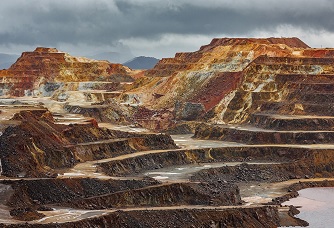
India’s Manufacturing ambitions in EVs, electronics, and clean energy are increasingly being shaped by the race for Critical Minerals.
From lithium and cobalt to rare earth elements, these minerals have become essential inputs for battery production, renewable energy equipment, semiconductors, and defense manufacturing.
But despite an aggressive policy push from the government, companies across the value chain are facing rising concerns over financing gaps, import dependence, and limited domestic processing capacity.
The challenge around Critical Minerals is now emerging as a key test for India’s Manufacturing expansion plans. Industry experts say that while the government has moved quickly with incentives, auctions, and overseas partnerships, the ecosystem needed to support large-scale mining, refining, recycling, and processing is still evolving. Without stronger financing channels and long-term investments, India risks remaining dependent on overseas supply chains even as domestic demand accelerates.
Also Read: Reducing Mining's Carbon Footprint with Renewable Energy Solutions
The concern is becoming more urgent as India pushes to scale local manufacturing under initiatives linked to electric mobility, renewable energy, electronics, and semiconductor production. Demand for minerals such as lithium, nickel, graphite, cobalt, and rare earths is expected to rise sharply over the next decade as companies expand production capacities across these sectors.
Manufacturers say supply disruptions and price volatility in global mineral markets are already creating uncertainty for long-term planning. Much of the global supply chain remains concentrated in a handful of countries, particularly China, which dominates refining and processing capacities for several strategic minerals. Industry observers warn that this concentration leaves countries like India vulnerable to geopolitical risks and export restrictions.
India has responded by accelerating efforts to secure overseas mineral assets and strengthen domestic production capabilities. The government has launched the National Critical Mineral Mission with an outlay of Rs 34,300 crore aimed at building a domestic value chain across exploration, mining, processing, and recycling. The mission also includes policy reforms and incentives to support local manufacturing linked to strategic minerals.
In recent months, India has also expanded international partnerships to reduce supply dependence. The country is in advanced discussions with Russia for cooperation in lithium and rare earth exploration and processing. Similar agreements have already been pursued with countries including Argentina, Australia, and Japan as India seeks to diversify sourcing channels.
However, industry executives and analysts say policy support alone may not be enough to build a globally competitive ecosystem. Mining and mineral processing projects require large upfront investments, long gestation periods, and significant infrastructure support. Private investors and financial institutions remain cautious because of uncertainties linked to commodity cycles, technology changes, and geopolitical risks.
Industry bodies have also called for lower-cost financing, extended moratorium periods, and viability gap funding to support companies entering the sector. According to recommendations submitted ahead of the Union Budget, dedicated financing mechanisms could play a major role in supporting domestic mineral recovery technologies, recycling projects, and MSMEs participating in the supply chain.
The issue is no longer limited to mining alone. Experts say the larger opportunity for India lies in building downstream processing and refining capabilities, where most of the value addition takes place. Several industry reports have pointed out that securing raw materials without developing refining capacity may still leave India dependent on foreign processing ecosystems.
The manufacturing sector is also beginning to recognize the broader risks emerging from weak supply chain ecosystems. A recent report on industrial fasteners highlighted how even low-cost components can disrupt factory operations when domestic capacity gaps persist. Analysts say Critical Minerals could become a much larger version of the same challenge if investments fail to keep pace with manufacturing demand.
At the same time, companies are starting to reposition themselves around future mineral demand. Firms such as Hindustan Zinc have announced plans to expand beyond traditional metals and build portfolios linked to Critical Minerals as global demand rises.
Global competition for mineral access is also intensifying. Countries across Asia, Europe, and North America are launching financing facilities, strategic reserves, and industrial partnerships to secure supplies for clean energy and advanced manufacturing sector. Earlier this month, the Asian Development Bank announced a dedicated financing facility aimed at strengthening Critical Minerals supply chains across the Asia-Pacific region.
For India, the stakes are closely tied to the future of domestic industrial growth. The government’s broader manufacturing roadmap increasingly depends on resilient supply chains that can support sectors ranging from EVs and batteries to electronics and renewable energy systems. While policy momentum has accelerated, industry experts say execution, financing, and ecosystem development will ultimately determine whether India can emerge as a serious player in the global Critical Minerals race.





We use cookies to ensure you get the best experience on our website. Read more...