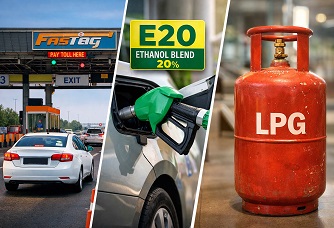
India is stepping into Fiscal Year 2027 with a set of changes that will directly affect daily life. From how you pay tolls to what fuel you use and how much you spend on cars and LPG, April 1 brings a clear shift.
The focus is on digital systems, cleaner energy, and cost adjustments. But these changes also come with trade-offs, especially for users who are not fully prepared.
Toll payments go fully digital
From Fiscal Year 2027, all highway toll plazas will stop accepting cash. Payments will be made only through FASTag or UPI.
Key points:
- Cash lanes are removed across national highways
- FASTag becomes the default payment system
- UPI is introduced as an alternative digital option
- Aim is to reduce waiting time and traffic congestion
- Government expects smoother vehicle movement at toll gates
FASTag annual pass update:
- Price increased to Rs 3,075 from Rs 3,000
- Valid for 1 year or 200 trips, whichever comes first
- Designed for frequent highway users
Impact:
- Regular travelers benefit from faster movement
- Users without FASTag or digital payment setup may face delays
- Initial confusion expected in rural or low-digital areas
Also Read: Manufacturing Sector FY-End Checklist 2026: Closing Strong for Growth
E20 fuel rollout and rising vehicle costs
Fuel and vehicle costs are both shifting in Fiscal Year 2027. Petrol will now be blended with 20 percent ethanol, and car prices are also moving up.
Key points on E20 fuel:
- Petrol now contains 20 percent ethanol blend (E20)
- Rollout is nationwide across fuel stations
- Part of plan to reduce oil imports and emissions
- Ethanol demand supports agriculture sector
Impact on vehicles:
- New cars are mostly compatible with E20
- Older vehicles may see 3–7 percent drop in mileage
- Possible long-term wear if engines are not designed for E20
Car price increase:
- Price hikes across brands from April 1
- Increase ranges between 0.5 percent to 2 percent
- Driven by higher input costs and currency changes
Overall effect:
- Buying a car becomes more expensive
- Running costs may rise due to fuel efficiency changes
- Owners of older vehicles need to check compatibility
LPG prices remain market-linked
Unlike tolls and fuel, LPG pricing structure stays the same in Fiscal Year 2027, but the impact continues.
Key points:
- LPG prices will be revised every month
- No fixed rate or cap introduced
- Prices depend on global crude oil trends
- Currency exchange rates also affect pricing
What this means for households:
- Monthly expenses may rise or fall
- Budget planning becomes less predictable
- Urban and rural users both affected
Trend to watch:
- Any global oil price spike can push LPG costs higher
- Currency weakness can increase import costs
Conclusion
Fiscal Year 2027 starts with a clear push toward digital payments and cleaner fuel, along with cost adjustments across sectors. Cashless tolls aim to save time, E20 fuel supports long-term sustainability, and LPG continues to follow global price trends. At the same time, users will need to adapt—whether it’s setting up FASTag, checking vehicle compatibility, or managing fluctuating household expenses.