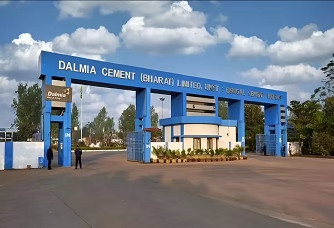
Dalmia Cement (Bharat) Ltd is scripting its most ambitious chapter with two deals in the same week, which aggressively scale up its production capacity while anchoring its long-term identity around the carbon-negative goal.
Dalmia’s carbon-negative goal, which is set for 2040, saw a sharper operational backing after a landmark week. On May 22, Dalmia Cement (Bharat) Ltd signed a deal to acquire cement assets of Jaiprakash Associates Ltd (JAL) from Adani Power -led insolvency resolution process for Rs 2,850 Crore.
On May 19, Oyster Renewable Energy Pvt Ltd and Dalmia Cement (Bharat) Ltd announced the development of a 31.6 MW solar-wind hybrid renewable energy project in the Kadapa district of Andhra Pradesh, which strengthens its effort for a carbon-negative goal.
Also Read: Decarbonizing Lignite-Based Power Generation in India
Dalmia Cement signed a Business Transfer Agreement with Jaiprakash Associates Ltd (JAL) and Adani Infra (India) Ltd to acquire cement manufacturing assets across Madhya Pradesh and Uttar Pradesh for Rs 2,850 Crore. The plants at Rewa, Churk, Chunar, and Sadwa bring 5.2 million tonnes per annum (MnTPA) of cement capacity and 3.3 MnTPA of clinker capacity under Dalmia’s ownership. The acquisition also involves 99 MW of thermal power capacity as well. With the acquisition, Dalmia Bharat’s total cement capacity will rise to 54.7 MnTPA.
The deal has a long back story. In December 2022, Dalmia had negotiated a framework agreement with JAL, but insolvency proceedings against the debt-laden conglomerate froze the transaction. The resolution came after the Adani Group successfully steered JAL through the Insolvency and Bankruptcy Code (IBC) process. With Adani Infra brought in as a party in the deal, the Business Transfer Agreement was formalized and is now expected to close in two weeks.
This move gives Dalmia a scope for immediate penetration in central India, a geography having high demand for housing and infrastructure projects, and Dalmia now has access to this market without the cost burden of building from scratch. When the transaction is complete, Dalmia Bharat’s total installed capacity will rise to 54.7 MnTPA, and ongoing projects at Belgaum, Pune, and Kadapa are expected to push that number to 66.7 MnTPA by the second or third quarter of FY28.
On May 19, Dalmia announced a 31.6 MW solar-wind hybrid renewable energy project in the Kadapa district of Andhra Pradesh, in a partnership with Oyster Renewable Energy Pvt Ltd. The project combines 21.6 MW of wind capacity with 10 MW of solar in a co-located hybrid configuration, designed to deliver a more reliable, clean power supply than either source could provide independently.
Commenting on the project, Dharmender Tuteja, CFO, Dalmia Bharat Ltd, said, “The 31.6 MW hybrid power project will reduce nearly 70,000 MT of CO₂ emissions annually, directly strengthening our plant-level carbon efficiency and sustainability metrics. This partnership with Oyster Renewable will further accelerate our decarbonisation roadmap.”
Oyster Renewable is investing around Rs 270 Crore in a project to support industrial decarbonisation. Siddharth Bhatia, Managing Director & CEO, Oyster Renewable Energy, said, “Heavy industries like cement are among the hardest to decarbonize, and hence, critical to address. This project is expected to reduce carbon emissions by about 70,000 metric tonnes annually and marks a step towards our goal of building 3.5 GW of hybrid renewable capacity by 2030, backed by a planned investment of ₹30,000 crore.”
For an industry long defined by its carbon burden, Dalmia’s moves this week signal that the Indian cement sector will now have competitors fighting for sustainability credentials.





We use cookies to ensure you get the best experience on our website. Read more...