 India’s power record hit a significant milestone on Thursday as the country met a new all-time peak demand of 270.82 gigawatts for the fourth consecutive day. Meanwhile, the temperature in New Delhi also reached a scorching high of 45.3 degrees Celsius.
The Ministry of Power celebrated this achievement, noting it as a historic feat of electricity generation. But within hours, citizens started flooding the social media platform X with complaints reporting blackouts, turning heads towards the reality of the situation.
The ministry noted that India’s power record was driven by the increasing usage of cooling appliances such as air conditioners and fans, which run continuously through one of India’s most punishing heat waves in recent times.
Thermal power, mostly coal, made up 62 percent of the generation load, with solar making up 22 percent and wind and hydropower contributing five percent each. For India, which has pledged net-zero emissions by 2070, the numbers remind us how dependent we are on fossil fuels.
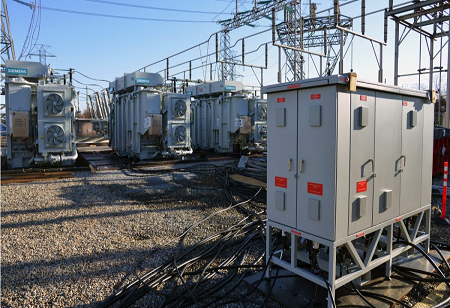
The intense heat also causes the old infrastructure to fail without warning. Aging wiring and transformers get overloaded under extreme conditions, which trigger localized blackouts that contradict the ministry’s triumphant numbers. The gap between what the grid can theoretically supply and what reaches homes, hospitals, and schools in smaller towns is wide, and during extreme temperatures, the gap can be deadly.
Also Read: Decarbonizing Lignite-Based Power Generation in India
The heatwave has exposed a defect, which the record-breaking statistics tend to obscure – access to electricity and cooling in India is distributed unequally. Urban and middle-class households have used up much of their power demand through air conditioners, while hundreds of millions of Indians in rural areas and urban slums are left out with unreliable power supply, outdated infrastructure, and cooling devices that they cannot afford.
The Banda city in Uttar Pradesh recorded 47.6 degrees Celsius on Thursday, which is one of the highest temperature records in India. Yet, it is precisely places like Banda where the grid reliability is the weakest and household incomes the thinnest. This reflects the reality that the communities that are often hit hardest by the heat are the ones least equipped to survive it. This creates a cycle of vulnerability that generation milestones alone cannot address.
India’s officially recorded temperature remains 51 degrees Celsius, which was recorded at Phalodi in Rajasthan in 2016. Scientists warn that such extreme temperatures will grow more frequent and more intense as climate change continues to accelerate.
In April, a report by the International Air Quality monitoring platform AQI found that its daily heat index, which comprises six measurements including temperature, solar intensity, wind, precipitation, and humidity, recorded that all of the world's top 50 hottest cities were in India. This demands more urgency than any power generation milestone.
India is the third-largest emitter of greenhouse gases. Every record demand met shows us a new reality: the country must burn more coal to protect its people from a crisis that, in fact, coal is helping to create. Breaking power generation records shows engineering progress, but the real milestone is ensuring a reliable and accessible power supply to every citizen.
.jpg "Saksham Enterprises: Optimizing Mission- Critical HVAC Infrastructure For The High Precision Sector")

.jpg "JDS Group of Companies: Innovating Smart Solutions For Modern Power Transmission & Distribution Infrastructure")




We use cookies to ensure you get the best experience on our website. Read more...