World's First Nuclear Hydrogen Facility has put India in the global spotlight after the country unveiled a first-of-its-kind hydrogen production plant that uses nuclear reactor heat instead of electricity.
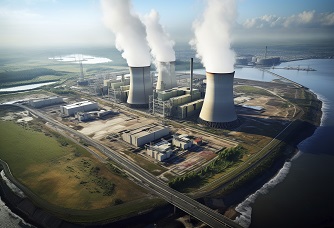
The World's First Nuclear Hydrogen Facility was inaugurated at the Indira Gandhi Centre for Atomic Research (IGCAR) in Kalpakkam, Tamil Nadu, marking a major step in India's clean energy journey.
Developed by the Bhabha Atomic Research Centre (BARC) and IGCAR under the Department of Atomic Energy (DAE), the facility is expected to help India explore a more efficient way to produce low-carbon hydrogen while reducing dependence on fossil fuels.
Unlike conventional hydrogen production methods, this plant does not rely mainly on electricity. Instead, it uses the Copper-Chlorine (Cu-Cl) thermochemical cycle, which makes use of the high-temperature heat generated by a nuclear reactor to split water into hydrogen and oxygen.
This process requires less electricity than traditional electrolysis, making it an energy-efficient option for producing clean hydrogen.
The facility was inaugurated on June 26 and is being described by the Department of Atomic Energy as the world's first demonstration plant that uses nuclear process heat with the Cu-Cl thermochemical cycle for hydrogen production.
Also Read: How Material Characterization Accelerates Innovation in Industry
Hydrogen is considered one of the clean fuels of the future. However, producing it often requires large amounts of electricity or fossil fuels.
Today, most hydrogen is produced as gray hydrogen, which is made from natural gas and releases carbon dioxide into the atmosphere. Another method, known as green hydrogen, uses renewable electricity from solar or wind power to split water into hydrogen and oxygen.
India's new nuclear hydrogen facility introduces another option by using the heat already available from a nuclear reactor. Since nuclear reactors operate around the clock and generate electricity without direct carbon emissions during operation, the technology can support continuous hydrogen production.
If the technology is successfully scaled, it could help reduce production costs while ensuring a stable supply of clean hydrogen for industries that need it the most.
“Nuclear power, with its unique ability to provide reliable carbon-free electricity as well as high-temperature process heat, is ideally suited to support large-scale hydrogen production,” said Ajit Kumar Mohanty, Secretary, Department of Atomic Energy (DAE).
The newly inaugurated plant is a technology demonstration facility, not a commercial hydrogen production plant. Scientists will use it to study the long-term performance, efficiency, and reliability of the Cu-Cl thermochemical process before considering larger-scale deployment.
The technology could eventually support India's growing demand for clean energy and help sectors that are difficult to decarbonize, including:
The project also aligns with India's broader push toward hydrogen technology, clean fuel, and reduced carbon emissions.
“This achievement builds upon more than four decades of operational experience and technological excellence gained through the Fast Breeder Test Reactor programme,” said Sreekumar G. Pillai, Director, IGCAR, in a press release.
As countries search for reliable alternatives to fossil fuels, India's World's First Nuclear Hydrogen Facility has positioned the country at the forefront of advanced hydrogen research. While commercial use is still some time away, the successful demonstration of this technology could play an important role in shaping the future of sustainable energy.







We use cookies to ensure you get the best experience on our website. Read more...