India's imported solar components remain one of the biggest gaps in the country's clean energy journey.
To reduce this dependence, the government is now shifting its focus from just making solar panels to manufacturing the critical parts that power the renewable energy and green hydrogen sectors.
The move aims to strengthen domestic production, secure supply chains, and reduce the country's import bill. As India expands its renewable capacity, imported solar components have become a major area of concern, prompting the government to identify products that can be manufactured locally.
The Ministry of New and Renewable Energy (MNRE) has identified several key products across the solar, green hydrogen, and wind energy sectors for domestic manufacturing. Instead of limiting support to solar module assembly, the government wants India to produce the advanced components that are currently sourced from overseas.
The selected products were shortlisted based on several factors, including:
The government is currently identifying priority products, while policy support and incentives are expected to be announced later.
Also Read: Zero-Emission Mobility: India's Path to Cleaner Urban Transport
The government's list includes several high-value products that are essential for India's clean energy ambitions.
These include:
Many of these components are widely used in solar cells, electrolyzers, and green hydrogen production. At present, India imports a significant share of these products, making the renewable energy supply chain vulnerable to global disruptions.
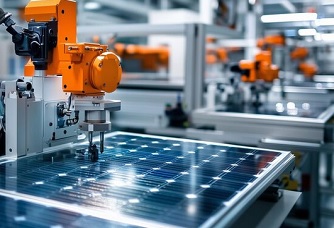
India has rapidly expanded its manufacturing capacity for solar modules in recent years. The country now has nearly 225 GW of solar module manufacturing capacity. However, solar cell manufacturing capacity stands at only around 30 GW, while commercial-scale production of polysilicon, a key raw material used in solar modules, is still absent.
This means India can assemble many finished products but still depends on imports for several of the most valuable and technologically advanced materials.
By encouraging local production of these critical components, the government aims to:
The latest initiative also complements existing government efforts to strengthen solar manufacturing under the broader Make in India vision. By expanding domestic capabilities beyond modules and cells, India hopes to build a more complete renewable energy value chain.
If the proposed policies are backed by industry support and timely incentives, the country's dependence on imported clean energy components could gradually decline. The strategy is expected to play an important role as India works toward its long-term renewable energy and energy security targets.







We use cookies to ensure you get the best experience on our website. Read more...