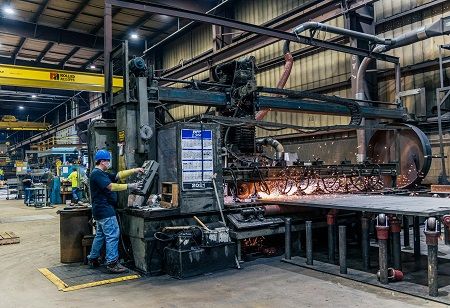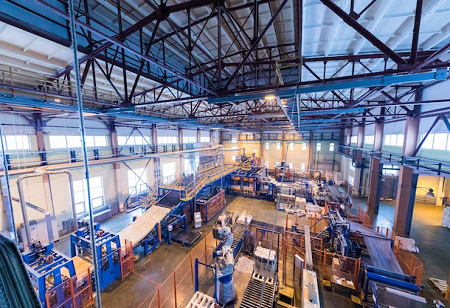
Top stories across industries this week reflect India's continued push to strengthen its manufacturing base, accelerate clean energy adoption, and build globally competitive industries.
The past week witnessed major announcements across defense manufacturing, aerospace, electric mobility, renewable energy, infrastructure, and artificial intelligence, highlighting the country's focus on industrial expansion and technological advancement.
Several landmark investments and policy-driven initiatives reinforced India's long-term growth strategy. Companies expanded their presence in missile production, green hydrogen, EV charging infrastructure, and solar energy.
Whereas state governments unveiled ambitious plans to attract investments in logistics, digital infrastructure, and AI. At the same time, developments surrounding E20 fuel pricing and vehicle compatibility brought attention to the challenges accompanying India's energy transition.
India's defense manufacturing ecosystem gained 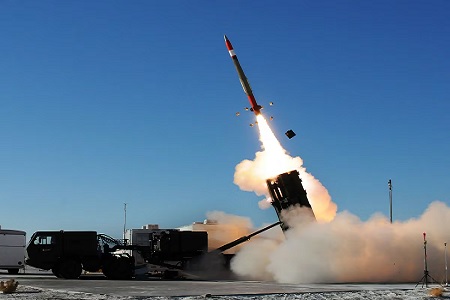 further momentum this week with major investments in missile production, industrial infrastructure, and aerospace services. The developments reinforce the government's long-term objective of reducing import dependency while positioning India as a global defense manufacturing hub.
The biggest announcement came from the Adani Group, which inaugurated a new missile manufacturing facility in Uttar Pradesh. The plant is expected to manufacture advanced missile systems and precision-guided munitions, strengthening India's indigenous defense production capabilities under the 'Make in India' initiative.
Adani Airport Holdings Limited (AAHL) Director Jeet Adani said, "In the defence and aerospace sector, we are promoting indigenisation, working closely with the DRDO and the Armed Forces to systematically reverse India’s dependency on imports. Gwalior gave MP its first exposure to serious defence manufacturing. Today, that complex manufactures our entire portfolio of Light Machine Guns, Assault Rifles and Carbines.”
Supporting this manufacturing push, industrial authorities allotted approximately 1,142 hectares of land to defense companies for new production facilities. The land allocation is expected to attract investments across ammunition, armored vehicles, aerospace components, drones, and electronics manufacturing.
Meanwhile, Andhra Pradesh continued strengthening its position in India's aviation ecosystem. Undavalli emerged as a strategic location for satellite aviation infrastructure, while Bharat Stars Services partnered with Netradyne to deploy AI-powered monitoring systems for aviation fuel transportation, improving operational safety and compliance.
These announcements reflect India's increasing focus on integrating defense manufacturing with advanced digital technologies, AI, and aerospace logistics.
Also Read: From Compliance to Value: Rethinking ESG in FMCG Operations
|
Development |
Key Details |
Expected Impact |
|
Adani Missile Facility |
New missile manufacturing plant |
Boost indigenous missile production |
|
Industrial Land Allocation |
1,142 hectares allotted |
Capacity expansion for defence manufacturers |
|
Satellite Aviation Hub |
Undavalli aviation infrastructure |
Supports satellite communication ecosystem |
|
AI in Aviation Fueling |
Bharat Stars–Netradyne partnership |
Improved safety and operational efficiency |
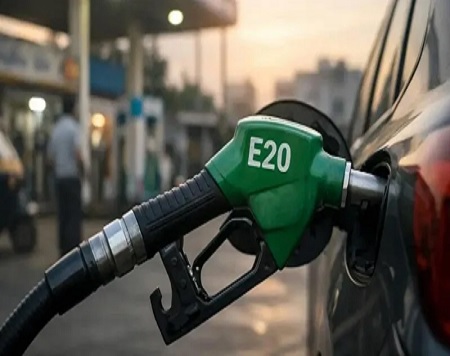 India's clean mobility transition witnessed significant progress this week across EV charging infrastructure and green hydrogen, although concerns surrounding E20 fuel compatibility resurfaced.
BPCL announced a major expansion of its EV charging network, strengthening the country's public charging infrastructure. The expansion supports the government's objective of accelerating EV adoption across passenger vehicles, commercial fleets, and two-wheelers.
On the renewable energy front, Bharat Heavy Electricals Limited (BHEL) announced fresh investments in green hydrogen technologies. The company aims to leverage its engineering expertise to become a major supplier of electrolyzers and hydrogen infrastructure as India targets large-scale hydrogen production by 2030.
However, the rollout of E20 petrol encountered fresh scrutiny. The government acknowledged that E20 fuel remains more expensive than regular petrol due to ethanol procurement costs. Simultaneously, reports highlighting possible vehicle damage associated with incompatible engines renewed discussions around consumer awareness and vehicle readiness.
Industry experts continue to emphasize that successful ethanol adoption will require faster vehicle upgrades alongside fuel availability.
|
Initiative |
Update |
Significance |
|
BPCL EV Charging |
Network expansion |
Faster EV adoption |
|
BHEL Green Hydrogen |
Investment in hydrogen technologies |
Supports National Green Hydrogen Mission |
|
E20 Pricing |
Government confirms higher cost |
Consumer affordability concern |
|
Vehicle Compatibility |
Reports of engine issues |
Need for wider E20-ready fleet |
India's manufacturing and infrastructure sectors continued 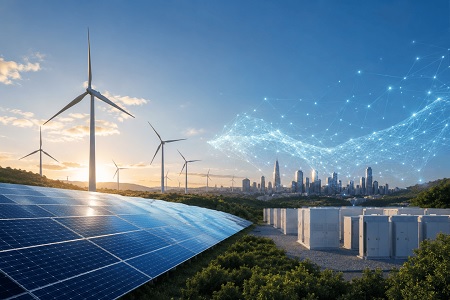 attracting major investments, with companies securing large renewable energy contracts while states announced ambitious infrastructure and AI investment plans.
CleanMax recorded its strongest quarterly performance to date, expanding its renewable energy portfolio to 4.2 GW, reflecting sustained demand for commercial and industrial clean energy solutions.
Premier Energies secured solar orders worth Rs 3,011 crore during Q1 FY27, reinforcing robust demand for domestic solar module manufacturing amid India's renewable capacity expansion.
“The new order reflects in company’s investments in new technologies, manufacturing scale and product quality, adding that it remains focused on supplying high-efficiency solar solutions while supporting India’s clean energy and self-reliance goals”, said by Chiranjeev Saluja, Managing Director, Premier Energies
Tata Projects outlined an ambitious roadmap to achieve Rs 1 lakh crore in annual revenue by 2030, supported by growing opportunities across infrastructure, transportation, urban development, and energy projects.
State governments also announced major investment initiatives. Odisha approved a Rs 2,100 crore cargo jetty project, expected to strengthen port logistics and maritime trade. Jharkhand unveiled an AI policy targeting Rs 10,000 crore in investments, positioning the state as an emerging destination for artificial intelligence, data centers, and digital infrastructure.
Collectively, these announcements demonstrate continued confidence in India's infrastructure-led economic growth strategy.
Also Read: Ethanol Epidemic in India: Factory Pollution, Vehicle Problems & More
|
Company / State |
Announcement |
Value |
|
CleanMax |
Renewable portfolio expansion |
4.2 GW |
|
Premier Energies |
Solar orders |
Rs 3,011 crore |
|
Tata Projects |
Revenue target by 2030 |
Rs 1 lakh crore |
|
Odisha |
Cargo jetty project |
Rs 2,100 crore |
|
Jharkhand |
AI investment target |
Rs 10,000 crore |
This format is suitable for an executive magazine or weekly industry report. It combines related stories into thematic sections, adds context and data, and presents concise tables for easy reading rather than simply summarizing each news item.




We use cookies to ensure you get the best experience on our website. Read more...