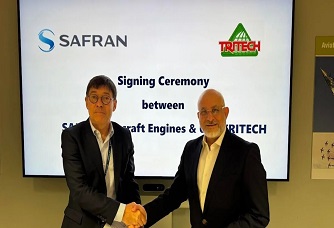
French aerospace company Safran has signed a memorandum of understanding (MoU) with India-based Uni Tritech to manufacture components for LEAP aircraft engines in India. The partnership is expected to strengthen India’s growing role in global aerospace manufacturing.
Under the agreement, Uni Tritech will produce precision-engineered parts for LEAP engines, which are widely used in modern commercial aircraft. The move supports India’s ambition to become a key aerospace manufacturing hub under the government’s Make in India initiative.
The LEAP engine is developed by CFM International, a joint venture between Safran Aircraft Engines and GE Aerospace. It powers popular aircraft models such as the Airbus A320neo and Boeing 737 MAX, both of which are used by airlines across the world.
This collaboration is expected to boost India’s aerospace manufacturing capabilities by increasing local production of high-precision aircraft components. It may also create opportunities for skilled jobs and help Indian companies become part of global aviation supply chains.
Safran has been present in India for more than 60 years and has expanded its operations across aerospace, defence, and aircraft propulsion systems. The company has steadily increased its focus on local manufacturing and engineering partnerships in the country.
Also Read: Andhra Pradesh Plans Rs 50,000 Cr Rare Earth Investment Drive
India’s aerospace sector has been attracting strong interest from international companies looking to diversify manufacturing locations and reduce supply chain risks. Many global aviation firms are increasingly partnering with Indian manufacturers to support rising demand for aircraft and components.
The Safran–Uni Tritech agreement reflects this broader industry trend, where global aerospace companies are building long-term partnerships with Indian firms to strengthen production capacity.
As air travel demand continues to grow worldwide, such collaborations could help India increase its presence in advanced aerospace manufacturing while improving domestic industrial expertise. The partnership may also support the country’s goal of becoming an important supplier of aircraft components for global markets.






We use cookies to ensure you get the best experience on our website. Read more...