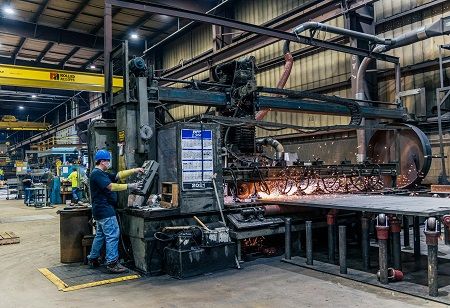
The Central Government is preparing to launch a “Made in India” branding scheme after encouraging pilots in the steel sector to promote the identity of Indian made products in the global market, according to Amardeep Singh Bhatia, secretary in the Department for Promotion of Industry and Internal Trade (DPIIT).
Amardeep Singh Bhatia, at the annual business summit of the Confederation of Indian Industry (CII), said, “The Made in India brand scheme has been in the can for quite a long time, and it is finally getting launched. We have had a pilot run with the steel sector, and it has been quite encouraging. We will be having greater discussions with the industry as to which are the sectors we can roll out, but the framework is ready.”
The push comes after Prime Minister Modi stressed India’s Atmanirbhar Bharat vision, urging that India must stop being merely a technology consumer and should start becoming a creator. In February, he called on the IT sector to build AI platforms and solutions that serve both global and domestic needs – a vision that now sits in India’s Made in India ambition. The Indian exports to the US are also set to attract a reduced reciprocal tariff of 18 percent, enabling the Made in India label to compete in the global market.
Also Read: Hybrid Energy Systems: Shaping India's Industrial Power Landscape
Yet, branding alone isn’t enough for global recognition of Indian products. Commerce sectary, Rajesh Agarwal highlighted a more pressing challenge – the disconnect of India’s trade and industrial policies. He stressed that if India is serious about embedding itself in global value chains, the industrial policies should support the trade policies.
Agarwal also stressed the effect of tariff unpredictability on Indian industries. He said, “Industries are not able to take long term investments decisions because tariff predictability is not there. You are not able to become an important part of global supply chains because your tariff certainty across borders is not very clear.”
He noted that Free trade agreements show a mixed picture; imports have surged as tariffs fell, while export growth is sluggish. He notes that the slow growth of exports might be because of regulatory harmonization becoming an impending factor on export growth. The government is also turning its attention to intermediate goods and MSME-scale manufacturing, identifying sectors where domestic production is lacking.
The message behind the move is clear: India wants to manufacture and export more, gaining recognition globally.






We use cookies to ensure you get the best experience on our website. Read more...