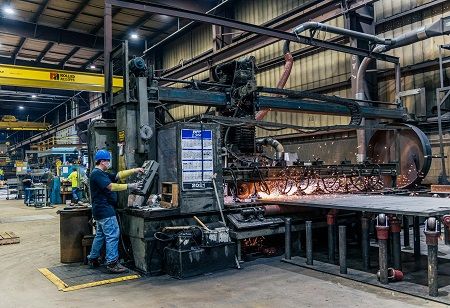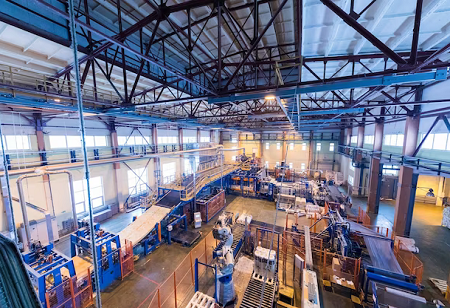
During AeroConnect 2026, organized by the Aerospace India Association (AIA), Binu K, MD of Collins Aerospace, discusses the importance of cross-industry knowledge sharing, industry-academia partnerships and engineering talent development in strengthening India's Aerospace Infrastructure.
He also highlights the need for specialized manufacturing processes, consistent supplier performance and domestic raw material qualification, emphasizing how collaboration between OEMs, industry associations and the government can accelerate India's emergence as a globally competitive aerospace manufacturing hub.
India's aerospace manufacturing ambitions increasingly depend on building a capable domestic supplier ecosystem, strengthening MSMEs and meeting global quality standards. As global supply chains evolve, the industry must look beyond conventional aerospace capabilities and draw on expertise across other manufacturing sectors. From cross-industry knowledge transfer to engineering talent and manufacturing performance, these priorities will shape India's position in the global aerospace landscape.
Gaining experience across industries such as automotive, energy, industrial automation, and oil and gas can offer valuable lessons for strengthening India's aerospace manufacturing ecosystem.
Consider the automotive sector. When the industry began developing in India, the country lacked several critical capabilities, including pressing, heat treatment, painting and coating facilities that met global standards. Over time, these capabilities were established and strengthened.
Similarly, India's pharmaceutical industry underwent a significant transformation during the late 1980s and 1990s. At the time, capabilities such as cleanroom infrastructure and the regulatory knowledge required to operate within the pharmaceutical ecosystem were still developing.
The oil and gas industry offers another important reference point. Many specialized processes required in aerospace have equivalent or closely related applications in this sector. The defense and space ecosystems also possess capabilities that could contribute to aerospace manufacturing. However, aerospace presents its own challenges, particularly concerning product stability, intellectual property and stringent qualification requirements.
It is evident that many qualification requirements follow similar principles, even though the terminology, documentation and procedures may differ. Rather than treating every requirement as an entirely new and complicated process, companies can identify commonalities and build upon existing capabilities.
The pharmaceutical sector also offers valuable lessons in regulatory compliance and stringent process controls, while oil and gas brings expertise in specialized processes and materials. However, these industries largely operate in isolation, limiting opportunities for knowledge and experience to be shared across sectors. This is where a collaborative approach can make a difference.
There is an opportunity to bring together industry associations, academia and technical institutions to capture and share this knowledge. Such an initiative could help build a common foundation for aerospace capability development without compromising the stability or intellectual property requirements of other sectors.
This knowledge-sharing approach could accelerate the development and qualification of raw materials, special processes and precision machining capabilities.
Electronics is another important area. The country's electronics ecosystem is expanding rapidly, while aerospace manufacturers continue to face challenges in developing and accessing the required electronics capabilities. There is considerable potential to leverage the progress taking place in this sector.
With artificial intelligence and digital systems continuing to evolve, capturing and sharing knowledge across industries could become significantly easier. However, with the knowledge and capabilities already available across the wider industrial ecosystem, there is an opportunity to double or even triple this progress over the next five years.
Ultimately, knowledge capture, knowledge sharing and establishing a strong foundation for capability development will be key differentiators for India and its aerospace supplier ecosystem.
While considerable attention is given to policymaking, there is also a need to focus on nurturing engineers and equipping them with the knowledge already available across industries. The industry should not have to wait for aerospace-specific expertise to develop from scratch when valuable experience exists in other sectors.
India can contribute its differentiated performance and value, particularly at a time when the global supply chain is undergoing significant changes.
The industry is struggling to ramp up production at the pace demand requires. Drawing inspiration from adjacent industries, we have repeatedly demonstrated that India can deliver where others may not be willing to take on the challenge. We are at a starting point with a young population, a large talent pool and a strong hunger for growth.
Entrepreneurship is another major differentiator for India. Many people want to do more, and that ambition can help us build stronger manufacturing capabilities. However, we must translate it into consistent performance. Even over the past year, the supply chain has continued to struggle with ramping up as companies expand their operations. We must ensure that this expansion does not come at the cost of performance.
We have been consistently asking our supply chain partners to maintain their performance and value even as they invest in new facilities and capabilities. That is what attracts global customers to India. Performance encompasses every aspect of delivery, including quality, cost, delivery timelines and safety.
This is where India has an opportunity to differentiate itself from the rest of the world. China's manufacturing success between the late 1990s and 2020 was built on its ability to take on global manufacturing requirements while remaining highly customer-focused and delivering world-class performance. India must build a similar reputation for consistent performance and customer commitment.
There are several initiatives underway as India’s aerospace ecosystem expands rapidly.
One of the biggest challenges is the gap in critical technical knowledge that engineers acquire during their college education. In the past, it could take three to five years for an engineer to become proficient enough to perform even relatively basic software-related tasks. This creates a considerable learning curve when new employees enter the industry.
To address this, we are working to strengthen industry-academia partnerships and share relevant technical knowledge. We are also collaborating with AI to identify aerospace-specific knowledge that can be incorporated into the final two years of engineering, diploma and IT college programs. The objective is to equip graduates with a better understanding of aerospace requirements before they enter the workforce, reducing the time needed to become productive.
The second challenge concerns the differences between aerospace and other manufacturing sectors. Around 90–95 percent of the underlying manufacturing processes may appear similar, but the remaining requirements can make a significant difference. Consider the motor example. While an aerospace motor may resemble one used in the automotive or industrial sectors, the operating conditions are different. Aircraft operate at high altitudes and under specific environmental conditions, requiring components to meet more demanding requirements.
The same applies to processes such as heat treatment. Although the process may appear similar across industries, aerospace applications require specially developed process parameters and carefully controlled procedures. We are working to bridge this knowledge gap by sharing these specialized manufacturing processes with suppliers. Boeing, Collins and several other companies are undertaking similar initiatives to make the wider ecosystem more capable.
This is another important area. We are examining existing material specifications to identify opportunities for standardization and alternative sources. Many aerospace specifications were originally developed in the US and Europe several decades ago. Establishing equivalent specifications in India, however, requires extensive certification and validation, making the process both time-consuming and expensive.
This is an area where the government can play an important role. Industry can identify the required material specifications and technical processes, while organizations such as AI can help consolidate these requirements and take them forward for government support and funding. Developing domestic capabilities is a national priority, and the responsibility should not rest with individual companies alone.
The objective is to undertake the necessary certification and qualification work centrally, making approved materials and processes accessible to OEMs and suppliers. This would help the industry avoid repeatedly going through lengthy and expensive qualification exercises, while accelerating the development of a globally competitive domestic aerospace supply chain.





We use cookies to ensure you get the best experience on our website. Read more...