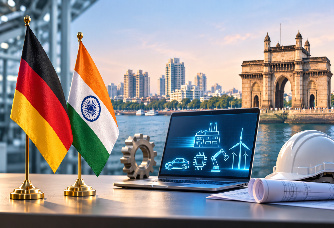
German R&D Expansion in India is gaining momentum as companies look beyond manufacturing towards engineering, research and product development.
Maharashtra is seeking to benefit from this shift, with Chief Minister Devendra Fadnavis inviting German companies to establish manufacturing facilities and research and development (R&D) centers in the state.
During a meeting with a German delegation led by Lower Saxony Minister-President Olaf Lies on November 27, Fadnavis highlighted opportunities in automobiles, semiconductors, robotics, renewable energy and advanced manufacturing.
The development reflects a wider effort to strengthen industrial ties between India and Germany.
German R&D Expansion in India reflects a change in how companies are using the country's skilled workforce and technology ecosystem.
German businesses are increasingly setting up Global Capability Centers (GCCs) to handle engineering, software development, artificial intelligence, research and product innovation.
According to an October 2026 report by the Indo-German Chamber of Commerce, more than 80 German companies operate over 150 GCC units in India, employing more than 130,000 professionals.
GCCs established by German Mittelstand (small and medium-sized, businesses specializing in specific products or technologies) companies have also grown by 108 percent over five years.
The report indicates that these centers are moving beyond support functions and taking up higher-value work, including product development and engineering. Access to skilled professionals, universities and technology companies is supporting this expansion.
This trend creates an opportunity for Maharashtra to attract more German research and engineering operations alongside traditional manufacturing investments.
Also Read: 5 Indian Automotive Industry Leaders Shaping the Future of Mobility
The growing focus on advanced technology is another important part of German R&D Expansion. Both countries are looking to strengthen cooperation in industries that are important for future manufacturing and supply chains.
During German Chancellor Friedrich Merz's visit to India in January 2026, the two countries agreed to strengthen cooperation in semiconductors, critical minerals, artificial intelligence, telecommunications and advanced manufacturing.
The India-Germany Joint Statement also highlighted research partnerships in battery technology, sustainable production and medical technologies. Cooperation in critical minerals includes exploration, processing, recycling and research.
These areas are relevant to Maharashtra's latest discussions with Lower Saxony. The state has opportunities to attract companies working in electric vehicles, robotics, industrial automation, aerospace and renewable energy.
Such partnerships could also help Indian manufacturers’ access German technology and improve their production capabilities.
The existing presence of German companies in the state provides a foundation for this effort. Volkswagen has invested approximately 1.1 billion Euros in Maharashtra since 2001 and operates two manufacturing facilities with a combined annual production capacity of 3.15 lakh vehicles.
The company is also planning to increase its R&D engineering workforce in the state from 450 to more than 700. This reflects the potential for Maharashtra to attract research and product development activities alongside manufacturing.
Fadnavis also invited Lower Saxony's universities and research institutions to participate in the proposed EduCity project in Navi Mumbai. The initiative could support joint research, academic programs and skill development.
For Maharashtra, attracting German R&D Expansion will depend on its ability to offer skilled talent, strong infrastructure and closer links between industries and educational institutions.
The challenge will be to turn investment invitations and proposed partnerships into actual projects. If successful, Maharashtra could strengthen its position as a destination for German manufacturing and R&D activities.

We use cookies to ensure you get the best experience on our website. Read more...