India's automotive industry is entering a significant growth phase, driven by rising vehicle demand, electrification, and technological advancements.
As per a press release issued by ICRA, domestic Passenger vehicle (PV) volumes are estimated to grow by 4-6 percent, potentially becoming the third market after China and the US to achieve this milestone.
Meanwhile, electric passenger vehicle sales could approach 400,000 units in FY27 (reaching roughly 8 percent penetration out of an estimated 4.9–5.0 million total passenger vehicle sales), while SUVs are expected to account for nearly 69 percent of domestic passenger vehicle sales.
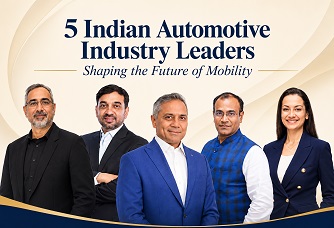
Against this backdrop, automotive industry leaders in India are playing a crucial role in shaping the sector's next phase of growth. Five Indian Automotive Industry Leaders Shaping the Future of Mobility brings together insights from prominent leaders who shares their perspectives on How Women Leaders Are Shaping India's Electric Mobility Future, India as a Global Manufacturing Hub in the New Mobility Era, Why India's Mobility Future Depends on Leadership and Innovation, Zero-Emission Mobility: India's Path to Cleaner Urban Transport, and Building EV Bus Ecosystems for India's Clean Mobility Goals
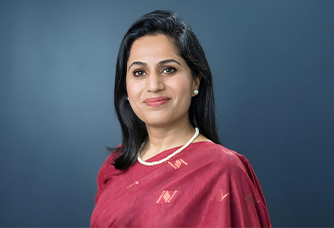
 Electric mobility is transforming India’s automotive industry, and Reeti Nageshri believes that the shift from early EV adoption to wider acceptance depends on building products that customers genuinely desire.
With over 15 years of experience across software engineering, digital transformation, product strategy, marketing, and business operations, she has played an important role in shaping Mahindra’s Born Electric portfolio and advancing its EV business strategy.
According to Reeti, electric vehicles must move beyond being marketed as economical and practical alternatives to conventional cars. Instead, they must deliver compelling design, performance, comfort, technology, and reliability. Mahindra’s BE and XEV electric SUV range reflects this approach, combining distinctive designs, 500+ km real-world range, and a lifetime battery warranty. She highlights that nearly 80 percent of Mahindra’s EV customers are new to the brand, with several coming from luxury car backgrounds.
She also emphasizes the importance of dedicated EV platforms, customer-focused innovation, accessible premium features, reliable service networks, and stronger collaboration among automakers, battery manufacturers, charging companies, energy providers, and government agencies to build a seamless EV ecosystem. Greater policy consistency and investments in ultra-fast charging infrastructure along major highways will further strengthen customer confidence and accelerate adoption.
“People don't adopt technology. They fall for products. We set out to build SUVs people want first, that just happen to be electric.”
Reeti also highlights how electric mobility is creating opportunities to challenge conventional perceptions of Indian automotive industry pioneers and technical roles. From manufacturing lines and battery plants to service workshops, sales, and marketing, women are increasingly contributing across the EV value chain. However, she believes companies must go beyond diverse hiring and create supportive workplaces through flexible working arrangements, childcare facilities, fair promotion opportunities, and structured career pathways.


.jpg "Building EV Bus Ecosystems for India's Clean Mobility Goals")
We use cookies to ensure you get the best experience on our website. Read more...