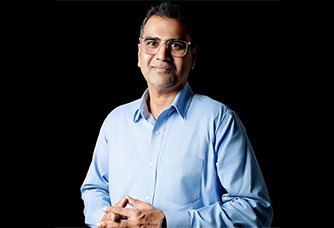
During AeroConnect 2026, organized by the Aerospace India Association (AIA), B V Murali, Senior Manager - Supply Chain Management, Boeing, reflects on India's aerospace manufacturing landscape through the lens of supplier ecosystem development, technological advancement, and global supply chain integration. He highlights the need to strengthen domestic capabilities, foster risk-sharing partnerships, address supply chain gaps, and develop skilled talent to position India as a global aerospace hub.
Can India's established aerospace manufacturing capabilities evolve into a globally indispensable supply chain, strengthening its position beyond cost competitiveness and conventional sourcing opportunities?
India is definitely one of the preferred choices when it comes to aerospace sourcing, primarily because of its robust supplier ecosystem, which is already developed and continues to evolve.
In addition, India has a competitive cost advantage that gives it a unique position. Another important factor is the increasing technological maturity of its suppliers. They are continuously investing in and strengthening their technological capabilities. During supplier visits, the level of investment being made to improve technological capabilities is often remarkable.
This is something that deserves recognition. Last but not least, India has the capacity to scale and support future growth. Suppliers are continuing to invest and expand their capabilities, supporting the overall growth of the industry. These are some of the areas where India is making significant progress.
However, there are certain areas that require greater attention. One of the key concerns is India's dependence on imported raw materials. Several OEMs are already working towards qualifying raw materials within India.
Continued investment and efforts in this direction are essential, as this remains one of the areas where India faces limitations.
Another important aspect is special processes. Even when manufacturing capabilities are established in India, secondary processes become equally important and can emerge as bottlenecks.
Although Boeing and other OEMs are working towards qualifying special process houses, but this continues to remain a challenge.
The final area is logistics turnaround time. Since India remains dependent on imported raw materials, the lead times involved are significantly higher. Consequently, the overall turnaround time to meet supply requirements also increases.
These are the areas that require collective attention. OEMs also have a responsibility to bridge these gaps and continue working towards addressing them. With stronger partnerships between OEMs and suppliers, India can certainly continue to grow.
India must move beyond low-cost sourcing and strengthen its capabilities in complex assemblies and system-level manufacturing to establish a more influential global aerospace position.
How sustainable is an OEM-led investment model that requires suppliers to commit substantial capital without guaranteed orders, long-term visibility or protection against pricing and cost uncertainties?
It is important to understand that the aerospace qualification process takes considerable time. Entering the aerospace industry is not easy, given the highly regulated environment and significant entry barriers. At the same time, the industry also has considerable exit barriers. Suppliers cannot easily move out of the aerospace sector once they have established themselves.
From the OEM perspective, the approach is also evolving. There is a shift away from traditional supplier-customer contracting towards a model built around risk-sharing partnerships.
Whenever an opportunity arises to work with a supplier, certain fundamental requirements must naturally be in place. Beyond that, OEMs assess whether suppliers are willing to share the risks alongside them.
OEMs then invest their efforts in developing these suppliers and strengthening their capabilities to bring them to a level where they can become world-class suppliers capable of meeting global aerospace requirements.
This is something OEMs continuously look for in their supplier partnerships, and the effort remains ongoing.
What is the one strategic shift India must prioritize to strengthen its aerospace manufacturing ecosystem and become a more competitive, globally influential sourcing hub?
India fundamentally needs to move beyond the mindset of being a low-cost sourcing destination.
The industry must upgrade its capabilities and move towards more complex assemblies. So far, India has been successful in manufacturing components, but the next major leap will be expanding its capabilities to undertake larger and more complex system-level manufacturing. This is something that deserves greater attention.
One principle that is particularly relevant here is: since aerospace is not an easy industry to enter, start small but think big. That is the approach India should adopt.
Also Read: Engineering the Next Generation of Aerospace Technologies
How can aerospace OEMs strengthen MSME capabilities through supplier development initiatives, enabling local manufacturers to meet global aerospace quality and technology standards?
From a scaling perspective, Boeing has undertaken several initiatives, one of which is the Kaushal program.
Through this program, Boeing engages with suppliers to provide training and upskilling opportunities for their workforce. Since many workers have traditionally followed conventional manufacturing practices, the focus is on enhancing their skills to meet specific aerospace industry requirements.
The program has already covered several suppliers, and these efforts continue.
This is one of the ways Boeing is addressing workforce development and strengthening the manpower capabilities required to support the growing needs of the aerospace industry.
(Disclaimer: The views expressed have been edited for editorial clarity, based on insights shared during AeroConnect 2026. This content is intended solely for editorial purposes and does not represent an official statement or endorsement by Boeing or the individual featured.)



We use cookies to ensure you get the best experience on our website. Read more...