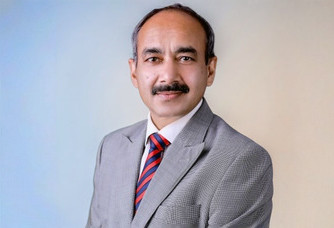
During AeroConnect 2026, organized by the Aerospace India Association (AIA), Kaushal Jadia, President of Cyient DLM, shares his insights on the evolving aerospace industry, focusing on aircraft electrification, advanced avionics, higher-voltage electrical architectures, and emerging semiconductor technologies.
He also discusses the importance of integrating engineering, product development, and manufacturing capabilities in India, while highlighting the challenges of international certification, product reliability, and aviation safety. His perspective emphasizes how technological innovation and indigenous manufacturing capabilities can strengthen India's position in the global aerospace supply chain.
Having spent several years in aircraft software engineering and subsequently expanded your focus into manufacturing, how do you see emerging technologies such as software-defined aircraft and cyber-physical systems shaping the future of the aerospace industry?
In aerospace, the evolution is reflected in significant advances in sensors, control systems, power distribution, and electrical architectures. While military aviation has its own distinct requirements and developments, these changes are also becoming increasingly important in commercial aviation.
Within commercial aviation, two significant areas of development are conventional aircraft and eVTOL platforms. From an electrical perspective, eVTOLs represent a very different aircraft architecture from that of conventional aircraft.
More broadly, the contribution of electrical systems to the overall value of an aircraft is expected to increase significantly as manufacturers such as Airbus and Boeing introduce newer aircraft platforms.
Traditionally, aircraft electrical systems have used 115V and 230V, 400Hz power, alongside 28V AC/DC systems. Now the industry is moving towards higher-voltage architectures, including 270V and 540V systems.
Whereas in eVTOLs, the power could extend up to 800V DC and potentially reach 1,200V DC. The principal advantage of higher voltage is that it reduces current for a given power requirement, which can reduce cabling requirements and overall weight.
However, it also creates challenges in driving motors and converting DC power into AC. This will make software, motor controllers and power electronics increasingly important. Power distribution is also expected to evolve, with greater use of solid-state switches and more sophisticated power conversion and transfer technologies. These systems will, of course, need to meet demanding reliability requirements.
As aircraft move towards hybrid configurations and greater electrification, electric propulsion and battery management systems will become increasingly significant. A further area of development is cockpit and avionics integration.
Rather than relying on separate sensors, displays and processing units, the direction is towards aggregating more functions on common platforms. This can support greater integration while making more efficient use of computing and display resources.
Similarly, the aircraft communications and onboard data networks are also evolving. Aerospace has traditionally adopted new communication technologies more cautiously than the wider commercial technology sector, given the importance of safety and reliability.
However, established avionics buses and Ethernet-based standards, including time-sensitive networking based on IEEE 802.3, are part of the technologies shaping future data exchange within aircraft. Satellite-based communication may also play a greater role alongside existing systems; this does not necessarily mean that conventional systems such as VHF will disappear.
Radar and sensor technologies are changing as well. Conventional commercial weather radar systems have typically used mechanically scanned antennas, while electronically scanned radar technologies have been used in other aerospace applications.
As costs come down, the adoption of more advanced radar architectures in commercial aviation could increase. There is also continuing development in the integration of radio-frequency systems.
In power electronics, we are seeing a migration from conventional silicon-based technologies towards silicon carbide and gallium nitride. These semiconductor technologies offer opportunities to improve efficiency and power performance.
At the same time, systems that have traditionally been hydraulic or mechanical, including certain de-icing and actuation applications are moving towards electrically driven solutions.
Even cabin systems are likely to become more sophisticated. Cameras already used by airlines for incident recording could also support non-intrusive, AI-enabled applications, such as identifying unattended baggage or checking aspects of cabin activity. These applications need to be implemented within the relevant power, safety, and certification constraints.
As more software and semiconductor content is introduced into aircraft, certification becomes especially important. Regulators are necessarily cautious about changes to safety-critical systems. That caution will continue to shape the pace and manner of technology adoption. Overall, however, the electrical and software content of aircraft is set to increase, supporting more integrated and increasingly electrified aircraft architectures.
Having expanded your organization’s focus from engineering services to product development and manufacturing, what have been the key learnings and challenges in building an integrated model?
Our background was in engineering services, and we added manufacturing capabilities through an acquisition in 2015. That combination provided the foundation for us to expand beyond engineering services.
Around six to seven years ago, we began focusing more deliberately on developing complete products for customers, including in safety-critical electronic segments. A fundamental principle of our approach has been to retain the core intellectual and design capabilities within the organization.
Capabilities ranging from model-based design and low-level software development to PCB design are carried out internally. A significant part of manufacturing is also undertaken in-house, although certain processes, such as PCB fabrication, are outsourced to specialized partners.
Today, our product range covers power distribution and power conversion, HVDC and DC systems, transformer rectifier units, cabin management systems, radios, motor controllers across different power ranges, and a range of IoT devices. We design and manufacture products across these categories, with many engagements structured as contractual design and manufacturing programs.
Our work also includes actuation assemblies, some of which are already flying on aircraft. The products span different Design Assurance Levels, including DAL-A, the highest design assurance level for airborne systems. Developing the capabilities required for these programs takes time, but the work is increasingly being recognized by global customers, most of whom are based outside India.
Our approach has not been to restrict ourselves to one technology or product category. We have diversified across a broad range of products while maintaining the principle that the critical design and engineering work should remain within India. That is where we believe substantial value can be created.
One of the challenges is the regulatory environment. Products supplied to international aerospace markets must meet the certification requirements of authorities such as the Federal Aviation Administration (FAA), the European Union Aviation Safety Agency (EASA), and Japan's aviation regulator.
India's regulatory framework and its bilateral arrangements do not yet provide the same level of reciprocal recognition that manufacturers would ideally need. In particular, there is no bilateral aviation safety agreement with EASA, while the arrangement with the FAA has limitations. As a result, Indian manufacturers may not be able to benefit fully from reciprocal certification arrangements.
As more companies in India develop capabilities in this sector, strengthening the regulatory framework will become increasingly important. This is an area where government support and engagement will be necessary.
From our perspective, the integrated model has enabled us to deliver greater value to customers. We are not compromising on design philosophy, product quality, or the technologies we use. Our products incorporate contemporary chips and semiconductors, along with modern design approaches.
We are also working, in a modest but meaningful way, with academic institutions to encourage research in advanced areas. Some of this work may take a few years to translate into practical applications, but it is important to build the capabilities required for the future.
As aircraft adopt advanced avionics and higher-voltage electrical systems, how can the industry balance weight reduction with the need for redundancy and safety?
Redundancy is fundamental to aircraft design, and it is not something the industry can compromise. Even when individual components become smaller and lighter, the overall system must retain the required redundancy and segregation to meet aviation safety requirements.
Consider a landing gear system, for example. A particular function may be managed by an electronic control unit, but the aircraft may require multiple units to provide redundancy. In such cases, the weight saved through a smaller or lighter component has to be assessed alongside the weight of the additional units required for system-level redundancy. The assessment therefore needs to be made across the complete aircraft architecture, rather than by looking at individual components in isolation.
The move towards higher-voltage DC generation and distribution is an important development, particularly for eVTOLs, which are inherently likely to use increasingly higher-voltage DC architectures. However, this does not mean that every aircraft system will move to DC.
Variable-frequency drive and power generation architectures remain active considerations, and manufacturers will need to evaluate the advantages and trade-offs across the aircraft. Higher voltage reduces current and can therefore reduce cable size and weight.
The benefit, however, must be assessed at the aircraft level. Similarly, advances in modular avionics and the ability to consolidate computing functions onto chips can reduce the size and weight of radio-frequency, computing and power-electronics equipment. These improvements must be achieved without compromising redundancy or segregation.
Semiconductor advances also contribute to this shift. Earlier CMOS-based switching systems could be less efficient and require heat sinks. Silicon carbide can improve efficiency and reduce thermal-management requirements, while gallium nitride can deliver further efficiency gains. In the discussion of these technologies, an efficiency improvement of around 35 percent was cited for GaN.
At the same time, the overall weight equation must account for the systems being replaced. As hydraulic and mechanical functions become electrical, the weight of electronics may increase in some areas, but this needs to be considered against the mechanical and hydraulic infrastructure that is no longer required.
The growing use of solid-state systems, including in braking applications, is one example of this transition. The A380 was also cited in the discussion as an illustration of the extent to which aircraft functions can be managed through integrated electronic systems.
Ultimately, electrification offers opportunities to reduce the weight of aircraft systems, but the outcome depends on the architecture as a whole. The industry will need to balance component-level weight savings with system redundancy, safety, reliability, and the requirements of certification.





We use cookies to ensure you get the best experience on our website. Read more...