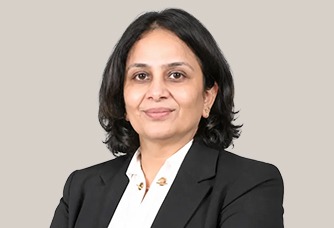
During AeroConnect 2026, organized by the Aerospace India Association (AIA), Shilpa Gupta, CTO of GE Aerospace, discusses the evolving landscape of India's aerospace industry through the lens of next-generation engine technologies, artificial intelligence and aircraft maintenance.
She highlights GE Aerospace's involvement in the Revolutionary Innovation for Sustainable Engines (RISE) program, the development of open fan and hybrid-electric technologies, and the growing role of Bengaluru's engineering ecosystem.
Gupta also examines how AI-driven predictive maintenance is improving engine monitoring, component inspection and maintenance planning, while emphasizing the importance of combining advanced technologies with human expertise to shape the future of aerospace engineering.
The aviation industry is witnessing significant technological developments in aircraft engine design and fuel efficiency. One of the key initiatives is the Revolutionary Innovation for Sustainable Engines (RISE) program, led by CFM International, a 50-50 joint venture between GE Aerospace and Safran.
Explaining the program, Shilpa Gupta, said RISE is a suite of pioneering technologies currently undergoing development and testing. While demonstrations are expected over the next few years, their commercial application is anticipated in aircraft entering service during the 2030s and beyond.
A key technology under the program is the open fan architecture. Unlike conventional engines, where the fan is enclosed within a metal casing, the open fan design removes this surrounding structure, leaving the fan blades exposed.
The program is also exploring compact core technology, which involves reducing the size of the engine core, and hybrid-electric propulsion systems.
Gupta noted that hybrid-electric technology presents several engineering challenges in commercial aviation. Electrical and electronic systems behave differently at high altitudes because of variations in air density and temperature. Transferring power between electrical systems and gas turbines also involves significant technical complexities.
GE Aerospace demonstrated its hybrid-electric technology through a flight demonstration at the Farnborough Airshow. Meanwhile, open fan and compact core technologies are progressing through development and testing.
The RISE program aims to achieve a 20 percent improvement in fuel efficiency, which Gupta described as a significant engineering challenge. This cannot be achieved through improvements in engine thermal efficiency alone. It also requires advancements such as higher bypass ratios, supported by larger fan designs.
She also highlighted the contribution of GE Aerospace's Bengaluru engineering operations to the program. The John F. Welch Technology Centre in Whitefield, which has been operational for 26 years, has contributed approximately 1,000 patents. Its engineering teams are actively involved in the RISE program.
Gupta described this as an exciting time for aerospace engineers, given the developments taking place across aviation and space exploration, including India's renewed focus on the space sector.
Also Read: 5 Indian Automotive Industry Leaders Shaping the Future of Mobility
Improving ‘time on wing’ and reducing unplanned maintenance remain important priorities for the aviation industry. According to Gupta, artificial intelligence is playing an increasingly important role in this transition by enabling more predictive and data-driven maintenance practices.
GE Aerospace uses AI and data analytics to monitor engine performance, identify potential issues and anticipate maintenance requirements. One example is AVM.ai, an analytics-based maintenance tool that monitors engine behaviour during flights.
Gupta noted that GE Aerospace receives substantial volumes of operational data, with three out of every four commercial flights powered by its engines. This data is used to develop predictive models that identify unusual engine behaviour and flag potential issues before they become serious.
Such insights help maintenance teams make informed decisions and address concerns in advance.
Another application is material forecasting. By analyzing an engine's operating condition and performance, AI models can predict which components may need replacement and when.
This allows GE Aerospace to identify and order the required parts before an engine arrives at maintenance repair and overhaul (MRO) facility. While unexpected requirements may still arise, the approach improves maintenance planning and reduces delays.
AI is also being used in turbine blade inspection. The engine's hot section is exposed to extremely high temperatures, making regular inspection of turbine blades essential.
GE Aerospace has introduced inspection technologies that capture images of the blades, assess their condition and estimate their remaining useful life. This gives maintenance teams better visibility into component health and helps them plan interventions.
Gupta identified these applications as examples of how AI can provide early insights, improve maintenance planning and reduce unexpected engine-related disruptions.
However, she emphasized that AI does not replace the expertise of engineers and subject matter specialists. While it can act as a powerful multiplier by analyzing large volumes of data and supporting better decisions, human expertise remains central to the process.
According to Gupta, AI is an enabler rather than a replacement, within the aerospace industry. GE Aerospace continues to place subject matter experts at the center of its AI-driven processes, combining technological capabilities with engineering experience.
(Disclaimer: The views expressed have been edited for editorial clarity, based on insights shared during AeroConnect 2026. This content is intended solely for editorial purposes and does not represent an official statement or endorsement by GE Aerospace or the individual featured.)


We use cookies to ensure you get the best experience on our website. Read more...