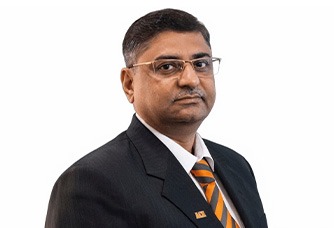
Chetan Gole, CEO – MHE Business, Action Construction Equipment Limited (ACE), in an interaction with Thiruamuthan, Assistant Editor at Industry Outlook, discusses how automation, electrification, and advanced material handling solutions are restructuring India’s MHE industry and what it will take for Indian manufacturers to become more competitive at global level.
With more than 35 years of experience across capital equipment, construction and commercial vehicles, and engineered products, he highlighted the importance of technology adoption, localization, operational efficiency, and sustainability in scaling the MHE industry. He also emphasized the need for stronger industry capabilities, government support, and strategic technology access to help Indian manufacturers build high-quality, cost-competitive equipment for both domestic and international markets.
You have spent over 35 years across capital equipment and MHE, including building new business verticals. How has that experience shaped your approach to scaling an MHE business?
I have been in this industry for over 30 years, so I have a thorough understanding of customer requirements and emerging industry needs. This experience keeps me grounded and connected with customer needs and emerging market trends. It helps me improve our equipment and systems to better match customer requirements.
We continuously monitor the market, international developments, improvements, and new technologies. We then work to incorporate these developments into our equipment and solutions. That is how we sustain and grow our business.
Warehousing and logistics are expanding rapidly. How is this growth changing demand for material handling equipment across sectors, particularly in terms of speed, scale, and operational efficiency?
Changing lifestyles and customer expectations around faster deliveries have significantly transformed the logistics industry. Earlier, customers would place an order and receive the material after one, two, or even three days.
Today, companies such as Amazon and Blinkit have changed these expectations by delivering products within hours or even minutes. As a result, the entire logistics and warehousing scenario has evolved, along with customer expectations around delivery time.
This shift has impacted the entire logistics ecosystem, including warehousing facilities, logistics operations, and material handling equipment. The industry has undergone a significant transformation to meet these changing requirements.
As automation and AI reshape industrial operations, how are these technologies being integrated into material handling equipment to boost accuracy, uptime, and process intelligence?
With increasing demands for operational efficiency, speed, and scale, the demand for advanced material handling equipment has also risen. This has led to greater adoption of automation, particularly to reduce dependence on labor. The COVID-19 period further highlighted the importance of automation in material handling.
Industries realized that when labor availability is limited, machinery needs to be deployed to handle cargo efficiently. As a result, automation and AI are increasingly being integrated into material handling equipment, making machines more automated and efficient.
Today, automated storage and retrieval systems are available, while robotics has also become an important part of material handling. Guided material handling equipment is being used for repetitive jobs and handling tasks, either on fixed or guided paths. All these technologies have helped the industry improve operational efficiency in material handling.
The real opportunity is to build Indian manufacturing capabilities that can challenge established global players, rather than simply compete within the domestic market
What role is material handling equipment playing in the evolution of smart warehouses, particularly in enabling seamless automation, data integration, and real-time inventory movement?
This is what customers require today. The faster they book an order, the faster they expect delivery. Therefore, the entire system needs to be integrated so that an order booked online can be executed seamlessly.
For this, the system needs to be AI-integrated, including technologies such as automated storage and retrieval systems. In these systems, material comes in and is stored at the right location. Whenever a particular item is required for an order, a robot or machine retrieves it and brings it back, allowing the order to be processed and delivered efficiently.
This kind of system is emerging rapidly. Major companies such as Amazon and Flipkart are building such systems to reduce order turnaround time and enable real-time inventory movement.
Telematics is becoming increasingly embedded in material handling equipment. How is equipment data influencing fleet utilization, predictive maintenance, operating costs, and customer decision-making?
If you are an equipment owner putting machines on rental, or a company administrator looking to monitor your equipment, telematics becomes a very important tool. It allows you to track the equipment’s location, active and downtime, fuel status, fuel consumption, service status, service intervals, alarms, accidents, and operating hours.
Telematics provides a convenient way to monitor the equipment, its usage, maintenance requirements, and even accidents. It allows these features to be monitored remotely, making equipment management more efficient and convenient.
Customer preferences are also shifting from outright ownership toward greater flexibility. How could equipment-as-a-service reshape the economics and adoption of material handling equipment?
There are several reasons why customers may not prefer outright ownership of equipment and instead choose to rent it. One of the main reasons is the high initial investment. If the equipment is required only for a short period, customers may not want to invest in such costly equipment and would instead opt for short-term rentals.
Another factor is the maintenance and servicing involved. Once equipment is purchased, it requires regular servicing, maintenance, and breakdown support. When customers do not have the necessary service network or support system, they may prefer a rental or equipment-as-a-service model.
This gives customers greater flexibility while reducing the need for significant upfront investment and in-house maintenance support.
With sustainability becoming a key priority, how are industries transitioning toward electric and eco-friendly material handling solutions to reduce emissions and operational costs?
The entire world is focused on reducing carbon footprints, and industries are making efforts to lower emissions. New technologies are being introduced in diesel and petrol engines to meet stricter emission norms. In India, for example, emission norms for commercial vehicles have progressed from BS3 to BS4, BS5, and BS6, helping reduce emissions and carbon footprints.
Beyond this, the industry is now moving toward electrification of equipment. We have seen the growing adoption of EV cars and other electric vehicles, and this transition is also taking place in material handling equipment.
The focus on ESG and carbon footprint reduction has further pushed companies toward cleaner and more sustainable solutions. This commitment is driving the industry to adopt lower-emission technologies, and I believe this trend will continue.
That is how the entire ecosystem is gradually moving toward more sustainable solutions.
Looking at the next decade, which trends do you believe will shape the evolution of MHE in India in terms of innovation, scale, and exports?
Emission reduction and carbon footprint reduction are at the forefront, along with operational efficiency.
Considering these factors, new electric material handling equipment is being developed with efficiency comparable to traditional diesel or petrol-powered forklift trucks. To further improve operations and efficiency, these machines are likely to become AI-operated, guided, or programmed vehicles.
This kind of integration, along with telematics, will further enhance overall efficiency. I believe this is going to be the future trend of material handling equipment.
India is supporting domestic manufacturing through initiatives such as Atmanirbhar Bharat and Make in India. What further steps should the government take to help Indian manufacturers scale globally and make their products more competitive in international markets?
If advanced technologies are available abroad, particularly in developed countries, they can be expensive. Making these technologies accessible to Indian companies could therefore be challenging. Companies can collaborate directly with international technology providers, but that can involve high costs.
In this situation, the government can play a role similar to what China has done. The Chinese government brought technologies available globally and made them accessible to domestic manufacturers. Similarly, the Indian government can facilitate access to technologies that are currently not available in India.
Based on these technologies, leading manufacturers can develop their own equipment and build products that can compete in global markets.
The government can also consider providing incentives to manufacturers producing equipment that helps reduce carbon footprints and energy or fuel consumption. Such incentives would encourage the adoption and manufacturing of cleaner technologies while helping reduce foreign exchange outflows and carbon emissions.
What will determine whether India’s MHC industry becomes more technology- and export-oriented rather than remaining primarily a domestic equipment market?
Once the required technologies become available and more manufacturers develop good, competitive solutions in terms of both technology and pricing, India can become more competitive in the global market.
Currently, China dominates the material handling equipment market because of its scale and technology. Earlier, Europe and the US dominated in terms of technology. However, with support from the Chinese government, Chinese manufacturers gained access to technology, developed their capabilities, and have now become a major manufacturing hub.
Chinese manufacturers are now selling material handling equipment across the world at competitive prices. A similar model could be adopted by the Indian government. While India’s capabilities are still developing, making equipment available at lower costs would make the replacement of manual labor with machinery more accessible and encourage the wider adoption of material handling equipment.
Government regulations will also play an important role in improving the material handling and logistics sectors, including how goods are handled, packed, and transported. Such regulations can support the growth of the material handling industry.
The third factor is scale. As the scale of manufacturing increases, the costs will reduce automatically and Indian manufacturers will become more competitive in international markets. Meanwhile, manufacturers will have to be extremely mindful of both quality and cost competitiveness.
If the government and manufacturers work on these two key factors—quality and cost competitiveness—India can become more competitive in international markets.
On a personal note, what leadership principle guides your leadership decisions? What five pieces of advice would you offer to emerging leaders?
I generally allow my people to make their own decisions, while I focus on removing bottlenecks in their processes.
Most of them are highly capable, very honest and committed to their work. If there is a process or a bottleneck in an operation, then I try to eliminate the obstacle to improve the operation. My approach is to support them, remove bottlenecks, and make it easier for them to do their jobs effectively.
The first thing I would tell emerging leaders is to have their goals really clear. Second, invest in achieving those objectives with your resources and energy. Anything that is not needed, that slows you down, and that pulls you away from your goals should be eliminated. This will keep you focused on what is important.
Third, prioritize your work. Clearly identify your goals and decide what needs to be the first priority, second priority, and so on. Whatever can be delegated should be delegated. Fourth, build your team and your network so that you have the right support to get the job done effectively.
Finally, pursue your goals consistently. Keep reviewing your progress, identify any challenges, and make the necessary corrections. These are the principles I believe leaders should focus on.
.jpg "Saksham Enterprises: Optimizing Mission- Critical HVAC Infrastructure For The High Precision Sector")
.jpg "JDS Group of Companies: Innovating Smart Solutions For Modern Power Transmission & Distribution Infrastructure")



We use cookies to ensure you get the best experience on our website. Read more...