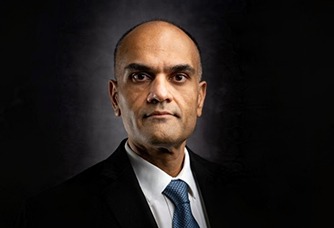
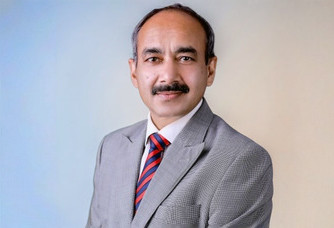
During AeroConnect 2026, organized by the Aerospace India Association (AIA), Ankit Patel, CEO, Ankit Aerospace, reflects on India's transition from a manufacturing partner to an owner of indigenous aerospace technologies. He discusses the five stages of industrial maturity, the importance of patient capital, evolving OEM-supplier relationships, investment risks and the strategic need for Indian aerospace companies to establish a stronger global presence.
What are the key stages in India's evolution from a manufacturing partner to a developer and owner of proprietary aerospace products?
The primary objective was simply to enter the aerospace industry and do whatever it took to become part of the ecosystem.
However, with OEMs establishing their presence in India, the ecosystem has expanded our horizons. The aspiration must now be to dream bigger and reach a stage where Indian companies develop and own their intellectual property (IP). The first step is having the confidence to envision and pursue the development of proprietary aerospace products.
The progression towards this goal can be understood through five distinct stages. Several parts of the world have already followed this journey, and India is gradually moving through these stages.
The first stage is doing, where companies undertake manufacturing by following existing designs and specifications. This is where the initial experience and satisfaction of manufacturing come from.
The second stage is tweaking. At this stage, companies understand manufacturing processes better and begin providing feedback to customers on possible improvements. Many Indian aerospace manufacturers are currently operating at this level.
The third stage is building, where companies develop the capability to design products based on specifications provided by customers. While some Indian companies have progressed further, a significant part of the industry is still transitioning between the tweaking and building stages.
The fourth stage is owning, where companies develop and take ownership of their products and technologies. Reaching this stage could take another eight to ten years.
The fifth and final stage is leadership, where companies move beyond owning products to defining markets and shaping their development.
The next chapter of India's aerospace growth will depend on how effectively domestic manufacturers convert their established industrial capabilities into globally competitive products and technologies.
Given India's expanding aerospace manufacturing base, what investments will accelerate indigenous product development, intellectual property ownership and global technological competitiveness?
While the journey begins with manufacturing, the long-term vision requires patient capital to sustain it. This is not a five- or six-year plan. Moving through the stages of doing, tweaking, building and owning is a journey that could span two to three decades.
Another important consideration is the stringent safety requirements of the aerospace industry. Aircraft are expected to operate reliably for decades, unlike products such as mobile phones, which typically have a much shorter lifecycle. An aircraft can remain in service for around 30 years, making reliability and product validation critical.
Consequently, companies entering this industry have limited opportunities to get things right. Missing a particular program or development window could mean waiting another decade for the next opportunity. Timing, therefore, becomes extremely important.
Our investments have been aligned with understanding these industry cycles and identifying where we stand within the five-stage progression. Currently, India is largely at the second or third stage, with the aspiration of reaching the fourth stage.
Once that destination is clear, companies must work backwards to identify the capabilities, talent, capital, markets and geopolitical considerations required to get there. These are some of the key considerations in building India's own aerospace product capabilities.
To what extent does the OEM-led sourcing model balance supplier investment commitments with commercial assurances on order volumes, pricing and long-term business visibility?
From the perspective of a C-class part manufacturer operating further down the supply chain, this is a concern that comes up frequently. Over the years, the way OEMs interact with suppliers has evolved. Initially, the primary consideration was cost, with India largely viewed as a best-cost sourcing destination.
However, the growing demand for aircraft has changed the dynamics. OEMs have also recognized the importance of sourcing from India to support their business requirements. While there may not be a direct government mandate to source locally, the growing aircraft sales market in India also brings broader geopolitical considerations into the sourcing equation.
Against this backdrop, OEMs today have a greater stake in the success of their Indian suppliers. Had an OEM approached a supplier with a similar investment proposition 15 or 20 years ago, the response would likely have been more skeptical. However, the current environment presents a different opportunity.
Ultimately, the investment decision must also be evaluated from a financial perspective, particularly in terms of the returns it can generate. A ₹100-crore investment requires careful consideration, and the decision must be guided by the CFO's assessment of its financial viability.
From a risk-mitigation perspective, the approach is to view an OEM as an enabler. When an OEM brings a business opportunity, it also enables the supplier to develop and acquire new technological capabilities. However, those capabilities need not be limited to a single customer. The same technology could potentially serve other customers, including European and US-based OEMs.
India is in a privileged position today, with several global OEMs engaging with its supplier ecosystem. Such opportunities do not arise frequently. The important consideration is how effectively suppliers leverage these partnerships to learn, develop technological capabilities and create opportunities beyond the initial engagement.
That is the approach to consider when evaluating such investments.
What is the one strategic shift India must prioritize to strengthen its aerospace manufacturing ecosystem and establish a stronger presence in global markets?
There are several businesses in this room that have been built and developed over the past two decades. Drawing a parallel with cricket, Indian aerospace companies have played the equivalent of a Test match on home ground for long enough. It is now time to expand their horizons, venture into international markets and establish their presence globally.
The aerospace industry in India needs to take this next step. Indian companies must look beyond domestic opportunities, expand their operations into other countries, and build a global presence. This will help them earn international recognition while gaining valuable experience and knowledge through their participation in the global aerospace ecosystem.
(Disclaimer: The views expressed have been edited for editorial clarity, based on insights shared during AeroConnect 2026. This content is intended solely for editorial purposes and does not represent an official statement or endorsement by Ankit Aerospace or the individual featured.)



We use cookies to ensure you get the best experience on our website. Read more...