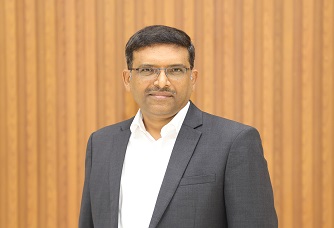
In an interview with Thiruamuthan, Assistant Editor at Industry Outlook, Prashanth Alevoor, Managing Director, Durr India, discusses how Indian manufacturing is moving from isolated automation to connected, intelligent factories. He highlights the role of data connectivity, AI, MES, IoT and digital intelligence in improving quality, flexibility and equipment availability.
He further discusses how sustainability is influencing plant engineering, while highlighting the technologies manufacturers need to build more adaptive, efficient and globally competitive factories.
Read the full interview to understand how India’s factories are moving from traditional automation to connected and intelligent manufacturing.
You have experienced the shift from traditional plant engineering to advanced robotics and digital manufacturing firsthand. Which change has had the greatest impact on how factories operate?
Data connectivity and software intelligence have had the single greatest impact on how factories operate today, far surpassing the introduction of physical robotic arms. While physical robotics replaced manual labor and brought precision to the factory floor, the real game-changer has been the transition from isolated automated cells to fully connected, intelligent ecosystems.
At Dürr, we see this reality perfectly embodied in our Paint Shop of the Future concept, driven by our DXQ digital intelligence software portfolio. The Shift from Muscle to Brain Historically, plant engineering focused on mechanical stability and local automation loops. Early robotics acted merely as the "muscle" of the assembly or paint line—highly repeatable but blind and disconnected. The integration of IoT platforms, advanced sensors, and manufacturing execution systems (MES) transformed these machines into an interconnected network.
Today, a factory does not just run; it communicates. Driven by the rise of electric vehicles (EVs) and varying customer demands, Indian factories can no longer afford rigid layouts. Our Paint Shop of the Future breaks away from this 100-year-old linear standard, replacing it with a flexible, modular layout centered around EcoProBooth painting boxes and EcoProFleet Automated Guided Vehicles (AGVs).
Instead of waiting in a single-file line, car bodies are transported independently by AGVs. If a premium vehicle requires a complex two-tone roof or an EV SUV needs longer processing time, it is intelligently routed to a specific box without stopping or slowing down the rest of the factory floor.
Robotics gave Indian manufacturing its hands, but digital connectivity and modular software gave it its eyes and intellect. By pairing smart software like DXQ with adaptive layouts like the Paint Shop of the Future, we are helping Indian OEMs achieve unmatched efficiency, total flexibility, and world-class sustainable operations.
The conversation has moved from deploying robots to connecting machines, systems and data. What is driving this shift, and where are Indian manufacturers seeing the most tangible value?
The driver behind this shift is the realization that physical automation alone provides diminishing returns. While a robotic arm delivers excellent mechanical precision, an unconnected robot is blind to the broader factory ecosystem.
Today’s shift is driven by the explosive market demand for high product customization, shorter vehicle lifecycles, and the complex co-existence of ICE, hybrid, and electric vehicle (EV) platforms on the same production lines.
Indian OEMs are moving beyond isolated "islands of automation" to connected ecosystems because that is where the true commercial and operational value lies.
In India, manufacturers are seeing the most tangible value in three distinct areas:
Eliminating Unexpected Downtime via Predictive Analytics: In a high-volume automotive plant, a single hour of unscheduled stoppage can cost millions. By connecting factory assets to a digital brain, Indian manufacturers no longer wait for a machine to break down. Digital tools continuously cross-reference micro-telemetry from thousands of sensors. They flag component degradation or subtle temperature spikes weeks before a failure occurs, allowing maintenance to be scheduled during planned operational gaps.
Achieving First-Time-Right Quality for Overseas Markets: Manual inspections and retrospective quality checks are incredibly expensive and generate heavy rework. Software portfolios like Dürr’s DXQ digital intelligence use Artificial Intelligence algorithms to monitor real-time process parameters, such as paint viscosity or nozzle pressure. By catching and correcting minute variations during the active manufacturing process, Indian plants are achieving the stringent "first-time-right" ratios required for premium global exports.
Unlocking True Production Flexibility: Historically, changing a vehicle model meant weeks of reprogramming isolated line systems. Data connectivity bridges the gap between IT and operational technology. A connected plant dynamically downloads customized process parameters to robots on the fly, allowing a single paint shop booth to seamlessly switch between an entry-level hatchback and a premium EV SUV without a single second of line stoppage.
The long-term vision is not simply smarter machines, but smarter production systems that can support people in making faster, more informed decisions across the entire factory.
Many manufacturers have automated individual processes but still operate with disconnected systems. What does it take to move from isolated automation to a truly connected plant?
Moving from isolated automation to a truly connected plant requires a unified digital backbone that connects equipment, production processes, quality systems, maintenance activities, and business operations. The goal is not connectivity for its own sake but creating a common data foundation that enables information to flow seamlessly across the factory and supports better operational decisions.
Solutions such as SCADA, MES, analytics platforms, and enterprise systems need to work together as part of one integrated ecosystem. This creates end-to-end visibility from the shop floor to plant management and establishes a consistent view of production performance.
For automotive manufacturers, the benefits are tangible. In the paint shop, one of the most complex and cost-intensive areas of vehicle production, operators can monitor processes in real time, identify deviations earlier, accelerate root-cause analysis, and optimize assurance, material flow transparency, and coordination between stations, helping manufacturers respond more quickly to changing production requirements.
At Dürr, we believe the real value of digitalization comes from transforming operational data into actionable insights. For example, DXQcontrol, Dürr’s SCADA software, connects to all the shopfloor equipment (process, conveyor, robots, material supply systems and utility systems) and helps monitor the complete production facility from a centralized control room.
Direct control of some areas, e.g., sequencing of the vehicles moving out of high bay storage, based on the production requirement, can be done directly from DXQcontrol. Through our DXQ software portfolio, manufacturers gain a comprehensive view of their operations, allowing them to improve availability, quality, and performance while creating a foundation for continuous improvement and future AI-driven optimization.
As factories generate more data through robotics, MES, IoT and connected equipment, are manufacturers making better decisions with that data, or is data integration still the bigger challenge?
Manufacturers today are generating unprecedented amounts of data from equipment, sensors, alarms and IT systems. However, more data does not automatically lead to better decisions. In many cases, the challenge has shifted from data acquisition to data utilization.
The real obstacle is often not the lack of information, but the ability to connect data from different sources and place it into an operational context. Production, quality, maintenance, and logistics data frequently exist in parallel, making it difficult to understand how events in one area influence outcomes in another. As a result, companies can find themselves data-rich yet insight-poor.
The manufacturers that are seeing the greatest success are focusing on building a common data foundation across the plant. Rather than treating data as isolated streams, they are creating an integrated view that connects process conditions, equipment performance, quality results, and production outcomes.
This enables teams to move beyond reactive reporting and towards proactive decision-making. AI-driven software guides operators to identify deviations earlier, maintenance teams can prioritize actions based on operational impact, and managers gain a clearer understanding of the factors driving productivity, quality, and availability.
For example, DXQ equipment maintenance collects data from all the equipment in the complete plant and shows the current state (e.g., number of cycles – as a counter, run-time of devices – as a time period) of this equipment. This helps the maintenance teams to monitor & plan the maintenance activities of their plant from one centralized place.
Ultimately, competitive advantage will not come from only collecting more data; it comes from transforming complex manufacturing data into actionable insights that can be understood and acted upon by the people running the factory. The most effective digital strategies are therefore those that connect information across the entire value chain and deliver the right insight to the right person at the right time.
AI is increasingly being added to industrial automation. Where do you see AI creating a genuine shift in manufacturing operations, beyond predictive maintenance and process monitoring?
Predictive maintenance is often the first AI use case discussed in manufacturing, but we believe the real transformational potential extends much further. The greatest opportunity lies in helping manufacturers understand complex relationships within highly interconnected production environments and turning that understanding into operational improvements.
In automotive paint shops, for example, thousands of process parameters influence the final quality of a painted vehicle. Historically, identifying the root cause of recurring quality defects has often required extensive engineering expertise and lengthy investigations. AI is changing this paradigm by uncovering hidden correlations across large volumes of production and quality data that would be nearly impossible to identify manually.
Beyond monitoring equipment, AI can support root-cause analysis, quality optimization, process stabilization, and operational decision-making. By continuously analyzing plant-wide data streams, AI systems can detect patterns, recommend corrective actions, and help teams resolve issues before they impact production performance. In addition, AI is enabling a shift from reactive and preventive approaches toward adaptive manufacturing environments that continuously learn and improve.
At Dürr, we see AI as a powerful enabler for transforming industrial data into business value. Through our DXQ software solutions (DXQplant.analytics and DXQequipment.analytics), we are already helping manufacturers use AI to improve first-run rates, reduce defects, increase equipment availability, and optimize resource consumption. The long-term vision is not simply smarter machines, but smarter production systems that can support people in making faster, more informed decisions across the entire factory.
India is becoming an important manufacturing and export base. What should manufacturers prioritize today if they want their plants to remain competitive as global production standards evolve?
To remain globally competitive as international production standards evolve, Indian OEMs are actively shifting away from a cost-effective concept toward high-technology-backed, world-class value creation. Because local manufacturers are transforming India into a primary global export hub, they must match stringent international benchmarks for agility, quality, and carbon compliance.
To achieve this, forward-thinking Indian OEMs are prioritizing two critical pillars:
Embracing Future-Proof Flexibility and Modular Layouts: Managing the domestic EV transition while concurrently expanding a diverse global export footprint means production lines must handle unprecedented model variety. Relying on rigid, 100-year-old linear assembly tracks restricts an OEM's ability to react to sudden global market shifts. Manufacturers are prioritizing modular concepts where car bodies are transported independently by Automated Guided Vehicles (AGVs).
Upgrading to Connected, Data-Driven Quality Infrastructure: To cement India's reputation as a top-tier manufacturing hub, local OEMs are heavily focused on achieving zero-defect quality that commands respect in mature overseas markets. Forward-thinking manufacturers are embedding advanced digital intelligence into their shop floors to leverage predictive analytics.
Sustainability is also becoming a factory-level priority, particularly in energy-intensive processes such as paint shops. How is this changing the way modern manufacturing plants are engineered?
Sustainability has completely evolved from a corporate compliance checkbox to a core architectural driver in modern plant engineering. Because Indian OEMs are scaling up to meet international export criteria, they are actively looking to engineer green factories from the ground up, rather than retrofitting legacy systems. This priority is fundamentally changing factory design, shifting the goal from maximizing sheer throughput to maximizing resource efficiency per unit produced. This structural engineering transformation is visible across three main frontiers:
Eliminating Resource Consumables at the Source: Traditionally, paint shops relied on heavy water usage to capture paint overspray, creating millions of liters of toxic industrial wastewater. Modern plant engineering completely replaces these outdated wet systems. Technologies like Dürr’s EcoDryScrubber and EcoDryX utilize dry separation systems that rely on recyclable filters or stone dust instead of water. This single change eliminates water consumption from the process, removes the need for chemical water treatment, and allows up to 95% of the air to be recirculated—retaining thermal energy and lowering booth heating costs dramatically.
Intelligent Thermodynamic and Energy Routing: Engineering a sustainable factory means treating energy as a circular asset. In the past, the massive heat generated by paint curing ovens or thermal exhaust air purification systems was simply vented out into the atmosphere.
Today, the EcoQPower system is based on a comprehensive analysis of a paint shop’s individual heating and cooling needs and intelligently networks all components with one another, thereby significantly increasing their efficiency. In paint booths, the temperature and humidity of the supply air are often controlled using fixed setpoints.
This frequently results in more heating, cooling, or humidification than is necessary. Smart AC, a DXQ software module, on the other hand, calculates an optimal control range for each system and enables flexible control within these limits. This reduces energy consumption and operating costs without compromising coating quality. For operators, the solution offers a simple way to realize efficiency gains and operate their systems with greater transparency.
Looking ahead, what will separate a genuinely intelligent factory from one that is simply highly automated?
The fundamental line dividing a highly automated factory from a genuinely intelligent one is autonomous adaptability. A highly automated factory is exceptional at doing the same predefined task over and over again with high speed and zero human intervention; it is a master of repetition. An intelligent factory, however, possesses the ability to perceive, predict, learn, and dynamically adjust its own behavior when faced with changing variables. Linear Flow to Modular Orchestration: Automation relies on a fixed track; if one station stalls, the entire line halts.
An intelligent factory operates on a decentralized, modular ecosystem. Instead of a linear conveyor belt, independent EcoProFleet AGVs move products through customizable manufacturing boxes like the EcoProBooth. The central digital brain (DXQcontrol) constantly recalibrates plant logistics on the fly, rerouting products to avoid bottlenecked or maintenance areas based on active demand.
From Reactive Scheduling to Predictive Survival: An automated plant relies on human intervention to schedule downtime, order parts, and adjust for energy spikes. An intelligent factory predicts its own future needs. It cross-references production demands with energy market costs, ambient climate forecasts, and equipment wear-and-tear models. It will autonomously decide to run heavy thermal cycles when green energy is cheapest or schedule its own micro-maintenance routines during natural gaps in the production log.
Ultimately, automation is about replacing manual muscle with high-speed mechanics. Intelligence is about giving the factory an active brain—transforming the shop floor from a passive asset into a self-optimizing, resilient business partner.
Boost Your Emotional IQ: Being aware of your feelings and others’ helps you vibe better with your team and handle stress like a pro.
Keep It Real and Transparent: Share your goals and feedback honestly—people appreciate authenticity and clear communication.
Stay Flexible and Curious: The world’s changing fast. Be open to new ideas, learn from mistakes, and pivot when needed.
Build Your Squad and Network: Connect with people who inspire you, both online and offline. Collaboration and diverse perspectives are your power moves.
Lead with Integrity and Authenticity: Walk your talk. Show up as your true self and be accountable —people follow leaders who are genuine and trustworthy.
Prashanth Alevoor is a seasoned business leader with over three decades of experience in automation, robotics, plant engineering and automotive manufacturing. He joined Dürr in 2015 as Head of the Robotic Application Technologies Division, overseeing robotics, paint circulation, gluing and dispensing applications. He later served as Director and Board Member before becoming Managing Director in 2024. Previously, he held leadership roles at ABB, Asia Motor Works, Man Force Trucks and VE Commercial Vehicles, along with engineering roles in automation and CNC controls.




We use cookies to ensure you get the best experience on our website. Read more...