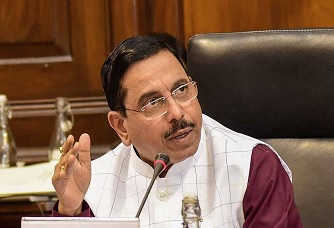
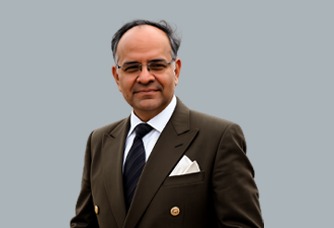
Prahlad Joshi, Union Minister of Consumer Affairs, Food and Public Distribution & New and Renewable Energy, urged Uber to support its drivers to adopt Electric Vehicles (EV) in line with Prime Minister Modi’s push for clean mobility on Tuesday.
CII Annual Business Summit 2026 saw Joshi in a meeting with Uber CEO discussing EV adoption and consumer-related issues. Joshi expanded on the meeting as, “Being one of the largest networks, I have requested him and insisted to him that he should support the people, the drivers and the owners of the Uber fleet to convert into EV vehicles.”
Uber Technologies, Inc. is a global mobility platform headquartered in San Francisco, providing ride-hailing and food delivery services. Today, Uber Chief Executive Officer Dara Khosrowshahi met Union Finance Minister Nirmala Sitharaman to discuss the company’s broader expansion and EV adoption plans.
Prahlad Joshi, who also holds the portfolio of Consumer Affairs, stressed that Uber should focus on consumer affairs compliance. The company agreed to the instruction and replied that they will initiate a self-audit and report back. This meeting suggests that the government’s clean mobility push is no longer a suggestion, but is slowly becoming a mandate.
Also Read: Building EV Bus Ecosystems for India's Clean Mobility Goals
Joshi also spoke about the Prime Minister’s vision regarding solar pumps and renewable energy adoption. "PM spoke about solar pumps and also about EVs. As far as solar pumps are concerned, we have given a great push under the PM KUSUM scheme,” he said. He also added that the government has announced the initiation of KUSUM 2.0 to expand the initiative further.
The Pradhan Mantri Kisan Urja Suraksha evam Utthan Mahabhiyan (PM KUSUM), launched in 2019 by India's Ministry of New and Renewable Energy (MNRE), promotes solar irrigation pump installations and solarising existing grid-connected pumps by providing subsidies of about 30 to 50 percent.
Joshi expanded on the conversation by saying that EVs charged during daytime hours using rooftop solar power can significantly reduce operational costs. He said that this will reduce the cost per mile, attracting people to shift to electric vehicles.
At the policy level, the Delhi Government’s Draft EV Policy 2.0 reflects an urge for aggressive EV adoption. The new draft aims for up to 95 percent of all new vehicle registrations to be electric by 2027. This marks a dramatic jump from the earlier 2020-2023 policy’s 25 percent target. The policy also plans to ban new petrol two–wheelers from 2028. These policy changes are in the wake of Delhi recording an average Air Quality Index of 191 in 2025, with winter levels crossing 300, marking a very poor zone.
Industry leaders warmly acknowledged the policy changes, citing them as a necessity to curb Delhi’s rising air pollution. Raman Bhatia, Managing Director of Servotech Renewable Power System, said, “Servotech gladly welcomes the Delhi EV Policy 2.0, which has been a long-overdue emergency response to the toxic air our national capital breathes. For years, we’ve treated air pollution as a seasonal headline, but as someone deeply embedded in the green energy sector, I see it as a systemic failure of our mobility habits. The true hero of this policy isn’t the subsidies but the mandatory transition for two-wheelers and commercial fleets. We are finally moving past the choice of going green to the necessity of being clean.”
The policy also states that EV buyers will receive a 100 percent road tax exemption on vehicles up to Rs 30 lakhs, with additional incentives for women buyers and those scrapping older vehicles. It also promises subsidies up to Rs 50,000 for retrofitting petrol and diesel vehicles.



.jpg "Building EV Bus Ecosystems for India's Clean Mobility Goals")
We use cookies to ensure you get the best experience on our website. Read more...