
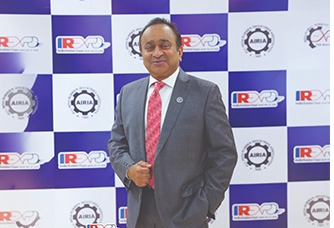
Shipbuilding policy is gaining urgency after Indian Oil Corporation (IOC) Chairman A S Sahney said India needs a stronger shipping fleet to ensure discounted crude imports translate into savings.
Speaking at the Energy Technology and Innovation Meet in Goa, Sahney warned that rising tanker freight costs were eroding the advantage and called for crude oil and LPG storage.
His remarks raise a manufacturing question beyond vessel availability: can Indian shipyards become more competitive, while suppliers expand their role in marine equipment and components?
Government support is growing, but delivery, localization and cost competitiveness will determine whether policy turns into capacity.
Sahney’s October 27 remarks highlight the commercial consequences of India’s limited tanker availability. Higher freight rates for Russian crude shipments from western ports have weakened the savings refiners could otherwise achieve through discounted purchases.
India needs competitive shipyards capable of constructing suitable commercial vessels and a supply chain that can deliver marine machinery, propulsion equipment, electrical systems and other specialized components.
Greater domestic sourcing could create opportunities for engineering companies and heavy-equipment manufacturers, provided their products meet vessel specifications, safety standards and cost requirements.
In February 2025, Sahney said IOC was open to buying more American crude if it was commercially viable and competitively priced, while identifying freight charges as a concern.
His January 2026 comment similarly emphasized commercially competitive crude sourcing and diversification. His latest intervention connects refinery economics with a separate strategic requirement: stronger shipping and manufacturing capabilities.
Also Read: India's Shipbuilding Expansion: Strengthening Global Presence
The government’s Rs 69,725 crore shipbuilding and maritime package provides a framework for addressing the cost and capacity constraints Sahney has highlighted.
Three measures are particularly relevant:
These measures could strengthen shipbuilding policy implementation by improving production capacity and the financial viability of vessel construction.
The government has also identified heavy engineering, steel, mechanical equipment, electrical systems and electronics as industries that benefit from shipbuilding.
The central question is whether expanded shipyard capacity will translate into greater domestic value addition. Building a vessel in India does not automatically mean its major machinery and equipment are manufactured locally.
Manufacturers of pumps, valves, compressors, propulsion equipment, electrical systems and control technologies could benefit if domestic shipbuilders increase procurement from Indian suppliers.
Sahney’s remarks provide a commercial reason to accelerate this process: dependence on external shipping capacity can expose refiners to volatile freight costs.
The government’s support package offers a foundation, but its impact on crude tanker manufacturing will need to be assessed through actual vessel orders, delivery performance, domestic component sourcing and improvements in shipyard productivity.





.jpg "Building EV Bus Ecosystems for India's Clean Mobility Goals")
We use cookies to ensure you get the best experience on our website. Read more...