The government has made a big move by cutting excise duty on petrol and diesel. This comes at a time when global oil prices are rising fast due to tensions in the Middle East. The decision is aimed at protecting consumers from a sudden spike in fuel prices.
Why the Government Took This Step
The main reason behind this decision is the sharp rise in global crude oil prices. Ongoing tensions in the Middle East have created uncertainty in oil supply. One of the biggest concerns is the possible disruption of key oil routes, which could limit supply and push prices even higher.
India imports a large portion of its crude oil. So when global prices increase, fuel prices in the country are directly affected. Without any action, petrol and diesel prices could have gone up quickly.
To avoid this situation, the government decided to reduce the tax it collects on fuel. By cutting excise duty, it is trying to balance the rising cost of crude oil and prevent a sudden burden on the public.
Also Read: Synthetic Engine Oils Optimizing Friction, Wear, and Fuel Economy
What Exactly Has Changed
The government has reduced the excise duty on both petrol and diesel significantly. Here’s a simple comparison:
|
Fuel Type |
Previous Excise Duty |
New Excise Duty |
Change |
|
Petrol |
Rs 13 per litre |
Rs 3 per litre |
↓ Rs 10 |
|
Diesel |
Rs 10 per litre |
Rs 0 per litre |
↓ Rs 10 |
This change has been implemented immediately.
In addition to this, the government has also increased taxes on the export of certain petroleum products. This is done to ensure that more fuel stays within the country instead of being exported.
Will Fuel Prices Actually Go Down?
This is the most important question. And the short answer is: not necessarily.
Even though taxes have been reduced, global crude oil prices are still high. Oil companies are already paying more to import crude oil. The tax cut mainly helps them manage these higher costs.
So instead of fuel prices dropping, the goal is to prevent them from rising further.
In simple terms:
This means you may not see a big drop in petrol or diesel prices at the pump, but you are also being protected from a sharp increase.
How Global Oil Prices Affect India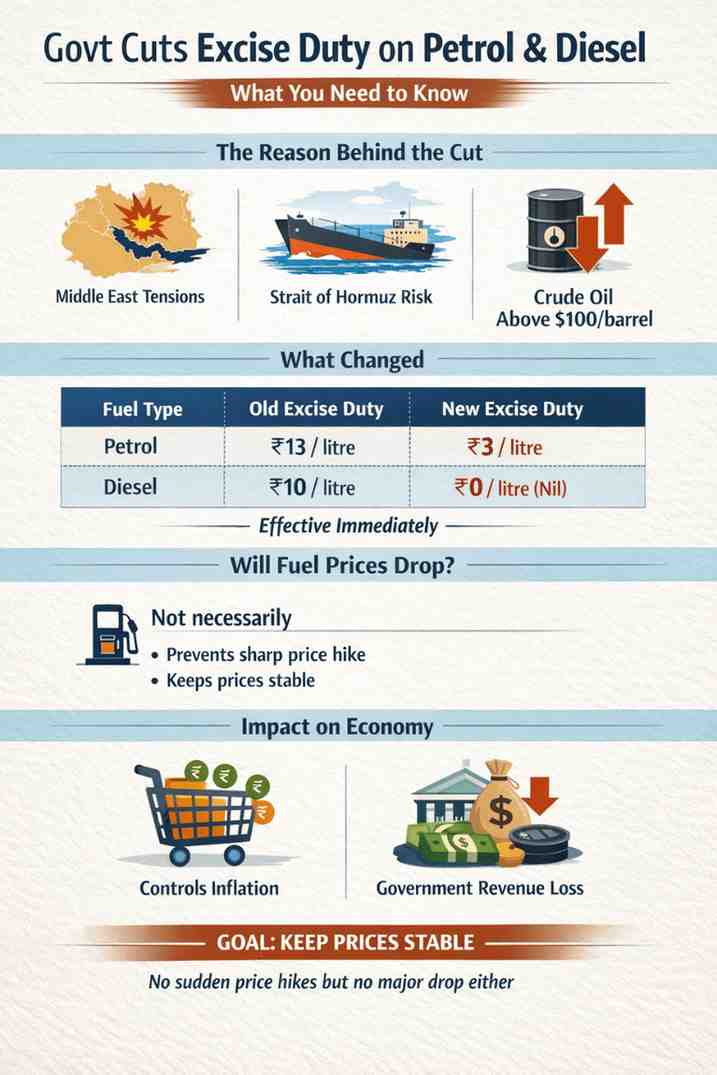
India depends heavily on imported crude oil. This means any change in global oil prices directly affects the country. When prices rise internationally, India has to pay more to buy the same amount of oil.
Most of this oil comes from the Middle East. So, when there is tension or conflict in that region, supply becomes uncertain. Even the fear of disruption can push prices up in the global market.
Another key factor is the Strait of Hormuz. A large portion of the world’s oil passes through this route. If this route is blocked or disturbed, oil supply drops and prices shoot up quickly.
For India, this creates a chain reaction:
This is why the government keeps a close watch on global oil trends. When prices rise too fast, steps like tax cuts are used to manage the situation and protect the economy from sudden shocks.
Impact on Economy and Daily Life
Fuel prices affect almost everything in daily life. When fuel becomes expensive, transportation costs go up. This leads to higher prices for goods like vegetables, groceries, and other essentials.
By keeping fuel prices stable, the government is trying to control inflation. This helps reduce the pressure on household budgets.
However, there is a trade-off.
The government earns a large part of its revenue from taxes on fuel. By cutting excise duty, it will lose a significant amount of income. This could impact government spending in other areas.
At the same time, oil companies benefit from this move because it reduces their financial pressure during a period of high global prices.
What Could Happen Next
The current situation is uncertain, and much depends on how global events unfold. If tensions in the Middle East continue or get worse, crude oil prices may remain high or even rise further.
In that case, fuel prices in India could come under pressure again. The recent excise duty cut may not be enough if global prices keep increasing for a long time. The government may have to take more steps, such as further tax changes or policy adjustments.
On the other hand, if the situation improves and oil supply stabilizes, global prices could fall. This may open the door for actual fuel price cuts in India, which consumers would directly benefit from.
For now, the focus remains on stability. The government is trying to avoid sudden shocks while keeping the economy steady. Consumers, businesses, and oil companies are all closely watching how the global situation develops in the coming weeks.
The Bigger Picture
This decision is more about managing a crisis than offering relief. The global oil market is unstable right now, and prices can change quickly.
The government had two options:
It chose the second option.
This move shows that the focus is on keeping prices stable rather than making fuel cheaper.
Final Takeaway
The excise duty cut is not a price drop strategy. It is a safety measure. You may not see petrol and diesel becoming cheaper, but this step helps avoid a sudden increase in costs. In a time of global uncertainty, this kind of move helps keep things under control.

.jpg "AR Enterprises: Building The Supply Networks Behind India's Construction Growth")
.jpg "Industrial Packers: Engineering Industrial Packaging for India's Manufacturing Future")




We use cookies to ensure you get the best experience on our website. Read more...