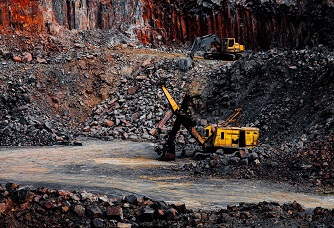
The latest mining penalty rules now ease the burden on manufacturers who rely on mineral concessions.
The Mines and Minerals Adjudication of Penalties Rules, 2026, create a civil-penalty system linked to lease size rather than the full value of any illegally extracted material.
Manufacturers and lease holders face clearer, limited financial exposure instead of open-ended recovery claims that once ran into thousands of crores.
The rules also offer a quick exit route that lets companies close a violation by paying the minimum penalty and fixing the issue.
For Indian manufacturers who need steady access to minerals, the change brings greater predictability to compliance costs.
The Mines Ministry notified the rules on 30 July 2026 and brought them into force from 1 August. The Mines and Minerals (Development and Regulation) Amendment Bill received Presidential assent on 18 August.
The earlier system often linked financial penalties to the value and extent of illegally extracted minerals and the resulting loss to the public exchequer. The new framework replaces that approach with fixed civil penalties based on the size of the lease.
Penalty ranges under the rules:
Reporting-related violations carry separate caps of Rs 5,000, Rs 1 lakh, Rs 2 lakh or Rs 3 lakh depending on lease size.
Also Read: Advancing India's Manufacturing Realm Toward Global Leadership
The rules introduce a summary-disposal route. If a lease holder pays the prescribed minimum penalty and rectifies the violation, authorities need not start or continue an inquiry. This mechanism gives manufacturers a predictable way to resolve certain contraventions without prolonged proceedings. Experts note that this shift moves enforcement from criminal recovery of mineral value toward administrative civil penalties under Section 25A of the MMDR Act.
From a manufacturing standpoint, the capped penalties and summary route reduce the risk of great, unpredictable demands. Companies that hold mining leases or depend on mineral inputs can now forecast compliance costs more accurately.
The overall Rs 50-lakh ceiling and per-hectare structure replace open-ended claims that once reached tens of thousands of crores in states such as Odisha. At the same time, some stakeholders flag potential downsides.
Former Odisha mines official U C Jena observed that a lessee who extracts far beyond the permitted quantity could earlier face recovery of the full extra mineral value plus penalty. The new rules contain no explicit cost-recovery provision for that excess.
Advocate Sankar Prasad Pani pointed out that the three-year limit on filing complaints may weaken action when irregularities surface later through data reconciliation. Deloitte partner Rajib Maitra noted that the framework focuses on civil penalties for regulatory non-compliance rather than the earlier combination of penalty and mineral-value recovery.
Despite these concerns, the rules deliver clearer boundaries for manufacturers. Fixed ranges, an overall cap and a summary-closure option give lease holders a more defined compliance path, while the government retains the power to adjudicate violations under the new civil-penalty system.
.jpg "AR Enterprises: Building The Supply Networks Behind India's Construction Growth")
.jpg "Industrial Packers: Engineering Industrial Packaging for India's Manufacturing Future")





We use cookies to ensure you get the best experience on our website. Read more...