India is increasingly pursuing to link digital payment system in its free trade agreements.
Commerce Secretary Rajesh Agrawal has stated that payment-system alignment is being discussed as part of India’s FTA negotiations, particularly with countries which have a large Indian diaspora.
Government is also looking to expand India’s fintech capabilities across Asia, Africa and Latin America, where informal economy and cash dependency remain significant.
India’s objective to include payment-system interoperability could therefore have implication far beyond faster digital transaction.
Agrawal indicated that India is seeking Payment-system alignment in its FTA negotiation, particularly with countries hosting a large Indian diaspora. Payment links were included during India’s recent trade agreement with New Zealand and European Union.
Similarly in June, India and Nepal linked Unified Payment Interface (UPI) with Nepal’s National Payment Interface launching a cross border remittance mechanism. India’s UPI was connected with Cambodia’s KHQR system, while a UPI-Favara corridor with Maldives went live in July.
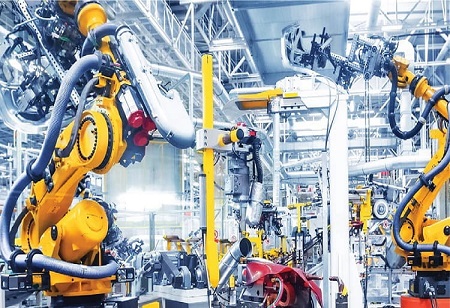
Also Read: From Robots to Intelligence: How India’s Auto Plants Are Changing
The push comes as India aims to expand its service export basket beyond the Information & Technology and professional services. Agrawal too stated that India should use its experience of developing financial solutions to become a larger exporter of digital financial services.
With this move India is creating a greater avenue for its financial services companies looking to serve oversea markets, supported by FTAs and International Partnerships. Encouraging Indian financial company to collaborate with local institutions and entrepreneur to create cross border payment, digital lending, insurance, wealth management, finance investment and trade finance service solutions tailored for the particular economy.
The government is also working on assessing challenges that come while trying to mobilize fintech services abroad. These include regulatory requirement, telecommunication infrastructure, cloud services, cyber security and data flow.
Agrawal also highlighted the potential impact of reduction in remittance cost from 6 percent to 3% percent, by minimizing the number of intermediaries and currency conversion cost. This move will leave an additional USD 5 billion in the hand of migrant Indian workers.
Boosting household income and thereby supporting higher consumption, savings and investments ultimately boosting the economy, particularly given the fact that India receives USD 125 billion in remittances annually.
The biggest opportunity lies in country where the small business activities remain cash driven. The World Bank recently pointed out that firms that receive payment digitally are less likely to face credit constraint.
Digital transactions generate verifiable financial trails, helping the lenders asses and identify cash flow, credit worthiness and viability of a business. This is especially important in economies where the credit system is underdeveloped, with lower levels of financial development and a large informal sector, where limited information and lack of audit report prevent small business from accessing formal credit.
Many Small businesses may have viable operation model but lack formal transaction statements and audit reports. Digital payment records can partially bridge this information gap. Thus, facilitating the transition of informal economic activity into formal financial system.
With India negotiating more FTAs, payment-system connectivity could consequentially be an important part of how the finance service export, remittance and trade expands.
The significance of this approach lies in its multiplier effect. Payment connection can reduce transaction cost and provide transaction data; transaction data can enable small business to access credit services, creating a digital payment ecosystem which will provide new opportunity to Indian financial service companies. UPI could be more than a domestic payment system and be part of a wider mission to expand India’s footprint across the Global south.






We use cookies to ensure you get the best experience on our website. Read more...