In 2026 and beyond, carbon regulatory regimes will continue to evolve as a major determinant of capital allocation, supply chain profits, and competitive edge across the transportation and automotive sectors.
The effect of regulatory pressure is evident in strained financial exposures. The European automotive industry is struggling with penalties of approximately €16 billion due to the 2025 emission reduction goals. Additionally, before the full rollout of the EU's Carbon Border Adjustment Mechanism (CBAM) regulation in 2026, India’s exports of aluminum and steel declined by about 24%, clearly illustrating changing market dynamics and legal implications.
Subsequently, premiums associated with low-carbon materials tend to diminish margins by 10 to 12% for businesses when their sourcing tactics are misaligned. In mobility-intensive industries, scope 3 emissions account for the largest share of total carbon emissions, prompting strict disclosure and sourcing scrutiny.
Cumulatively, these indicators signify a structural transition in which mobility decisions encompassing logistics design, sourcing processes, and production geography incorporate cost exposure into operating margins, thereby reviving the entire mobility economics.
Why Carbon Regulations Make Mobility a Key Margin Driver?
Carbon regulations influence logistics intensity through financial factors rather than operational decisions. These financial elements mainly include fuel standards, indirect emission disclosures, and emissions trading systems.
To sum up, mobility is at the center of carbon regulations, so for market players, mobility architecture determines carbon accountability, which, in turn, affects margin resilience.
Here, mobility strategy consulting plays a crucial role by devising a strategic roadmap for supply chain leaders and mobility companies, using data-driven strategic intelligence to manage margins while traversing a stringent regulatory landscape.
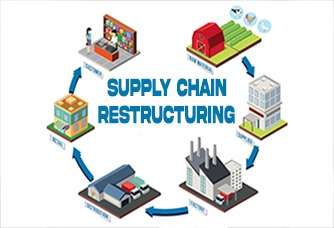
How Supply Chain Mobility Frameworks are shaped in 2026
a. Production Networks and Their Regionalization: Organizations are curbing on supply chain corridors to decrease carbon-adjusted cost to border pricing. Policy stability and infrastructural readiness affect site selection, so now preference is given to manufacturing hubs that prove to be carbon efficient over geopolitical stability.
b. Intensity-focused Designs: Businesses are directing their focus on carbon intensity per unit of output over complete emission caps, which is helping with scaling the production and minimizing integrated carbon cost per product.
c. Supplier Carbon Integration: Manufacturers pay significant attention to carbon performance when developing procurement strategies. Hence, leading mobility players are moving towards systematic supplier involvement, needing verifiable data while motivating upstream decarbonization
Given that 70-90% of Scope 3 emissions make up the total carbon footprint, upstream integration is vital for manufacturers.
d. Digital Logistics Orchestration: AI-powered platforms simulate routing decisions related to fuel costs, carbon prices, and policy conditions. Investments in AI-enabled supply chain operations are projected at around $20 billion in 2025-26, emphasizing the need for digital accuracy amidst complex carbon challenges.
AI-powered systems in the mobility sector increase visibility and reduce lead times. Overall, companies that focus on responsive, distributed networks tend to avoid the challenges of carbon pricing and the penalties imposed on rigid supply chains.
What are the Strategic Implications of Reactive Compliance on Long-Term Margins in Mobility Supply Chain?
Short-term regulatory responses and adherence to the law, in the form of emissions pooling arrangements and sourcing low-carbon inputs at high premiums in the last stage, alleviate the risk of immediate penalty exposure. However, such short-term measures are ineffective at strengthening structural competitiveness.
Duplication threats increase with a fragmented legal regime across prominent economic blocs; thus, regional divergence binds organizations to localize production, expand fixed capital commitments, and implement identical compliance systems. Without systematic architectural design, carbon complexity increases, and margin predictability diminishes.
A leading survey found that around 98% of supply chain leaders are revising their strategies in response to regulatory fluctuations and tariffs. However, 54% of supply chain leaders point out that around 12 months of duration is required for shifting the supply regionally by at least 25%. This gap between operational response and policy shifts makes organizations prone to financial vulnerability in the transition phase.
Market leaders who integrate carbon metrics directly into procurement decisions, capital allocation models, and footprint design through scenario modelling, rather than relying on annual responses to regulatory change, evade the challenges of supply chain margin reduction.
How Mobility Consulting Strategy of Stellarix Can Help Protect or Improve Margins
Innovation and resilience are pressing challenges that can be faced effectively in the contemporary business landscape through partnering with a suitable co-man. Stellarix assists businesses in minimizing the complications associated with value creation and technology amid a dynamically evolving industrial environment.
Strategic partner scouting services assist companies in revitalizing their businesses through collaboration with suitable ventures and accelerate their transformation by improving speed and scale. Companies that act early in this area benefit from a strong ecosystem of partners in the value chain and increased business resilience. Key areas include:
In addition to this, through tactfully designed mobility consulting, companies function seamlessly in a carbon-regulation environment, covering everything from carbon-aware mobility analysis and optimized logistics to technology roadmaps.
Market players, by timely opting for business strategy consulting, lower risk factors and ensure strong margins via long-term scalability and prioritization of ROI-driven investment. To sum up, success in the volatile trajectory of the carbon-regulated landscape can be achieved through strategic partnerships and actionable intelligence consulting.
Final Words
With carbon regulations becoming a major economic force shaping the mobility sector's profits to a significant extent, along with supply chain orchestration and capital allocation, it is mandatory that mobility sector activities revolve around compliance.
About €16 billion in penalties and decreased margins from premiums for green or carbon-neutral materials make carbon liability a critical issue for mobility companies looking to manage financial risk disclosure. By integrating carbon intelligence into digital orchestration, network planning, and supplier choices, organizations can convert regulatory changes into stronger business resilience in the EU, US, and APAC regions. In contrast, companies that respond only to regulations often view carbon as a steady margin decline.
Stellarix, through its business strategy consulting, empowers businesses to build robust mobility architectures to ensure cost stability and foster long-term competitiveness by reducing regulatory risk exposure.







We use cookies to ensure you get the best experience on our website. Read more...