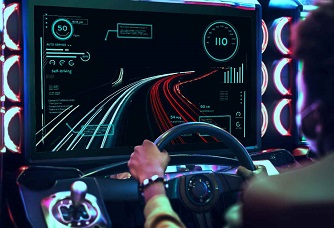
AI vehicle testing is emerging as an important tool for automotive manufacturers seeking to manage the growing complexity of vehicle development.
HCLTech’s launch of an artificial intelligence-powered Verification and Validation (V&V) solution, built on NVIDIA’s simulation technologies, brings this challenge into focus.
The service is aimed at vehicle manufacturers and Tier 1 suppliers who want automated software validation, broader testing coverage and sped-up release cycles.
Manufacturers are under immense pressure to meet software testing and compliance requirements as vehicles’ connected features and electronic systems rely heavily on software.
Virtual simulation could help address these pressures by reducing reliance on physical tests, although its actual impact on automotive engineering costs will depend on implementation and measurable results.
Traditional vehicle development involves repeated validation cycles, engineering resources and physical testing to assess vehicle systems under different conditions.
HCLTech’s V&V for Auto adopts a simulation-first approach that connects requirements, test creation, execution, analysis and compliance evidence across the validation lifecycle.
For manufacturers, potential operational benefits include:
Also Read: India Set to Cross 5 Million Car Sales in FY27: Auto Industry Growth Vision
Although AI vehicle testing can expand simulation capabilities, it does not eliminate the need for real-world validation.
Physical testing remains important for assessing hardware behavior, component performance and vehicle responses under actual operating conditions.
The business case will therefore depend on factors such as:
The launch reflects a wider shift towards software-defined vehicles, where software updates and connected functions extend development and validation requirements beyond initial production.
HCLTech Chief Growth Officer and Global Head of Mobility Pankaj Tagra said traditional validation processes are struggling to keep pace with increasingly complex vehicle systems and frequent software updates.
NVIDIA’s Dr Sebastian Scheurle, also highlighted validation as a factor shaping the pace of software-defined vehicle development.
For Indian automakers and component suppliers, AI vehicle testing could offer a way to manage increasingly complex engineering programs while maintaining traceability across software releases.
Its long-term manufacturing value, however, will depend on demonstrated improvements in validation efficiency, engineering expenditure and release timelines rather than automation capabilities alone.





We use cookies to ensure you get the best experience on our website. Read more...