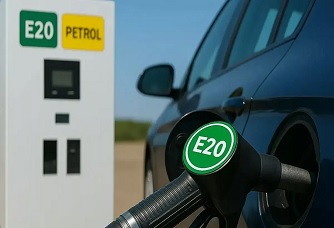
Many vehicle owners have questioned whether E20 petrol is safe for their cars. The government has now shared its findings.
It said the fuel may reduce mileage by three to five percent in some older vehicles. However, there is no evidence of widespread engine damage or a shorter engine life. The update came in a written reply to Parliament.
The government said most concerns relate to vehicles designed for E10 fuel. These vehicles may show a small drop in fuel mileage after switching to E20 petrol.
However, detailed testing found no major mechanical problems linked to the fuel.
The Ministry of Road Transport and Highways said studies were conducted on different vehicle categories. These included two-wheelers, passenger cars, and commercial vehicles.
The tests were carried out by:
The government said the findings did not show any widespread engine failures. There was also no proof that E20 fuel reduced engine life.
Officials added that flex-fuel vehicles and models designed for E20 can use the fuel without any issue.
Vehicles made for E10 fuel may experience slightly lower fuel efficiency. This happens because ethanol contains less energy than pure gasoline.
Also Read: Is E20 Fuel Ruining Your Engine? Mileage Drops & Compatibility Risks
The government explained that older vehicles built for E10 fuel were not originally optimized for higher ethanol blends.
As a result, some owners may notice:
The government stressed that these effects are expected and do not indicate engine damage.
It also said there is no verified evidence that E20 fuel causes widespread failures in fuel systems or engine parts. The findings are based on laboratory testing and real-world vehicle performance.
The government continues to promote ethanol-blended fuel to reduce crude oil imports and lower vehicle emissions. India has expanded ethanol blending over the past few years. The move supports energy security and reduces dependence on imported fossil fuels.
Automobile manufacturers have also introduced new vehicles that are compatible with E20 fuel. Officials said the transition is being carried out in phases. Newer vehicles are being designed to operate efficiently on higher ethanol blends.
The government added that consumers should follow the fuel recommendations provided by vehicle manufacturers. Owners of older vehicles may notice a small reduction in mileage. However, they should not expect widespread engine problems based on current evidence.
The latest statement aims to address concerns raised by vehicle owners after E20 fuel became available across more fuel stations in the country. According to the government, current testing does not support claims that E20 causes large-scale engine damage or reduces vehicle life.
.jpg "AR Enterprises: Building The Supply Networks Behind India's Construction Growth")
.jpg "Industrial Packers: Engineering Industrial Packaging for India's Manufacturing Future")





We use cookies to ensure you get the best experience on our website. Read more...