India has turned down Russia’s offer to purchase US-sanctioned liquefied natural gas (LNG) cargoes, even after rising conflicts in West Asia put huge pressure on India’s energy security.
India conveyed its decision during Russian energy minister Pavel Sorokin's visit to New Delhi on April 30, where he held talks with Hardeep Singh Puri, Petroleum and Natural Gas Minister.
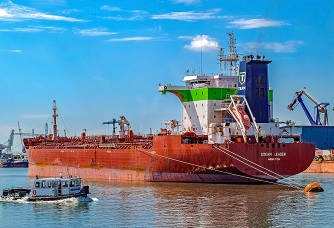
This decision from India’s side has left at least one Russia-linked LNG shipment stranded near Singapore. A 138,200-cubic-metre tanker that had earlier signaled Gujarat's Dahej terminal as its destination is now adrift in Singaporean waters without a destination.
India’s reluctance to accept LNG has its roots in the compliance risks that directly threaten its energy security calculations. Unlike crude oil, which can sometimes be obscured during ship-to-ship transfers, LNG cargoes are harder to conceal as they are easier to monitor through satellite tracking systems.
The cargo, which is stranded in the Singaporean waters, is from Russia’s Portovaya LNG plant in the Baltic Sea, which is under US sanctions. This makes the transaction legally risky for Indian buyers.
Also Read: What's Driving LNG Adoption in India’s Commercial Transport
According to the statements given by sources to Reuters, India says that they are willing to buy Russian LNG that is not under US sanctions, but most of these are already tied up in long-term contracts with European buyers. Meanwhile, China continues to purchase both sanctioned and unsanctioned Russian LNG.
India depends on Russia for the majority of its crude oil imports. Before the US- Israel conflict with Iran, which started on February 28, India had routed nearly half of its gas needs and crude oil through the Strait of Hormuz. Russia is now seeking long-term supply agreements with India for LNG and fertilizers like potash, phosphorus, and urea. Sorokin is expected to revisit India in June for further talks on the matter.
On the policy front, the government has announced a rationalization of royalty rates and methodologies for crude oil, natural gas, and casing head condensate (a light hydrocarbon liquid obtained during gas production) under the ORD Act.
Minister Puri stated that he expects the new policies to bring greater clarity to India’s oil and gas regime. Through a post on X, he stated, “In a big boost for the country’s Upstream Sector, rationalization of royalty under the ORD Act marks a new era for our Oil & Gas regimes by eliminating inconsistencies and driving growth in the upstream sector under the leadership of PM Narendra Modi.”
The revised framework under section 6A of the ORD would introduce lower and rationalised royalty rates across different regimes for crude oil, natural gas and casing head condensate, expecting to bring greater uniformity to India’s oil and gas sectors.
The ministry expects these new policies to provide certainty and confidence to investors, enabling long-term planning and encouraging fresh investments in exploration and production activities.
.jpg "Fostering High-precision, High-performance with Optimal Metal Finishing Excellence")

.jpg "Devising Future-Proof Sustainable Industrial Packaging Solutions")




We use cookies to ensure you get the best experience on our website. Read more...