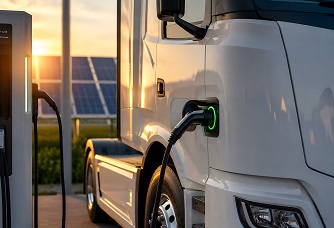
E-CV makers seek more time as localization rules take effect under the PM eDRIVE scheme. This has led electric commercial vehicle manufacturers to face compliance challenges.
The Society of Indian Automobile Manufacturers requests a seven-month extension for traction motor and motor controller systems.
China’s export curbs on rare-earth magnets disrupt global supplies. Geopolitical tensions further raise freight costs and transit delays.
Industry executives warn of possible production disruptions without relief. The government has yet to decide on the fresh request.
Key Highlights
Electric commercial vehicle makers remain unable to fully meet localization requirements under the PM Electric Drive Revolution in Innovative Vehicle Enhancement scheme. The Phased Manufacturing Program requires manufacturers of e-buses and e-trucks to produce key components of traction motors in India.
The government originally set the deadline for September 1, 2025. It deferred the date twice after industry representations. The latest extension allowed imports of traction motors containing rare earth magnets only until August 31, 2026. Compliance rules therefore begin on Tuesday.
Also Read: India as a Global Manufacturing Hub in the New Mobility Era
The Society of Indian Automobile Manufacturers wrote to the Ministry of Heavy Industries on July 22, 2026. It requested that the localization deadline move from September 1, 2026 to April 1, 2027.
SIAM cited continued disruption in the supply of rare earth magnets caused by China’s export restrictions on heavy rare earth elements such as dysprosium and terbium. Although some export licenses have been issued, procurement still faces regulatory approvals, long lead times and supply uncertainty.
The industry body also pointed to geopolitical tensions in West Asia. These tensions increase transit times, freight costs and overall uncertainty for critical components.
SIAM argues that an extension will prevent production disruptions if supply constraints continue. The extra time will help manufacturers and component suppliers develop local supply chains and expand manufacturing capacity. It will also support a smooth shift from imported systems to partially localized and eventually fully localized traction motor and motor controller systems.
E-CV makers face a difficult transition as localization rules take effect amid ongoing global supply challenges. Rare-earth magnet shortages and geopolitical pressures limit the industry’s ability to meet the current deadline.
A measured extension could protect production volumes while manufacturers build domestic capacity. At the same time, the government must maintain pressure for genuine localization to strengthen India’s electric vehicle ecosystem. Clear and timely communication on the pending request will help manufacturers plan with greater certainty and avoid unnecessary disruptions in the electric commercial vehicle segment.






We use cookies to ensure you get the best experience on our website. Read more...