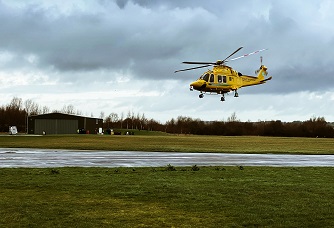
India has taken another step in advancing satellite navigation with the approval of its first Private Point-in-Space (PinS procedure) for helicopter operations.
The new satellite navigation procedure has been approved for Undavalli Heliport, marking a major milestone for India's aviation sector.
The approval allows helicopters to safely perform instrument approaches without relying on conventional landing infrastructure. It also strengthens the country's push toward modern, technology-driven aviation and better regional connectivity.
The development comes months after India demonstrated the growing capabilities of its satellite-based aviation ecosystem. Earlier, the country successfully conducted a commercial aircraft landing using GAGAN, India's indigenous satellite-based augmentation system.
That achievement proved satellite-guided landings were ready for fixed-wing aircraft. The latest approval now extends similar capabilities to helicopters, opening new opportunities for safer operations in remote and challenging locations.
Unlike airports, many heliports do not have conventional instrument landing systems. This limits helicopter operations during poor weather or low visibility. The approved PinS procedure addresses this challenge by using advanced satellite-based navigation technology.
The procedure was developed by the Airports Authority of India (AAI) and approved by the Directorate General of Civil Aviation (DGCA).
The Civil Aviation Ministry said PinS procedures help helicopters conduct precise instrument approaches even without ground-based navigation aids. This improves operational safety and reliability, especially in difficult terrain and adverse weather conditions.
The approval also reflects India's growing focus on expanding advanced aviation technologies beyond major airports.
The new PinS procedure offers several operational benefits.
These advantages are expected to benefit both public and private helicopter operators. They also support faster response during emergencies and improve access to difficult locations.
Also Read: Green Aviation in India: Impact vs Implementation Challenges
Civil Aviation Minister Ram Mohan Naidu described the approval as the beginning of a new phase in helicopter operations. He said the milestone will improve flight safety, operational efficiency, and all-weather accessibility.
The minister also reaffirmed the government's commitment to building a globally competitive and technology-driven helicopter ecosystem. He emphasized the adoption of modern navigation technologies across the aviation sector.
According to the ministry, the approval will serve as a model for similar PinS procedures across the country.
The expansion is expected to support several critical sectors, including:
As India continues to strengthen its satellite navigation capabilities, the focus is shifting beyond commercial airports. The first PinS procedure at Undavalli Heliport shows how advanced navigation can improve helicopter operations across the country. With more such procedures expected, India's aviation network could become safer, more reliable, and accessible throughout the year.







We use cookies to ensure you get the best experience on our website. Read more...