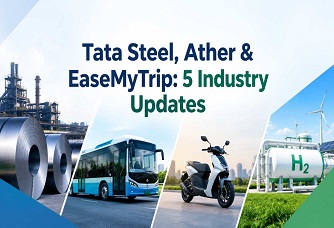
Indian Industry is seeing developments across steel, electric mobility, thermal power and green hydrogen, with Tata Steel, EaseMyTrip and Ather Energy announcing significant moves.
Tata Steel has extended its Dutch green-steel agreement to March 2027 as regulatory and investment issues remain under discussion.
EaseMyTrip has entered electric-bus manufacturing through EMTev, targeting annual production of 5,000 buses within five years.
Ather Energy is preparing a major production expansion in Maharashtra alongside an overseas push.
Meanwhile, India is considering mandatory imported-coal blending at thermal power plants amid supply constraints, while Petroleum Minister Hardeep Singh Puri has stressed the need for local demand, production and consumption to make green hydrogen commercially viable.
Tata Steel has extended its sustainable steel production agreement with the Province of North Holland by five months to March 1, 2027, giving the parties additional time to resolve outstanding issues before a final investment decision.
The Green Steel Project is aimed at cleaner steel production at IJmuiden, alongside the controlled closure of the site’s coke and gas plants. The company said basic engineering is nearing completion and that it is working on spending and execution priorities.
A key unresolved issue is steel slag, with Dutch regulations covering its production, storage and transportation becoming increasingly complex.
The development highlights how regulatory clarity around process by-products and plant operations can influence the timeline for large-scale green-steel manufacturing.
Also Read: Top 6 Breakthroughs Defining the Future of the Tire Industry
EaseMyTrip has launched its electric-bus manufacturing arm, EMTev, in Bhopal and plans to build capacity for 5,000 electric buses annually within five years. The move takes the company beyond travel services into electric mobility manufacturing and forms part of its Vision 2030 roadmap.
The manufacturing challenge now extends beyond vehicle assembly. Reaching the targeted scale will require a broader supplier ecosystem covering batteries, electric drivetrains, power electronics, thermal systems and other vehicle components.
For India’s electric bus manufacturing segment, the development also points to the importance of building domestic component capabilities alongside vehicle production.
Ather Energy is preparing an aggressive overseas expansion while prioritising domestic demand in the near term. Its upcoming Maharashtra facility is planned to add 10 lakh units of annual production capacity, split into two phases of 5 lakh units each.
The first phase is expected to begin operations around December and may take four to six months to reach full capacity.
The capacity addition could provide the production base for Ather’s longer-term export strategy. The company expects overseas markets to make a meaningful contribution to revenue over five to seven years.
The immediate manufacturing focus, however, remains scaling domestic supply as demand has outpaced available production.
India is considering asking thermal power plants to blend up to 5 percent imported coal with domestic supplies as coal inventories decline and power demand remains elevated.
Nearly 40 percent of coal-fired plants reportedly have less than three days of coal stocks, while constrained rail capacity and weather disruptions have affected coal movement. The proposed measure could have implications beyond fuel procurement.
Power plants must manage differences in coal quality, calorific value and handling characteristics when blending supplies. Rising international coal and freight prices could also increase the operating cost of thermal generation.
Petroleum Minister Hardeep Singh Puri has argued that green hydrogen will succeed where local demand, local production and local consumption develop together.
He said producing hydrogen in one location and transporting it over long distances may not always be practical, strengthening the case for localized hydrogen ecosystems.
For India’s green-hydrogen manufacturing ecosystem, this approach could link production directly with industrial consumers such as refineries, fertilizer and steel plants.
It could also create demand for electrolysers, compression systems, storage equipment and hydrogen-handling infrastructure. The emphasis on proximity therefore shifts the discussion from production targets alone toward building complete regional hydrogen value chains.




We use cookies to ensure you get the best experience on our website. Read more...